Category: Case Studies

  • How Different Generations Use Social Media and How Brands Should Actually Build for Them

    How Different Generations Use Social Media and How Brands Should Actually Build for Them

    Most brands treat social media like one big room with one big audience. It is not. It is three completely different worlds running at the same time, and what works in one world will fall flat in the other two.

    generational social media preference

    Social media started as a place to post updates and stay in touch with people. That version of social media does not really exist anymore. Today, people use social media to search for things, study a product before they buy it, and decide who they trust.

    Think about how people in your life actually use these platforms. A 21-year-old opens TikTok to search for coffee shops near them. A 34-year-old checks Instagram to see if other parents are buying a specific baby monitor. A 47-year-old goes on Facebook to read real reviews before signing up for a service. Three people. Three completely different journeys. Same general idea of “being on social media.”

    The brands that are winning right now understand this. They are not posting one piece of content and hoping it lands with everyone. They are building with a specific person in mind each time. And the brands that are struggling? They are still thinking of their audience as one group.

    You do not need more content. You need the right content for the right person at the right moment.

    How Gen Z Actually Uses Social Media

    Gen Z does not just use social media. They live on it. For them, it is not a leisure activity they check once a day. It is the main way they find out about the world. This generation grew up with smartphones in their hands, and they have built habits that most older marketers still find hard to believe.

    gen z stats

    What this tells you is that for Gen Z, social media is basically Google, YouTube, and Amazon combined into one place. When they want to find something, they go to TikTok or Instagram. When they want to learn something, they look for a short video. When they are ready to buy something, they check what creators they follow are saying about it.

    GENZ WORKS AND FAILS

    What Gen Z Expects From a Brand

    Gen Z is not looking for products. They are looking for experiences and identity. They want to follow brands that feel like they get the culture, that speak without corporate polish, and that have a genuine point of view. They respond to creators and voices that feel real. The moment something feels like an ad trying too hard to be cool, they are out.

    This does not mean you have to chase every trend. It means your content needs to have a clear personality and deliver something fast. A useful tip, a funny take, an honest opinion, a quick answer to a question they already had. That is the currency on this side of social media.

    How Millennials Use Social Media to Make Real Decisions

    Millennials are the most active generation on social media by volume. They manage more accounts than any other group, and they use social media with a mix of intention and habit. They are on Instagram, Facebook, LinkedIn, Pinterest and sometimes TikTok too. But the way they use these platforms is very different from Gen Z.

    Millennials STATS_ social media

    For Millennials, social media is where they stay connected with people and validate the decisions they are already considering. They are not just scrolling for fun. They are checking if a product is worth it, seeing what people like them are using, and looking for brands that feel human and honest.

    Millennials Works and Fails

    The Millennial Purchase Path on Social Media

    A Millennial who is thinking about buying something will often follow a brand for a while before they decide. They watch how the brand talks to people, whether they respond to comments, whether their content feels honest or scripted. They are also heavily influenced by people they already trust, which is why influencer marketing hits so well with this group. Not celebrity influencers necessarily, but people who feel like a real version of themselves.

    If your brand shows up consistently, engages genuinely and delivers content that helps them make better decisions, Millennials will trust you. That trust turns into purchases and into loyalty.

    How Gen X Uses Social Media and Why They Are Worth Your Attention

    Gen X is the quiet one in the room. They do not post as much, they do not go viral, and they do not spend hours scrolling through TikTok challenges. But do not make the mistake of overlooking them. They are intentional, they have purchasing power, and when they make a decision, they usually stick with it.

    Gen X uses social media primarily on Facebook and YouTube. They use it to research before buying, to read reviews, to watch how-to content, and to stay in touch with people they actually know. They are not looking to be entertained. They are looking for answers.

    Why Brands Should Not Ignore Gen X on Social Media

    This generation has real spending power and they are tired of being ignored by brands that are too busy chasing younger audiences. Content that is clear, well-structured and genuinely useful goes a long way with them. They do not need to be impressed with trending audio or fast cuts. They need to feel like you respect their time and you are giving them something real.

    The Real Problem Most Brands Are Running Into Right Now

    One strategy does not fit three very different people

    Most brands post the same piece of content across every platform for every audience. They copy trends without thinking about whether that trend makes sense for who they are talking to. They treat engagement as a single number instead of asking who is actually engaging and why.

    The result is low engagement, weak conversions, and a brand that feels generic to everyone. You are spending time and money creating content that is not actually connecting with anyone in a meaningful way.

    This is not a content problem. It is an audience understanding problem. And it is completely fixable once you start thinking about who you are actually talking to.

    How to Build Content That Actually Works for Each Generation

    Once you understand how each generation behaves on social media, building for them becomes a lot more straightforward. You do not need to create an entirely different brand voice for each group. You just need to meet each audience where they are.

    diff generation social media table

    If Your Audience Spans Multiple Generations, Here Is What to Do

    Most brands are not talking to just one generation. They have customers across the board, and that is where the real challenge lives. You cannot pick one format and call it a strategy. You need to think in layers.

    The good news is that you do not need to triple your content output. You need to take one idea and execute it differently for each audience. Same message, different delivery.

    When you build in layers like this, you are not just posting more. You are scaling your relevance across multiple groups without confusing any of them. This is what it looks like to have an actual strategy instead of just a posting schedule.

    How Kellogg’s Runs Three Separate Strategies at the Same Time

    Kellogg’s is one of the clearest examples of a brand that understands generational behavior on social media. They do not run one campaign for everyone. They run three completely different approaches, built around how each generation actually uses social platforms.

    The result is a brand that feels fresh to a 20-year-old on TikTok, relatable to a 35-year-old parent on Instagram, and reliable to a 50-year-old on Facebook. Same company, same products, three very different conversations.

    Case Study: Kellogg’s Generational Playbook

    Here is a look at how they approach each generation and what makes each approach work.

    Gen Z

    Kellogg’s shows up on TikTok, Roblox and Snapchat with bold, fast, experience-first content. They frame their products as snacks and lifestyle items, not boring breakfast cereal. Their messaging is direct, a little irreverent, and built around identity. Campaigns like gaming activations and hashtag challenges meet Gen Z where they already spend their time. They are not trying to convince Gen Z to buy cereal. They are trying to be part of the world Gen Z already lives in.

    Millennials

    On Instagram, Facebook and Pinterest, Kellogg’s talks to Millennials through health, convenience and family. They work with parenting influencers, share recipe content, and push positioning like “cereal for dinner” because it speaks to the real, messy, busy life that Millennials are actually living. It is not about features or nutrition facts. It is about fitting into a real person’s day without making things harder.

    Gen X

    For Gen X on Facebook and YouTube, Kellogg’s leans into nostalgia, familiar mascots and health messaging around things like heart health and digestion. They are not trying to be cool or trendy. They are trying to be trustworthy. They remind Gen X of a brand they have known their whole lives and give them practical reasons to keep buying it. Coupons, retail targeting and straightforward health claims do the heavy lifting here.

    The Real Lesson From How Kellogg’s Operates

    Most brands look at Kellogg’s and think the secret is budget. It is not. The secret is that they understand their audience well enough to build differently for each group. They do not guess. They look at who is engaging with what, which formats are driving results for which audience, and they adjust continuously.

    That is the difference between posting and having a strategy. And it is the same difference that separates brands with growing social channels from brands that post consistently and wonder why nothing is moving.

    Kellogg’s does not guess what works. They know who it works for. That is the whole game.

    Where Most Teams Get Stuck and Why It Is Not Their Fault

    Here is the hard reality. Most marketing teams know that their audience is not one homogeneous group. They can feel it when engagement is inconsistent and conversions do not match the effort they are putting in. But they keep posting the same way because they do not have a clear picture of what is actually working for whom.

    They are running on assumptions, trends and gut feeling. They are not doing this because they are bad at their jobs. They are doing this because they do not have the data to make better decisions. They cannot see which generation is engaging with which content, which formats are driving the actions they actually care about, or what the intent is behind someone saving a post versus someone commenting on it.

    Without that clarity, even a team full of talented people ends up creating content that tries to do everything and ends up doing nothing particularly well.

    How Bluekona Helps You Stop Guessing and Start Knowing

    This is exactly the gap that Bluekona is built to close. Instead of posting and hoping, Bluekona helps you understand what is actually happening inside your social content, who is engaging with it, and what is driving real outcomes.

    With Bluekona, you can break down performance by format, by message type, and by platform. You can track the intent behind engagement, so a spike in saves on a how-to post tells you something very different from a spike in comments on a relatable story. And you can keep refining your strategy over time based on what the data is actually telling you, not what feels right in the moment.

    The brands that win across generations are not the ones with the biggest budgets. They are the ones who understand their audiences well enough to build for them with intention. Bluekona gives you that understanding.

    Ask These Three Questions Every Single Time You Make a Post

    1. Who is this piece of content actually for? Be specific. Name the generation, the situation they are in, the platform they are on.
    2. What problem does this solve for that person? Not for your brand, for them. What do they walk away with that they did not have before?
    3. Would this genuinely resonate with that person? Be honest. If you are not sure, that is a sign to rework it before you hit publish.

    The Final Takeaway on Building a Social Media Strategy That Spans Generations

    Social media is not one audience. It never was. But for a long time, brands could get away with treating it like one because the platforms themselves were simpler and the competition was lower. That time has passed.

    Today, Gen Z is searching on TikTok. Millennials are building purchase decisions on Instagram. Gen X is doing their research on Facebook and YouTube. These are three completely different behaviors, three different expectations, and three different journeys to a purchase decision. If your content strategy does not account for that, you are leaving reach and revenue on the table every single day.

    The brands that win on social media in the years ahead are going to be the ones who stop thinking about platforms and start thinking about people. They are going to build content with a specific person in mind, test what actually lands, study the data behind it, and keep improving.

    You do not need to rebuild your entire strategy overnight. You just need to start asking better questions before you create. Who is this for? What do they need right now? Does this actually give it to them?

    Start there. Then use the tools and data available to you to sharpen that instinct into something repeatable and scalable.
  • How Social Turned Stanley’s Quencher Into a Culture Staple

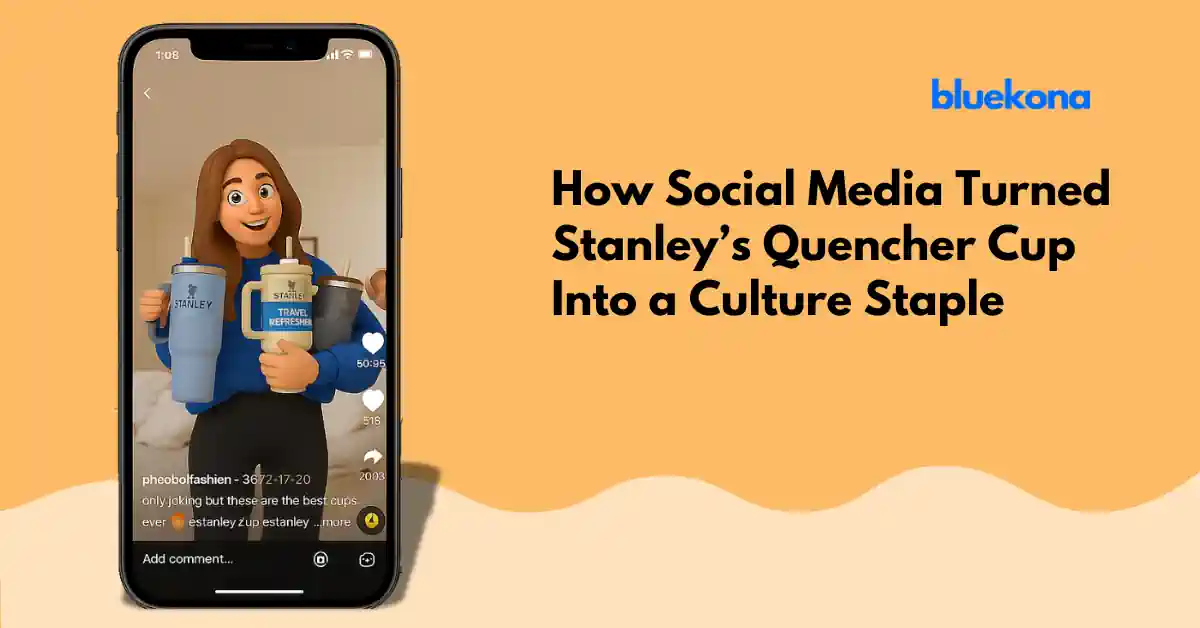
    How Social Turned Stanley’s Quencher Into a Culture Staple

    A 100-year-old thermos brand nearly killed a product that would later redefine its entire business. The Stanley Quencher wasn’t rescued by louder ads or a new engineering breakthrough — it was rescued by a social-driven identity shift. When the brand pivoted its audience, redesigned its aesthetics, seeded creators, and leaned into UGC-fueled hype cycles, a clunky 40-ounce tumbler turned into a cultural staple and a revenue engine.

    This isn’t a brand magic story. It’s a roadmap. SMBs and D2C teams can replicate the same levers of audience reframing, aesthetic repositioning, simple creator seeding, limited drops, and smart UGC amplification — without a Fortune 500 budget.

    The mechanics are repeatable, the workflow is approachable, and the upside is massive when executed deliberately.

    Here’s the playbook behind the Quencher moment — and how smaller brands can steal it, scale it, and ship it starting this quarter.

    The Quencher Moment — Quick Case Recap

    In 2016, Stanley released a 40-ounce tumbler built for outdoorsmen — and it bombed so badly the company nearly discontinued it.

    Then a female-led lifestyle blog, The Buy Guide, discovered the Quencher and introduced it to a completely different audience: women who wanted hydration that felt stylish, functional, and part of their daily rituals. Stanley embraced the pivot — new colors, creator seeding, limited-edition drops, and then social took over.

    The result: a near-dead SKU became the brand’s hero product, driving Stanley from roughly $70M in annual revenue to a projected $750M.

    What Changed: Five Marketing Levers That Flipped the Script

    Stanley didn’t overhaul the product, instead they overhauled the context around it. Five deliberate shifts turned the Quencher from an outdoor-worker tumbler into a lifestyle obsession.

    1. Audience Redefinition

    The original Quencher targeted rugged, outdoorsy men. The people who actually fell in love with it? Women — especially busy moms, wellness-focused consumers, and lifestyle shoppers who wanted a functional and aesthetic hydration staple. Stanley pivoted hard, and the moment they spoke to a new audience, demand ignited.

    2. Aesthetic Pivot

    The original Quencher came in utilitarian colors — hammertone green, matte black, basic silver. It used to look like a tool. Then it started looking like an accessory. Pastels, soft neutrals, seasonal drops, and collab colorways reframed the Quencher as something you show, not just something you use. Form became as important as function — and the product became Instagrammable.

    3. Influencers & Creator-First Distribution

    Instead of buying ads, Stanley put cups into the hands of lifestyle creators. Morning routines, hydration recipes, #WaterTok, GRWMs — the Quencher became a supporting character in everyday content. Native placement beat traditional promotion, and TikTok did the heavy lifting.

    4. Scarcity & Collabs (Drop Strategy)

    Borrowing from sneaker culture, Stanley introduced limited-color drops and collabs (Target, Starbucks, special editions). Scarcity triggered FOMO. Drops sold out in minutes. People camped outside stores. Resale groups formed. A water bottle became a collectible.

    5. UGC & Authentic Crisis Responses

    Nothing sells like real people doing real things. When a TikTok showing a Quencher surviving a car fire (with ice still in it) went viral, Stanley amplified it — and then replaced the customer’s car. The gesture deepened trust, and the clip became one of the most powerful pieces of UGC the brand could have asked for.

    @stanleybrand

    Thank you for allowing us to join you on this ride, @Danielle ❤️ Happy holidays from Stanley!

    ♬ original sound – Stanley Brand

    Why This Works?

    Stanley’s playbook works because it taps the psychological triggers that dominate modern social behavior — and turns them into predictable commerce outcomes.

    Social Proof

    When hundreds of creators, moms, and wellness influencers show the same product in their routines, it signals “this is the one everyone uses.”

    Outcome: Higher discovery → more profile visits → accelerated trust.

    Scarcity & FOMO

    Limited color drops and collabs create urgency. If you don’t buy now, you may not get another shot.

    Outcome: Faster conversions → shorter decision cycles → higher sellout velocity.

    Collectible Culture

    Multiple colors and seasonal releases shift the product from thing you need to thing you collect. People don’t buy one — they buy five.

    Outcome: Repeat purchases → higher LTV (Lifetime Value)→ organic social sharing (“my collection”).

    Micro-Influencer Trust

    Everyday creators feel less like ads and more like friends making recommendations. Their content blends into feeds instead of interrupting them.

    Outcome: Higher engagement → stronger persuasion → better assisted conversions.

    Platform-Native Discovery

    TikTok and Instagram reward trending objects and behaviors. The Quencher became content, not an ad.

    Outcome: Algorithmic lift → viral loops → sustained inbound demand.

    The Net Effect

    Each psychological trigger compounds:
    Discovery → Trial → Repeat Purchases → Cultural Momentum.

    A Practical 6-Step Playbook for SMBs & D2C Brands

    You don’t need a $100M marketing budget to run the Stanley playbook. You just need a structured test cycle. Here’s the exact workflow small teams can execute in 30–60 days.

    Step 1: Re-Define Your Primary Audience (Micro-segments + Hypotheses)

    List who else your product could resonate with — not your current customer, but the adjacent one.
    Write a simple hypothesis:

    “[Product] could resonate with [segment] because they care about [value/outcome].”

    Test one micro-segment at a time (e.g., “wellness moms,” “home organizers,” “hybrid workers,” “early-morning gym crowd”).

    Step 2: Test an Aesthetic Mini-Collection

    Small brands don’t need 12 SKUs. Use a three-variant capsule to signal a new identity: softer colors, matte finishes, seasonal hues, or elevated packaging.

    Run a small batch. Don’t overcommit inventory — you’re testing signal, not building a full line.

    Step 3: Run Creator Seeding

    Send product to 5–10 micro-creators (5K–50K followers) who already speak to your target segment.

    Add one macro creator (100K+) as a control.

    Give them creative freedom: “Use this naturally in your routine.”
    Prioritize authenticity over polished ad-style posts.

    Step 4: Launch a Controlled Drop

    Choose one variant for a scarcity test. Announce a drop 3–5 days in advance. Limit units or set a 24–48 hour window.

    You’re not trying to sell out instantly — you’re testing urgency, demand, and creator-driven traffic patterns.

    Step 5: Seed UGC & Build a Response Playbook

    Ask customers to share their experience using a branded hashtag.
    Repost the best content immediately — amplification is part of the incentive.

    Prepare a simple crisis-response plan:

    • What if something breaks?
    • What if someone posts a complaint?
    • What if a piece of UGC goes viral unexpectedly?

    Authenticity + fast responses = trust (and more shares).

    Step 6: Measure & Re-Run (KPIs + Cadence)

    Use 30–60 day test cycles. Track:

    • Discovery → profile visits, search volume lift
    • Engagement → saves, shares, UGC volume
    • Conversion → CTR, add-to-cart rate, conversion rate
    • Retention → repeat purchases, cohort LTV

    Double down on what moves. Kill what doesn’t. The system is the strategy.

    Small teams don’t win with volume — they win with structured, repeatable workflows. These templates give you plug-and-play systems you can run this week.

    Measurement: What to Track (and What ‘Good’ Actually Looks Like)

    Here’s the part most brands skip — and the part that determines whether your Stanley-style playbook actually worked. If you’re going to pivot audiences, upgrade your aesthetic, seed creators, and run limited drops, you need a simple measurement system that tells you, “Yes, this is landing,” or “Nope, adjust.”

    Think of these four buckets as your dashboard.

    1. Discovery Metrics: Are more people finding you… on purpose?

    These tell you whether your creators, content, and drops are pulling new eyeballs into your world.

    Track:

    • Impressions
    • Profile visits
    • Branded search appearances
    • (Optional) Follower growth — useful, but not the metric to obsess over

    What a win looks like:
    If your profile visits jump 3× during a drop or creator push, that’s signal. You’re breaking out of your existing bubble and hitting your new audience segment.

    If branded search starts climbing (“yourbrand cup,” “yourbrand pastel,” etc.), even better — you’re becoming discoverable on your own terms.

    2. Engagement Metrics: Do people actually care?

    Discovery without engagement is just window shopping. Engagement shows your new aesthetic and positioning are resonating.

    Track:

    • Saves (strong buying intent)
    • Shares (distribution booster)
    • Comments (qualitative signal)
    • UGC volume under your hashtag

    What a win looks like:
    If your “new look” product content gets a 50%+ increase in saves, that’s people bookmarking the product — usually because they plan to buy.

    If your branded hashtag starts populating with new videos each week? Even small numbers matter. That’s momentum.

    3. Conversion Metrics: Does the hype translate to sales?

    This is where the rubber meets revenue. You don’t need massive jumps — small increases compound fast.

    Track:

    • CTR from social → product page
    • Add-to-cart rate
    • Conversion rate
    • AOV
    • LTV of customers who bought during your drop

    What a win looks like:
    CTR up 20–40%
    Add-to-cart up 10–15%
    Conversion rate up 0.5–1%
    Drop cohorts buying again within 30–60 days (hello, collectible culture)

    Those small percentage lifts? They’re exactly what fuel Stanley-style growth loops.

    4. Earned Media Signals: Are you becoming ‘talked about’?

    This is when the flywheel kicks in — when your brand stops pushing and starts getting pulled into feeds, posts, and articles.

    Track:

    • Growth in branded hashtags
    • Press mentions
    • Creators tagging you without being seeded
    • Stitch/duet activity on TikTok

    What a win looks like:
    If your branded hashtag grows 200%+ in a 60-day window, you’re doing something right. When people you’ve never spoken to start tagging you or asking for collabs, you’ve crossed from marketing → culture.

    A quick “is this working?” baseline

    Let’s say you spend $500 on a tiny creator seeding run.

    You get:

    • 50,000 impressions
    • 1,500 profile visits
    • 2% conversion (30 orders at $40 AOV = $1,200)

    That’s already 2.4× ROI before you count repeat purchases or the ripple effect of UGC.

    Now stack on:

    • profile visits tripling
    • conversion rate rising just 0.5–1%
    • UGC snowballing

    …and the revenue tail outperforms what most small brands get from paid ads.

    Common Pitfalls & How to Avoid Them

    A Stanley-style playbook can unlock huge upside — but only if you dodge the traps that usually derail small brands. These are the mistakes that show up every single time a D2C team tries to “go viral” without a strategy.

    1. Chasing Trends Without a Real Identity

    Jumping on every TikTok trend feels productive… until your brand starts looking confused.

    The fix: Anchor everything to your brand’s core story, then use trends as seasoning — not the whole meal.

    2. Forgetting Your Original Customers

    A new audience is great. Abandoning the ones who got you here? Not great.

    The fix: Run your pivot in parallel. Keep classic products/colors active while experimenting with new aesthetics and messaging.

    3. Betting Everything on One Creator

    Creators are NOT silver bullets. One viral video doesn’t build a brand.

    The fix: Spread the risk. Test 5–10 micro-creators and treat each as a signal, not a savior.

    4. Sharing UGC Without Checking It

    Fake testimonials, stolen content, or low-quality UGC can damage trust instantly.

    The fix: Always verify the creator, confirm permission, and check the context before you repost anything.

    5. Creating FOMO But Forgetting Fulfillment

    Nothing kills hype faster than a sold-out product that takes six weeks to ship.

    The fix: Match your “scarcity play” to realistic inventory. Drops should feel exciting — not like a logistics crisis.

    6. Running Big Experiments With Zero Measurement

    If you don’t track what happened, you’re not running a playbook… you’re guessing.

    The fix: Use a simple 30–60 day measurement cycle (discovery → engagement → conversion → earned media). Double down on what moves. Ditch what doesn’t.

    How to Scale This Without Burning Cash

    Everything above works beautifully — until you try to run it consistently. Audience pivots, creator seeding, UGC management, drop cycles, repurposing workflows… they all require systems.

    You need a way to see what’s working, repeat what’s working, and stop wasting time on what isn’t. That’s where automation becomes the difference between “fun experiment” and “repeatable growth loop.”

    Bluekona steps in as the operational backbone, that has automated cross-platform audits that show which creator posts actually drive discovery, profile visits, and conversions. So you know which partnerships to scale and which to cut.

    Stanley didn’t just market better — they reframed the product. Small brands can do the same by testing fast, listening to social signals, and doubling down on what resonates.

    You don’t need a heritage brand or a massive budget to spark a Quencher-style moment. You just need the right audience, the right story, and the discipline to keep iterating until it clicks.

    Ready to start today?

  • What Solopreneurs Can Learn from Gymshark’s Go-to-Market Playbook

    What Solopreneurs Can Learn from Gymshark’s Go-to-Market Playbook

    Most brands try to buy attention. Gymshark built a $1.45B empire by earning it.

    Founded in 2012 in a garage by teenager Ben Francis, Gymshark didn’t win by outspending Nike or Adidas. They won by out-creating them—turning influencers into athletes, community into currency, and content into the engine of compounding growth. Paid ads? They used them, sure—but only as fuel for what was already catching fire.

    While competitors were burning through ad budgets, Gymshark was building content people actually searched for, shared, and showed up for. That’s the difference between hype and a flywheel.

    In this breakdown, we’ll dissect how Gymshark went from garage startup to global powerhouse in just over a decade—and, more importantly, how you can steal their playbook and start applying it today.

    Garage to Global — The Fast Growth Timeline

    In 2012, Ben Francis wasn’t a founder with investors or a roadmap—he was a teenager stitching gym clothes in his parents’ garage. Fast forward to 2025: Gymshark is valued at $1.45 billion.

    The real turning point? The 2013 BodyPower Expo. While legacy brands rolled out sterile booths and glossy displays, Gymshark rolled in with creators like Lex Griffin, Steve Cook, and Nikki Blackketter—athletes who were already embedded in the fitness culture. They weren’t paid mouthpieces; they were real people with real followings who wore Gymshark because it felt authentic.

    The effect was explosive. Not a 48-hour viral blip, but the kind of organic buzz that turns heads, builds waitlists, and cements a brand inside a community.

    And Gymshark didn’t let it fade. They turned that moment into a system: fast-cycle product launches built on community feedback, limited drops that created genuine scarcity, and a marketing engine that always started with the people living the lifestyle—not a boardroom strategy deck.

    The solopreneur steal: Your breakthrough won’t come from a clever ad hack. It’ll come from embedding yourself in the community you serve—and letting them pull your brand forward.

    The Content Flywheel — How Gymshark Built a Machine That Compounds

    Most brands are still debating whether to chase TikTok trends or double down on Instagram. Gymshark skipped the debate and built something more powerful: a content ecosystem that feeds itself. Every piece of content fueled the next, creating a flywheel of compounding growth.

    Creator-Led Marketing (Before It Was Cool)

    Those early partnerships with Lex Griffin, Steve Cook, and Nikki Blackketter weren’t just influencer shoutouts. Gymshark called them “athletes,” but really, they were ambassadors living the lifestyle and bringing their audiences with them. By 2023, the network had grown to 125+ creators, driving more than 30% of Gymshark’s social-driven revenue.

    The solopreneur steal: Don’t rent billboards disguised as influencers. Build long-term partnerships with creators whose audiences trust them. Authenticity scales better than follower counts.

    Content Systems That Compound

    Here’s where Gymshark played chess while everyone else played algorithm roulette. Instead of random posting, they built repeatable systems across every major channel:

    • Instagram (7.7M+ followers): Athlete-driven content, customer transformations, and workouts worth saving—not just polished product shots.
    • TikTok (4.3M+ followers): They didn’t just hop on trends, they created them. The “66 Days: Change Your Life” challenge alone drove 200M+ views.
    • YouTube (long-form depth): Series like Gymshark Lifts gave the brand authority and loyalty beyond 15-second clips.
    • Blog (Gymshark Central): Ranking for 356K keywords and pulling in 1.5M organic visits monthly (Ahrefs, 2025). An SEO gold mine powering the entire funnel.

    The brilliance? Every piece of content did double (or triple) duty. A single YouTube video became Instagram clips, TikTok challenges, and blog material. One photoshoot stocked months of social posts. Creator collabs amplified across all platforms.

    That’s the flywheel. Not random hype, but a system where content compounds instead of fades.

    Paid Ads Were an Amplifier, Not Foundation

    Here’s where most marketers misread the Gymshark story. They assume it was all organic magic—that a billion-dollar brand grew without ever touching paid ads. Wrong. Gymshark did use ads—they just didn’t rely on them as the foundation.

    While competitors were burning cash on generic product pushes, Gymshark used paid media as an amplifier. The playbook was simple: test content organically, then scale only what proved it could stand on its own.

    Take their “66 Days: Change Your Life” challenge. It racked up 200M+ views organically before Gymshark spent a dime. Only then did they push paid media behind it—pouring gasoline on a fire that was already roaring.

    And when they did spend, it wasn’t on sterile “buy now” ads. It was creator-led videos, user-generated transformations, and challenges people were already sharing. Paid ads extended reach; authenticity did the heavy lifting.

    The solopreneur steal: Don’t use ads to test whether your content is good. Use them to scale what’s already proven to resonate. If your content can’t get traction without paid spend, no budget in the world will save it. But nail the organic first, and ads become the multiplier every scrappy brand dreams of.

    The Moat: Community as Growth Engine

    Here’s what separated Gymshark from every other brand trying to copy their success: they didn’t just build an audience—they built a community.

    audience vs community difference

    Offline Experiences That Created Online Legends

    While “digital-first” brands obsessed over dashboards, Gymshark was doubling down on the real world. The Gymshark Lifting Club wasn’t just a gym—it was a pilgrimage site. Pop-ups weren’t sales activations—they were gatherings of the tribe. And when they took over Venice Beach, the 70M+ impressions weren’t the point—the cultural signal was.

    The solopreneur steal: Even if you run a digital business, find ways to meet your community offline. A coffee chat, a local meetup, or an annual event can forge loyalty no algorithm can touch.

    Owned Channels: Where Belonging Happens

    Gymshark also built moats on platforms they controlled. Their app, blog, and Discord-style communities weren’t just content distribution—they were connection engines. Members shared transformations, tracked workouts, swapped advice, and held each other accountable.

    That’s the difference between customers and evangelists. Customers buy your products. Evangelists defend your brand, recruit new members, and stick with you when competitors come knocking.

    The solopreneur steal: Stop chasing “followers.” Start facilitating connections. Your job isn’t just to push content—it’s to create spaces where your people can find each other. Products can be copied. Communities can’t.

    What Solopreneurs and Marketers Can Learn

    Gymshark didn’t stumble into a $1.45B valuation. They built a system—and you can too, even without a billion-dollar budget. Here’s the playbook worth stealing:

    1. Invest in Content Systems That Compound
      Forget chasing the next viral TikTok. Gymshark’s blog pulls 1.5M monthly organic visits and their YouTube series keep attracting new fans because they built assets that pay dividends long after publishing.
      Your move: Start building your own media engine—SEO, blogs, YouTube. Boring? Maybe. Effective? Absolutely.
    2. Build Creator Relationships, Not Transactions
      Gymshark didn’t rent influencers. They partnered with people who lived the lifestyle. By 2023, those authentic voices drove 30%+ of social-driven revenue.
      Your move: Don’t buy followers. Find aligned creators—even small ones—who actually believe in what you’re building.
    3. Treat Paid Media Like Gasoline, Not the Engine
      Most solopreneurs burn money trying to force mediocre content to work. Gymshark only spent when they knew content resonated—turning sparks into bonfires.
      Your move: Prove it works organically first. Then, use paid to amplify—not compensate.
    4. Close the Feedback Loop
      Gymshark didn’t guess what content or creators worked. They measured, refined, and doubled down.
      Your move: Use tools like BlueKonaAI to track performance across channels, spot what drives real engagement, and kill what doesn’t. Guessing is for amateurs—feedback loops are your competitive edge.

    The bottom line: Gymshark’s secret wasn’t ads, luck, or hype. It was systems—content, community, creators—that compound. The only question is whether you’re ready to stop winging it and start building your own flywheel.

  • How Prime Became a $1B Brand Without Ads — The Repurposing Playbook

    How Prime Became a $1B Brand Without Ads — The Repurposing Playbook

    While most beverage brands were burning millions on Super Bowl ads and celebrity endorsements, Prime skipped the playbook. KSI and Logan Paul built something else entirely: a content machine that turned every drop into a cultural event, every meme into distribution fuel, and every sip into social currency.

    No traditional ad budgets. No media buys. Just two creators who understood the rule most brands miss: repurposed and redistributed content beats content that’s created once and forgotten.

    That’s why you’ve never seen a Prime TV commercial — but you’ve definitely seen Prime. TikTok unboxings, YouTube flavor rankings, Instagram hauls, and endless UGC clips kept the brand inescapable. That’s not accident. That’s architecture.

    Prime cracked the code on content leverage — multiplying moments into touchpoints across every platform where audiences live. The result? A $1B brand powered not by ad spend, but by workflows built for scale.

    Here’s how they did it — and how you can replicate the same flywheel without needing millions of followers or celebrity clout.

    Prime’s Playbook: Content > Ads

    Most beverage brands stick to the same old routine. Churn out products, pump out ads, blast them everywhere, and just hope something resonates. But Prime decided to do things differently.

    Instead of chasing after TV commercials or billboards, Logan Paul and KSI turned their launches into content events.

    Today, the most valuable billboard isn’t in Times Square — it’s the TikTok “For You” page. And you can’t just buy your way onto it. You have to earn it with content that people genuinely want to share.

    The Scarcity-Content Loop

    Prime’s brilliance wasn’t just about creating buzz — it was about creating buzz that could be captured on film. Each product drop was crafted to generate moments worth sharing, not just sales:

    • Scarcity creates urgency → Fans scramble to find Prime in stores
    • Urgency creates content → “Found Prime at Target!” becomes a TikTok sensation
    • Content creates discovery → New audiences catch wind of it and want to join in
    • Discovery fuels more scarcity → Demand starts to snowball

    This cycle turned supply shortages into marketing gold — a testament to popularity that no ad campaign could replicate.

    Cross-Platform Virality by Design

    While Coke spends millions on a 30-second Super Bowl ad, Prime filled social media feeds daily with user-generated micro-ads across every platform

    • TikTok: Unboxings, flavor rankings, “Prime hunting” videos
    • YouTube: Reactions, reviews, mentions on Logan/KSI’s podcast
    • Instagram: Story hauls, collaborations, eye-catching product shots
    • Twitter/X: Memes, trending hashtags, real-time updates on stock

    Every clip acted as an unpaid advertisement. Every post felt genuine because it was genuine.

    The outcome? Prime skyrocketed to a billion-dollar brand with almost no ad spend — not by buying attention, but by crafting content that spread organically.

    The Repurposing Engine Behind the Hype

    Prime’s real superpower wasn’t just creating viral content. It was multiplying it. Every launch became raw fuel for a content flywheel that spun across every platform.

    The UGC Flywheel

    A single flavor drop didn’t just launch a product — it launched a content ecosystem:

    • TikTok: 15–60 sec taste tests, quick dopamine hits
    • YouTube: 10-min reviews, deep dives for superfans
    • Instagram Stories: Behind-the-scenes, aesthetic shots
    • Twitter/X: Real-time updates, hot takes, memes
    • Reddit: Comparisons, availability threads, community debates

    The kicker? Prime didn’t need to make this content. Fans did it for them — and every clip became free advertising that felt more authentic than any polished ad campaign.

    The Logan/KSI Amplifier

    Logan and KSI didn’t just mention Prime — they franchised it. One podcast shoutout spawned:

    • A full-length YouTube/Spotify episode
    • A highlight reel for TikTok & Reels
    • Quote graphics for Twitter & Instagram
    • Fan reaction compilations
    • Meme remixes that spread far beyond their own channels

    Every collab, every drama cycle, every mention was sliced, remixed, and re-distributed — multiplying reach across formats and platforms.

    Platform-First Repurposing

    Prime knew repurposing wasn’t copy-paste. Each piece was re-optimized for the platform:

    • TikTok: Quick cuts + trending audio
    • YouTube Shorts: Vertical, hook-first, cliffhanger endings
    • Instagram Reels: Aesthetic visuals, narrative captions
    • Twitter/X: Real-time threads, meme bait

    The same Prime moment looked different on every channel — but each version was engineered to win that platform’s algorithm.

    The Snowball Effect

    This wasn’t marketing, it was momentum. Every piece of content could go viral on its own, sparking the next wave of UGC, which created the next wave of discovery. One taste-test TikTok could pull in millions of new eyeballs — who then made their own content, feeding the cycle again.

    Prime didn’t just repurpose content. They built a self-sustaining content ecosystem where every post fueled the next.

    Distribution at Scale

    Prime achieved what should have been impossible: billion-dollar brand awareness with virtually zero media spend. They cracked the code on organic distribution at paid scale — something most brands only dream of.

    The BTS Meal Effect — Without the Price Tag

    Remember when McDonald’s partnered with BTS and the internet exploded? Every influencer tried the meal, every platform buzzed, and McDonald’s sales spiked. That campaign cost millions in production, partnership fees, and media spend.

    Prime achieved the same cultural penetration — organically.

    Instead of one mega-collab, Prime generated thousands of micro-collaborations. Every creator who found a bottle became an unpaid brand partner. Every fan who hunted down a rare flavor became a walking ad. Scarcity didn’t just drive sales — it drove content.

    Search as a Distribution Channel

    Prime didn’t optimize for search in the traditional SEO sense. They optimized for searchable moments.

    TikTok queries like:

    • “Prime flavors ranked” → 50M+ views across thousands of videos
    • “Prime energy drink review” → endless taste-tests and reactions
    • “Where to find Prime” → hunting content, real-time updates
    • “Prime vs Red Bull” → head-to-head comparison videos

    Each query became a content funnel. One search turned into hours of bingeable Prime content — pulling in new audiences with every click.

    Platform-Native Mastery

    Prime knew distribution wasn’t about posting everywhere — it was about speaking each platform’s language.

    • TikTok: Quick cuts, trending audio, authentic reactions → algorithm rocket fuel
    • YouTube: Long-form reviews + flavor rankings → evergreen discovery
    • Instagram: Vibrant bottles = instant aesthetic, UGC that looked pro without effort
    • Twitter/X: Real-time drops, memes, and availability updates kept Prime trending

    The Compound Distribution Effect

    Prime’s distribution system worked like this:

    1. Logan Paul teases a new flavor on the podcast.
    2. Clip spreads across TikTok, Instagram, Twitter.
    3. Fans make reaction + hunting content.
    4. New creators discover Prime → make their own content.
    5. Their audiences join the frenzy, creating even more.

    Each layer multiplied reach. This wasn’t a campaign. It was a self-replicating distribution network that money couldn’t buy.

    The result? Prime didn’t purchase attention. They architected a system where their audience distributed the brand for them — willingly and at scale.

    Lessons for Marketers

    Prime’s story isn’t just entertainment — it’s a masterclass in modern marketing. Here are the lessons every brand can steal, no matter your size or budget:

    1. Content > Ads

    Prime flipped the traditional formula. Instead of:
    Product → Ads → Awareness → Sales
    They ran:
    Content → Attention → Community → Sales.

    Result? $0 ad spend → $1B+ sales. Meanwhile, legacy beverage giants burn hundreds of millions on ads and still struggle to connect with Gen Z.

    Takeaway: Don’t ask “What’s our ad budget?” Ask “What’s our content strategy?” Ads interrupt; content gets consumed.

    2. Repurposing = Leverage

    Prime’s real trick wasn’t creating more — it was multiplying every moment.

    • One podcast clip → 10+ social snippets
    • One collab → 20+ derivative posts
    • One viral moment → 50+ remixes

    Repurposing isn’t laziness. It’s efficiency. It’s how you speak each platform’s native language while squeezing max ROI from every asset.

    Action plan: Audit your process. Are you “create once, post once” — or “create once, adapt everywhere”?

    3. Cross-Platform = Discovery Dominance

    Prime didn’t just post — they built a discovery ecosystem.

    • Search: “Prime flavors ranked” videos on YouTube
    • Social feeds: TikToks, IG Stories, memes
    • Algorithms: TikTok FYP + YouTube recommendations
    • Communities: Reddit, Discord, comment sections

    Omnipresence matters because your customers don’t live on one channel. If you’re only posting on LinkedIn or TikTok, you’re missing 80% of the funnel.

    4. Community > Campaign

    Prime’s biggest unlock wasn’t tactical — it was philosophical. They didn’t run campaigns; they built a community that was the campaign.

    Every customer hunting for Prime became part of the story. Every fan posting their haul was unpaid marketing. Every meme, every reaction video, every Reddit thread amplified reach.

    That’s the meta-lesson. You don’t need Logan Paul’s celebrity. You need Prime’s strategy — turning every customer into a content creator, and every content moment into a discovery engine.

    The Reality Check — You Don’t Need Logan Paul, You Need His Workflow

    Prime’s success feels impossible because we focus on what we don’t have: Logan Paul’s 23M YouTube subscribers, KSI’s cultural pull, their combined reach. But their real advantage wasn’t audience size — it was their content multiplication system.

    Strip away the celebrity factor, and Prime’s playbook boils down to three workflows:

    1. Create Once → Repurpose Everywhere
      One asset becomes dozens of platform-native posts — TikToks, Shorts, Reels, tweets, blogs.
    2. Distribute Systematically
      Consistent posting beats sporadic bursts. Prime content wasn’t random — it was everywhere, always.
    3. Analyze + Iterate
      Track what works, double down on winners, cut the dead weight.

    These aren’t celebrity superpowers. They’re workflows. And workflows can be systematized, automated, and scaled — regardless of follower count.

    The Bluekona Advantage

    This is exactly what Bluekona automates:

    • Create Once → Repurpose Everywhere
      Upload one asset, and Bluekona reformats it for TikTok, YouTube Shorts, Instagram, LinkedIn, and more.
    • Analyze What Works
      Identify which platforms, formats, and themes drive engagement, traffic, and sales.
    • Distribute on Autopilot
      Post everywhere on schedule — optimized for each algorithm — without touching a calendar.
    • Build Your Flywheel
      Turn every launch, blog post, or video into weeks of multi-platform content.

    No Celebrity Required

    Prime proved content-driven growth beats ad-driven growth. You don’t need millions of followers to use their strategy — just the right system. Bluekona gives you that system.

    No Logan Paul required. Just better workflows.

  • Why TikTok’s Algorithm Now Favors Search And How Brands Are Winning?

    Why TikTok’s Algorithm Now Favors Search And How Brands Are Winning?

    The landscape of TikTok has shifted dramatically and brands that are paying attention are reaping the rewards. What used to be all about viral dances and comedy sketches has quietly transformed into something much more impactful — Gen Z’s favorite search engine for finding products, tutorials, and recommendations.

    With a staggering 1.59 billion potential ad impressions and 82% of Gen Z active on the app, TikTok’s algorithm now favors videos that are searchable and driven by intent, rather than just random viral clips.

    This means that using keyword-rich captions, on-screen text, and strong watch-time signals are no longer just nice-to-haves—they’re essential tools for driving organic sales.

    The results are impressive: creators and brands are raking in seven-figure revenues without spending a dime on ads, simply by mastering TikTok SEO.

    Plus, with 54% of users interacting with brand content every day and the average Android user logging 35 hours a month on the app TikTok isn’t merely competing with Google for searches, for Gen Z, it’s taking its place.

    This isn’t just a fleeting trend. It’s a significant change in how search, social media, and e-commerce come together. The real question is whether your brand will keep up or risk being left behind.

    The TikTok Search Shift

    TikTok’s journey kicked off with a delightful mix of algorithmic luck. Users dove into the app, eager for surprises, as the For You Page dished out whatever was hot at the moment—think dances, memes, and hilarious skits. Content thrived or flopped based on engagement metrics like watch time and shares, with little thought given to long-term discoverability.

    However, as the platform evolved, so did user habits. Instead of just scrolling for fun, people started looking for answers. Searches like “best skincare routine for acne,” “how to style curly hair,” or “Stanley cup review” began to fill TikTok’s search bar—something we used to reserve for Google.

    TikTok’s algorithm was quick to catch on. When users search, it shows they have high intent, which translates to deeper engagement and better conversions. The platform began to favor videos that matched search queries, giving them a boost not just in search results but also on the For You Page.

    This created a cycle: content that was easy to search for performed better, prompting more creators to optimize for search, which in turn trained users to see TikTok as a visual search engine.

    Why Keywords Now Rule TikTok?

    These days, TikTok is indexing nearly every bit of text associated with your video

    • Captions have become like meta descriptions—rich in keywords that tell TikTok exactly what your content is about.
    • Comments play a role in discoverability—using strategic keywords in audience Q&As can signal relevance to the algorithm.
    • Voiceovers and on-screen text are transcribed and indexed, giving you multiple opportunities for keyword optimization.

    The bottom line? While entertainment is still key, searchability is what determines if your content gets noticed in the first place.

    Creators who seamlessly incorporate targeted keywords into captions, conversations, and dialogue are crafting videos with longer lifespans—content that continues to attract views weeks or even months after it’s been posted.

    Going viral isn’t just about luck anymore. It’s all about intent-driven discovery and the brand.

    Why Gen Z Skips Google for TikTok?

    Why is Gen Z turning away from Google and heading straight for TikTok? Well, understanding this shift in search behavior is just part of the puzzle. The bigger picture is why an entire generation now trusts a social media app more than the biggest search engine on the planet.

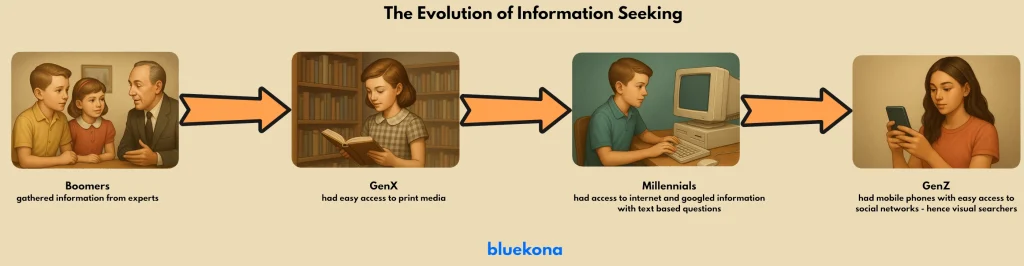
    Unlike previous generations, Gen Z didn’t spend their childhood poring over manuals or encyclopedias. They’ve learned to tackle problems visually — think YouTube tutorials, Instagram stories, and now, those quick TikTok clips.

    The Evolution of Information Seeking

    For them, visual learning isn’t just a preference, it’s what they always do. When they need to tie a tie, fix a leaky faucet, or pick out a new moisturizer, they’re not diving into a lengthy blog post — they’re watching someone demonstrate it live.

    TikTok has truly mastered this visual-first approach. While Google’s search results often lean heavily on text that requires some patience to sift through, TikTok serves up short, practical videos that feel personal and immediately helpful.

    Type “best affordable skincare routine” into Google, and you’ll find yourself wading through blog posts filled with disclaimers and backstories. Do the same on TikTok, and you’ll be greeted with 30-second clips of real people applying products, showcasing results, and sharing their genuine reactions.

    That sense of authenticity is crucial. Google’s top results can often come off as overly commercial or optimized for clicks. On the other hand TikTok, feels like advice from a friend. Even sponsored content has to pass the test of real-time demonstration — you can see the product in action, catch those genuine expressions, and make your own judgment.

    The real magic lies in what we call edutainment.TikTok’s effortless mix of learning and fun. There’s no clear boundary between “searching for answers” and “watching for enjoyment.” Users absorb information about products, solutions, and trends while they scroll, so by the time they’re ready to make a purchase, they’ve already been influenced — all without feeling like they’re being sold to.

    For brands, the takeaway is straightforward, TikTok captures Gen Z’s attention by turning information into entertainment. Success isn’t about interrupting their scrolling with ads, it’s about crafting content so captivating that your product becomes part of the scroll itself.

    The SEO Mechanics Inside TikTok

    Understanding that TikTok functions as a search engine is one thing, but grasping how it ranks your videos is a whole different ball game.

    The algorithm takes into account a blend of keyword signals and engagement metrics to determine which videos pop up in searches and on the For You Page.

    1. Captions & Keyword Placement

    TikTok scans every word in your caption, aligning it with user searches.

    That casual morning skincare video in your feed starts with a hook built around its main keyword “My $8 morning routine for glowing skin.” Along the way, it naturally drops secondary keywords like “AM skincare,” “hydrating toner,” and “daily sunscreen.” The creator prompts interaction with calls-to-action such as “Save this for your next Target run” or “Which SPF do you use?” Finally, they tag 3–5 highly relevant hashtags to help TikTok categorize the content — #MorningSkincare, #GlowingSkin, #AffordableBeauty.

    2. Subtitles & On-Screen Text

    TikTok automatically generates captions from your audio and can read overlay text, making both searchable.

    In the video, if you noticed, the creator syncs it all together — the voiceover says, “Morning skincare routine,” the on-screen text reads, “AM skincare steps,” and the caption might say, “Daily skincare routine for glowing skin.” That video didn’t just show up by chance — it’s the result of clever keyword clustering that boosts ranking across multiple related searches. And when the creator overlays product names, prices, and a “get it here” prompt, it sends an even stronger commercial intent signal to TikTok’s algorithm.

    3. Watch-Time & Completion Rate — The Quality Filter

    TikTok places a high value on videos that viewers finish watching (or replay).

    Here are some key strategies:

    • Deliver your main message within the first 3 seconds
    • Show results before the process (after→before)
    • Create loopable content that viewers want to re-watch for clarity or satisfaction
    • Finish with a next-step hook (“Full ingredient list on my profile”)

    The algorithm also monitors what happens after viewing — profile visits, related searches, and continued session time — and boosts videos that keep users engaged on the platform.

    The key takeaway here is that TikTok SEO revolves around stacking signals. This means you should align your captions, spoken words, and on-screen text with intent-driven keywords. The goal is to create such valuable and engaging content that viewers can’t help but stick around, prompting the algorithm to share it even more widely.

    Case Study 1: Danielle Athena – TikTok Shop Creator Success

    What sets successful brands apart on TikTok from those that struggle isn’t just their budget — it’s all about strategy.

    Take beauty creator Danielle Athena, for example. Rather than pouring money into ads, she cleverly utilized TikTok SEO to create a million-dollar sales funnel, racking up an impressive $5.6 million in beauty sales on TikTok Shop this year alone.

    What’s her secret sauce? It’s all in her viral content, featuring reviews of popular tools like the Tymo Ring (which snagged 48 million views) and the Wavytalk 5-in-1 (with 25 million views).

    But don’t be fooled into thinking it was just luck — it was all about smart search optimization. Athena crafted her videos around high-intent search phrases like “best hair straightener” and “affordable hair styling tools.”

    The SEO Strategy Behind the Sales

    She used keyword-rich captions that felt like genuine reviews (“This $30 hair straightener outperforms my $200 one — here’s why”).

    She grabbed attention with striking visuals — dramatic before-and-after shots within the first 3 seconds to hook viewers. She also layered keyword signals throughout her captions, voiceovers, and on-screen text to maximize discoverability.

    Engagement prompts like “Save this for later” or “Which tool should I test next?” encouraged comments and saves, which are strong signals for ranking.

    Athena’s approach to integrating TikTok Shop was just as strategic. Instead of pushing hard sales, she presented each review as educational content, seamlessly incorporating purchase options.

    Viewers didn’t feel like they were being sold to — they felt informed. The outcome? A significant boost in purchase intent and conversion rates.

    Scaling the Playbook

    Athena teamed up with Wavytalk to co-create new products, enriching her content pipeline with product launches, behind-the-scenes clips, and tutorials.

    This consistency helped her establish a search monopoly for hair tools on TikTok — when users search, her content is what they find.

    The Results

    • Danielle: $5.6 million in creator-driven sales.
    • Wavytalk: $12.6 million in TikTok Shop revenue in the first half of 2024

    Case Study 2: Dee Pizza – From Small-Town Pizzeria to Global Footfall Magnet

    https://www.tiktok.com/discover/dee-pizza

    If Danielle Athena demonstrates how TikTok SEO can boost digital product sales, Dee Pizza showcases how the same principles can elevate a small-town eatery into a worldwide sensation.

    Nestled in Llangollen, Wales, this family-owned pizzeria went viral thanks to a clever concept: the “First Eats Free” campaign. Each day, they captured the moment when their first customer received a complimentary meal — quick, POV-style videos that felt instantly relatable and were perfect for sharing.

    The Local SEO StrategyThat Went Global

    Dee Pizza didn’t leave things to chance. Their videos were carefully crafted around location-specific keywords like “best pizza in Wales,” “unique dining experiences,” and “food challenges.”

    They complemented these with geographic hashtags to attract both local diners and curious tourists. And it paid off. One Saturday’s video exploded with 12.6 million views and 950,000 likes, creating a buzz that had people lining up before the restaurant even opened its doors.

    Turning Customers Into Content

    What made this campaign truly brilliant was its self-perpetuating cycle: engaging customers create captivating videos, which in turn draw in more customers eager to be part of the fun.

    Even those who didn’t win on the freebie wheel left with positive memories and more chances for content creation. Every interaction became a marketing opportunity. Each video entertained followers, ranked well for local search terms, and inspired user-generated content, allowing Dee Pizza’s influence to stretch far beyond its small-town roots.

    Scaling Success

    This strategy led to impressive growth. With 700,000 followers on TikTok and plans for expansion already underway, Dee Pizza is now franchising its model — a testament to how TikTok SEO can drive not just clicks, but real-world foot traffic and sustainable business growth.

    Dee Pizza didn’t win because of polished ads or big budgets. They won because they turned daily operations into SEO-driven storytelling — authentic, repeatable, and optimized for intent. Their playbook shows that on TikTok, the smartest marketing isn’t separate from the business; it is the business.

    The Brand Playbook: $1M Funnels Without Ads

    What do a beauty influencer and a cozy little pizzeria have in common? On TikTok, quite a lot! Danielle Athena and Dee Pizza show us that the brands making waves on the platform aren’t necessarily those with the deepest pockets — they’re the ones who know how to leverage TikTok SEO to create a sustainable growth engine.

    1. Keywords Spark Discovery

    Athena tailored her reviews around intent-driven searches like “best hair straightener.” Meanwhile, Dee Pizza focused on “best pizza in Wales.”

    Both creators used captions, on-screen text, and hashtags to connect with what people were genuinely looking for.

    2. Repeatable Formats Fuel Growth

    Athena’s product demos followed a tried-and-true structure: hook → results → tutorial → CTA.

    Dee Pizza’s “First Eats Free” campaign was straightforward, easy to replicate, and endlessly captivating.

    They didn’t rely on fleeting viral moments — instead, they built a content system designed to deliver results time and again.

    3. Authenticity Drives Conversions

    These case studies highlight that TikTok users aren’t interested in ads — they crave answers and real experiences. Athena’s reviews felt like friendly advice rather than a sales pitch, while Dee Pizza’s POV clips captured genuine moments instead of scripted commercials. This authenticity fostered trust, which in turn led to conversions.

    4. Content Transforms into Commerce

    For Athena, her search-optimized videos seamlessly directed viewers to TikTok Shop, racking up over $5.6M in sales.

    For Dee Pizza, their short videos sparked real-world demand, filling up their restaurant and paving the way for franchise growth. In both scenarios, entertainment morphed into education, and education turned into sales.

    The Takeaway for Brands

    You don’t need ads to thrive on TikTok. What you really need is content that’s searchable, authentic, and designed for repeatability. Whether you’re selling beauty products or delicious pizza, the strategy remains the same: stack those keyword signals, make your content easy to find, and let TikTok’s algorithm handle the scaling.

    How to Optimize for TikTok Search

    When it comes to optimizing for TikTok search, understanding how the platform has evolved is just the beginning—putting your own SEO strategy into action is where the real work lies.

    The brands that are thriving on TikTok aren’t just hoping for the best. They’re following a well-thought-out system that revolves around keywords, consistency, and engagement triggers.

    1. Embrace TikTok’s Unique Keyword Research

    Believe it or not, TikTok itself is a fantastic keyword research tool. Start by typing in some basic terms in the search bar, like “skincare,” “pizza,” or “budget makeup,” and watch as the autocomplete suggestions pop up with high-intent queries such as “skincare routine for acne” or “best pizza in Wales.”

    Dig a little deeper with long-tail variations like “skincare routine for teenagers” or “affordable curly hair tools.” These phrases often lead to more specific searches that face less competition.

    Keep an eye out for emotional modifiers that TikTok suggests—words like “easy,” “quick,” “affordable,” or “healthy.” These terms give you insight into what users are really looking for.

    Here’s a pro tip: Take a close look at the top-ranking videos in your niche. Pay attention to their captions, how they use keywords, and their engagement patterns. This reverse-engineering can reveal what TikTok’s algorithm is favoring.

    And don’t forget about seasonality! Terms like “summer skincare,” “holiday outfits,” or “back-to-school makeup” tend to see spikes at certain times of the year. Make sure to align your content calendar with these trends.

    2. Post Consistently, Vary the Format

    To really shine on TikTok, consistency is key. But don’t confuse consistency with churning out the same video over and over. It’s all about showing up regularly—aim for once a day or three to five times a week, depending on your niche—and mixing things up with different formats and perspectives:

    • Quick tips that last 15 to 30 seconds
    • Longer tutorials that run 60 to 90 seconds
    • Product reviews or demos
    • Behind-the-scenes looks or POV content
    • Responses to questions from your comments

    One of the smartest ways to scale your content is by batch-creating around specific keyword clusters. For instance, a fitness brand could develop a series focused on “home workouts” that targets phrases like

    • “home workout no equipment”
    • “home workout for abs”
    • “home workout quick results”

    This strategy not only establishes your authority on the topic but also keeps your content feeling fresh and engaging.

    3. Engineer Engagement That TikTok Rewards

    TikTok doesn’t just count views, it looks for signs of real value. Here are the big three:

    • Comments → Pose specific questions: “Which of these products would you give a shot?”
    • Shares → Craft content that’s either super relatable or so good that people can’t help but share it.
    • Saves → Think tutorials, product info, or step-by-step guides that users will want to revisit later.

    Don’t hesitate to pin your own strategic comments to give extra keyword context (like, “This $30 straightener outperforms my $200 one — and it’s safe for curly hair too”).

    And remember to include CTAs such as: “Save this for your next Target trip.” “Tag a friend who needs to see this.” Early engagement is crucial.

    Letting your loyal followers know or promoting your content on other platforms can give the algorithm a boost, but the ultimate aim is to create content that’s so helpful or entertaining that engagement happens naturally and consistently.

    The Bottom Line: Achieving success with TikTok SEO isn’t about just wishing for your content to go viral. It’s about treating TikTok like a search engine: identify genuine user queries, consistently create content around those topics, and craft engagement signals that show TikTok your content is worthy of a higher ranking.

    Pitfalls to Avoid

    Even with a solid TikTok SEO strategy, small mistakes can kill your momentum. These pitfalls don’t just cap your reach — they can actively harm your account’s standing with the algorithm.

    1. Overstuffing Keywords

    Cramming every variation of a keyword into one caption makes content look spammy and hurts engagement.

    Bad: “Best affordable skincare routine for acne-prone sensitive dry oily skin morning night products under $20.”
    Better: “This $12 cleanser cleared my acne in two weeks — here’s my sensitive-skin morning routine on a budget.”

    The second example feels natural, still hits multiple keywords (affordable skincare, acne, sensitive skin, morning routine, budget), and delivers value without keyword overload. TikTok’s algorithm rewards contextual, conversational use — not robotic stuffing.

    2. Ignoring Watch-Time Signals

    TikTok doesn’t just care what you say — it cares if people stick around to watch it. Many creators lose viewers by delaying the payoff.

    Bad: “Today I’m going to show you my skincare routine for dry skin.” (intro drags, users scroll away)
    Better: “This $8 moisturizer gave me glass skin in one week — here’s how.” (hook delivers instant value)

    Watch-time is TikTok’s ultimate ranking filter. Focus on:

    • Strong hooks in the first 3 seconds.
    • Quick pacing and no fluff.
    • Clear visuals and audio.
    • Loop-ability (before/after reveals, fast demos, or content that’s worth rewatching).

    3. Not Updating Content for Seasonal & Trending Searches

    TikTok search trends shift constantly. Posting “summer skincare” in November won’t rank. Smart creators build content calendars around predictable cycles:

    • Winter: “dry skin solutions”
    • Spring/Summer: “sunscreen recommendations”
    • August/September: “back-to-school makeup”

    They also jump on real-time trends — whether it’s a viral product, trending audio, or cultural moment — but only when it aligns with their niche.

    The best creators blend seasonal consistency with trend agility. That means updating proven videos with fresh products, using trending sounds strategically, and being first (but not too early) when new searches spike.

    Note: TikTok punishes spammy captions, boring content, and outdated strategies. The creators who win long-term don’t chase hacks — they align naturally with how people search, keep viewers watching, and adapt to the rhythms of TikTok’s ever-changing search landscape.

    Ready to rank higher on TikTok? BlueKona shows you which videos drive sales — and how to scale them.

  • How Bumble Built a Billion-Dollar Brand with Women-First Storytelling

    How Bumble Built a Billion-Dollar Brand with Women-First Storytelling

    Back in 2014, dating apps felt like a never-ending cycle of swipe fatigue and shallow matches. Tinder was the king of the hill, and Match Group had the cash to back it up. But what they did not have? A brand that women could genuinely trust.

    The Differentiator: Women First

    Back in 2014, most dating apps were all about quantity. Swipe more, match more, message more. But this approach created a toxic cycle, especially for women, who often found themselves overwhelmed by low-effort messages and unwanted advances.

    Bumble’s breakthrough wasn’t just another feature. It was a shift in power dynamics. By making it a rule for women to initiate the conversation within 24 hours, Bumble didn’t merely adjust user habits—it completely redefined the dating game.

    This wasn’t just about improving user experience, it was a philosophy embedded in the product. And this philosophy arrived at just the right time. In a society that was increasingly prioritizing consent, safety, and respect in the digital realm, Bumble transformed into more than just a dating app—it became a movement.

    From Positioning to Purpose

    Bumble’s brilliance lay in turning a simple interaction rule into a broader cultural statement. Their messaging was refreshingly straightforward.

    • The Problem: Dating apps often left women feeling unsafe, overwhelmed, and drained.
    • The Solution: Empower women to take charge of the conversation.
    • The Movement: Encourage women to lead, not just match.

    While other apps focused on matches, algorithms, and endless choices, Bumble emphasized autonomy, safety, and mutual respect.

    Whether it was app store descriptions, billboard advertisements, or push notifications, every message echoed the same empowering idea: make the first move.

    The Product Was Simple. The Brand Was the Movement.

    What made Bumble resonate wasn’t just their messaging—it was how the app functioned. Their “women first” rule wasn’t merely a marketing gimmick, it was ingrained in the app’s very code.

    This harmony between values and actions turned users into passionate advocates. Women shared their experiences of feeling safer and more in control, while men appreciated the thoughtfulness behind their interactions. The mechanics of the product became the message, and that message sparked a movement.

    In a crowded space filled with feature-hunters and acquisition strategies, Bumble demonstrated that true differentiation occurs where values and behavior intersect.

    Multi-Platform Content Consistency

    Having a powerful message is one thing, but delivering that message consistently across all the platforms your audience frequents is a whole different game. Bumble didn’t just participate in this challenge,n they absolutely nailed it.

    From Instagram and TikTok to LinkedIn and real-world campaigns, Bumble showcased what we might call omnichannel brand discipline. Every interaction, whether it’s a billboard or a push notification, echoed Bumble’s unmistakable vibe — bold, witty, and empowering.

    But let’s be clear, this wasn’t just a matter of copying and pasting content. It was all about smart adaptation. Bumble skillfully adjusted its voice to fit the unique style of each platform while staying true to its core values.

    Let’s talk about storytelling on different platforms!

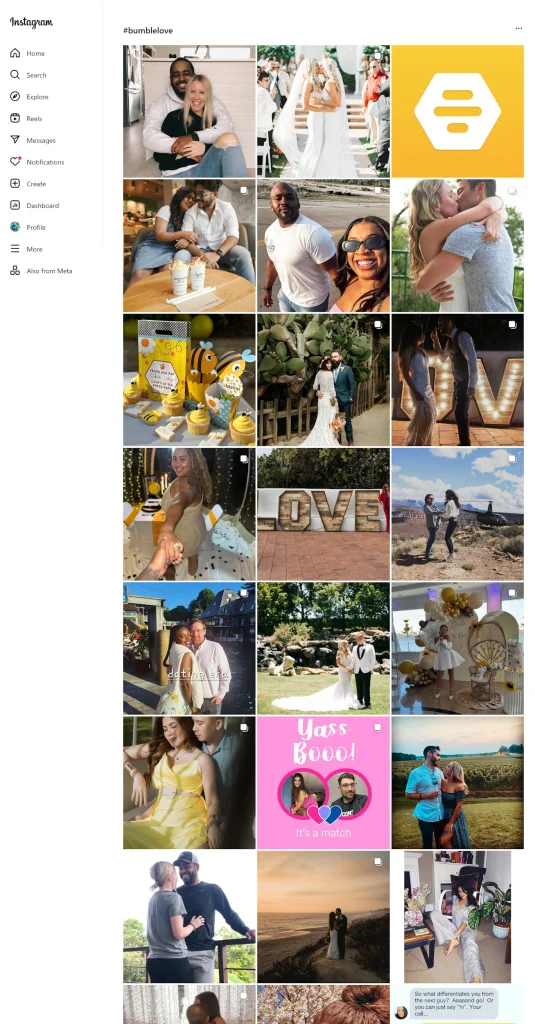
    Instagram

    This space is all about bright, eye-catching visuals paired with motivational quotes, fun dating myth busts, and user-generated content. It’s a feed designed to inspire and foster a sense of belonging—just right for Bumble’s uplifting vibe.

    Bumble - Instagram

    TikTok

    Here, the content is short, emotionally resonant, and often refreshingly candid. It connects with Gen Z by embracing vulnerability, humor, and empowerment, all wrapped up in the latest trending formats.

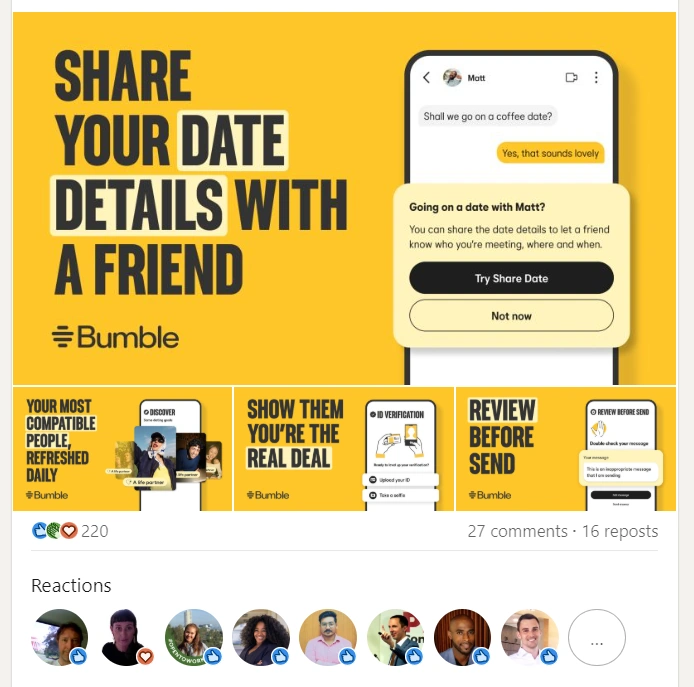
    LinkedIn

    When it comes to Bumble Bizz, the tone takes on a more polished, professional flair. Picture career advice, confidence-boosting tips, and inspiring stories of women smashing through glass ceilings—while still keeping Bumble’s signature voice intact.

    Bumble - Linkedin

    IRL Campaigns

    From eye-catching “Make the First Move” billboards in bustling cities to engaging Bumble Hive pop-ups, the brand’s real-world presence is just as bold as its online persona—driving home the same essential message.

    Bumble IRL

    What was the secret sauce behind it all? Total message discipline. Every single touchpoint, whether it was ads, push notifications, or interviews with Whitney Wolfe Herd, it all echoed the same emotional vibe — you’re in control here. You’re the one who makes the first move.

    While many brands tend to water down their message across different platforms, Bumble really nailed it.

    Mission Marketing > Product Marketing

    While competitors obsessed over chat features and swipe mechanics, Bumble focused on something harder to replicate — a worldview.

    Their messaging wasn’t led by features. It was led by values—specifically, consent, safety, and equality.

    These weren’t abstract ideals, they were embedded in the product experience and expressed through every touchpoint.

    This wasn’t marketing. It was positioning with purpose.

    Values-First Messaging

    While many dating apps focused on algorithms and flashy updates, Bumble took a different route:

    • Consent: “No means no” wasn’t just a catchphrase—it was built right into the app’s design.
    • Safety: With a woman-led approach, Bumble aimed to cut down on harassment and ease anxiety.
    • Equality: It challenged traditional gender roles, not only in dating but also in networking and friendships.

    This values-first strategy fostered a real emotional connection.

    Long-Term Campaigns That Moved

    Bumble didn’t just follow trends, it sparked movements.

    • #MakeTheFirstMove transformed from a simple dating prompt into a powerful platform for empowerment, touching on everything from careers to friendships and personal growth.
    • “Date, Meet, Network Better” brought the app’s ecosystem together without ever feeling like just another product expansion. It was more like a mission that kept growing. These weren’t just fleeting campaigns, they were vibrant brand stories—crafted to evolve alongside cultural shifts.

    Social Impact as Brand Strategy

    Bumble blurred the line between brand and activism

    • Legislative advocacy: Actively supporting laws against digital sexual harassment and non-consensual image sharing.
    • Strategic partnerships: Aligning with organizations advancing women’s safety and representation.
    • Public stances: Speaking out on issues of workplace equity, digital rights, and more—even at the risk of polarizing their audience.

    This wasn’t performative CSR. It was strategic alignment that deepened trust and cultural relevance.

    The Compound Effect

    While traditional product marketing often fizzles out without ongoing investment, mission-driven marketing has a way of building momentum.

    Every cultural event or news story related to gender equality gives Bumble another chance to stay in the spotlight—without needing to shell out cash for visibility.

    This approach also attracted media attention. Journalists, influencers, and users were drawn to a brand that had a voice and a purpose. That’s how Bumble created a brand advantage that no product feature could ever replicate.

    The Bumble Content Ecosystem

    Bumble didn’t just launch campaigns, it created a whole content ecosystem. This is a dynamic, self-sustaining system where digital, physical, and user-generated content all work together to foster emotional connections, encourage repeat interactions, and scale engagement effectively.

    Whether you stumbled upon Bumble at a Hive pop-up, heard a friend’s dating tale on Instagram, or received a push notification in the app, the vibe was always the same: empowering, bold, and tailored just for you.

    1. IRL Meets Digital: The Hive Strategy

    Bumble made real-world brand moments central to its strategy. The Bumble Hive events weren’t just pop-ups, they were multi-day experiences in major cities that hosted career workshops, networking mixers, and wellness events, all designed to embody Bumble’s values offline.

    Each Hive became a content engine, generating:

    • Professional photo/video assets for campaigns
    • UGC from attendees
    • Local media buzz and influencer collabs
    • Educational clips and community testimonials

    By designing for geographic localization, Bumble made its brand feel hyper-relevant. A Hive in LA looked different than one in Austin—but all reinforced the same mission.

    2. Community-Driven Content at Scale

    Instead of just relying on their internal team for content, Bumble tapped into the creativity of its users, turning them into a powerful content engine.

    • User Story Campaigns: Real people sharing their genuine successes—whether it’s about love, building networks, or new friendships.
    • City-Specific Narratives: By showcasing how Bumble influenced local experiences, users could see themselves reflected in the product.
    • Crowdsourced Q&A: Questions submitted by users transformed into dating tips, career advice, and educational content that enhanced the community’s value.

    This wasn’t merely about engagement, it was about emotional connection. Users became passionate advocates because they recognized their own stories in the brand.

    The Branded Content Engine

    Bumble functioned like a comprehensive media powerhouse

    • Educational Videos: They tackled real-life issues such as dating anxiety, networking strategies, and building friendships—content crafted for genuine experiences, not just for onboarding new users.
    • Influencer Collaborations: These partnerships were built on long-term relationships rather than fleeting sponsorships. The creators truly embodied the brand, rather than just promoting it.
    • In-App Content Loops: They seamlessly integrated helpful nudges like dating advice, conversation starters, and empowering messages right into the user experience, reinforcing brand values with every swipe.

    This was content that served a purpose, not just filler in the user experience.

    The Ecosystem Effect

    This ecosystem didn’t just expand reach—it created a real connection.

    Every element supported the others: In-person events fueled digital campaigns.

    User stories sparked social sharing and built community trust. In-app content boosted engagement and kept users coming back. Branded videos enhanced understanding and deepened emotional ties.

    The outcome? A brand experience that seamlessly followed users across different platforms, feeling consistent, empowering, and intentional at every turn.

    By developing a cohesive content system rather than relying on separate channels, Bumble not only safeguarded its brand for the future but also sparked a movement—not just a product.

    Wrap Up

    Bumble didn’t come out on top just by having the best algorithm or focusing solely on conversions. They succeeded by creating a brand that represented something greater—and then embedding that belief into every aspect of their product, content, and community.

    Their approach wasn’t just about performance marketing, it was all about performance storytelling. From the “women first” feature to real-life Hive pop-ups, and from mission-driven campaigns to engaging in-app content loops, Bumble infused emotional connection into every interaction with users.

    This is the playbook for today: align your values with your actions, create content systems rather than one-off pieces, and accelerate cultural relevance faster than you can write code.

    For any brand trying to stand out in crowded markets, Bumble serves as a masterclass in transforming content into community—and turning that community into a competitive edge.

    Want to build a brand with content that compounds like Bumble’s?
    Start with a BlueKona content performance audit — and see which stories are worth scaling.

  • How Canva Built an Unbreakable Content Moat?

    How Canva Built an Unbreakable Content Moat?

    When someone searches for “how to make a resume,” Canva doesn’t just rank, it leads.

    Their blog post explains the process. The embedded YouTube video demonstrates it. Their templates allow users to start right away. By the time someone finishes reading, they are already using Canva’s o build their resume and are halfway to becoming paying customers.

    That’s not just content. That’s a smart strategy.

    While most SaaS companies spread their efforts thin—blogs in one place, templates in another, tutorials lost on YouTube, Canva created an interconnected, education-focused system. Each type of content works together to attract visitors, teach results, and encourage product usage.

    The outcome? A strong content barrier that competitors cannot surpass. They would need to rebuild the entire system.

    In this blog, we’ll reverse-engineer how Canva created this stronghold. From their SEO blog structure to their YouTube-blog combinations that succeed in search engines.

    We will also discuss how to create a similar barrier in your niche, even if you’re starting from scratch.

    Let’s break it down.They tapped into a fundamental truth

    The Education-First Strategy

    Most design tools focus on their features, but Canva took a different approach by emphasizing outcomes.

    They tapped into a fundamental truth. The issue with design isn’t about the tools itself, it’s about the knowledge gap.

    You don’t search, “designing tool with great gradient controls.” Instead, you search, “I want to create a resume that looks good”. This understanding influenced their entire content strategy.

    Rather than starting with what their product can do, Canva built a system that teaches you exactly what you want to achieve and then helps you get there, all within the Canva platform.

    When it comes to SaaS onboarding, most focus on just the interface. But Canva? They’re all about the outcomes.

    They realized that most people avoid design not because they can’t do it, but because they don’t believe they can. Every tutorial, every blog post, and every Design School guide aims to reduce fear, simplify the process, and show users, “you can do this.”

    Quotes like “It’s easier than you think to design a flyer from scratch” build confidence, and it works.

    It converts unsure visitors into enthusiastic first-time creators

    The Educational Architecture

    Canva’s system operates on three levels:

    1. Foundation: Design principles, color theory, typography, general literacy
    2. Application: Specific tasks, resumes, flyers, logos
    3. Advanced: Industry use cases, real estate flyers, school newsletters, business decks

    Each layer connects to the next. Each one develops skills and creates reliance on the product.

    This is why Canva doesn’t need to sell hard. Their system guides users into the product. Templates are directly integrated into tutorials. Calls to action don’t interrupt the content. Infact, they are part of the content.

    It’s learn, try, succeed, all within a closed loop.

    Why It Works?

    This strategy solves three problems at once

    • Discovery: Educational content ranks for long-tail, high-intent queries like “how to make a poster” or “resume layout for students.”
    • Conversion: By the end of the tutorial, users aren’t just informed. They’re already halfway done with their design.
    • Retention: Success builds confidence. Confidence drives return usage. Each completed project increases the odds of the next.

    This is how Canva built a growth engine by making “learn” and “use” the same step.

    While most brands see education as an afterthought, Canva turned it into their competitive advantage.

    Canva’s SEO Flywheel

    Canva doesn’t see SEO as just a way to get traffic. They see it as an ecosystem, where each page, template, and tutorial supports the others.

    At the core of this approach is a self-sustaining flywheel.

    Educational content drives template usage. Template success generates user data. Data fuels smarter content creation. Everything is indexed, linked together, and optimized for intent.

    canva content flywheel - how it works

    The outcome? It was not just about search rankings. It’s about achieving lasting organic strength and creating an SEO advantage that competitors can’t easily replicate.

    1. Targeting Genuine Design Intent, Not Just Popular Keywords

    While most SaaS tools compete for broad terms like “best design software,” Canva explored the complete range of real user needs

    • Tactical outcomes like “How to make a resume,” “How to design a flyer.”
    • Contextual use cases such as “Wedding invitation design,” “Restaurant menu templates.”
    • Skill development content like, “Typography basics,” “Color theory for beginners.”
    • Industry verticals, for instance “Real estate flyer design,” “School newsletter templates.”

    This detailed targeting reaches users at every stage of their design journey, from total beginners to niche professionals. It connects them directly to Canva’s template ecosystem.

    Each keyword cluster serves as a high-conversion gateway into the product.

    2. Internal Linking

    This is where Canva really stands out from the crowd.

    Their internal linking is not random. It’s a carefully crafted funnel that takes you to the bottom even before you realize it

    • Specific template categories
    • Design tutorials
    • Product feature explanations

    Let’s see how this works in practice. The page how to make a resume for your first job, links to entry-level resume templates with the CTA “Choose a free template to get started”. At the end of this page, you see other follow-up guides like “How to write a cover letter”

    This internal structure boosts:

    • SEO performance (through distributed link equity and crawlability)
    • Engagement metrics (lower bounce rates and higher time on site)
    • Conversions (fewer obstacles between intent and action)

    It’s all about shaping the user journey as an SEO strategy. And it really scales.

    3. Content Clustering for Authority and Conversion

    Canva builds topical clusters instead of standalone articles. Their resume hub includes

    • Resume writing fundamentals
    • Layout tips and formatting guides
    • Industry-specific resume advice
    • Cover letter writing tutorials
    • LinkedIn profile optimization

    Each piece supports the others and links across the cluster. And the benefits are clear:

    • Google recognizes the thorough coverage of topics, leading to better rankings
    • Users can easily explore related subjects, resulting in longer session times
    • More opportunities for calls to action and template placements, boosting conversions

    It’s a perfect blend of SEO, user experience, and funnel strategy.

    Why Competitors Can’t Copy This?

    Sure, anyone can whip up a blog post on “how to make a resume.” But let’s be real,it’s almost impossible to create a flywheel as effective as Canva’s.

    To pull that off, you’d need:

    • In-depth keyword research and a solid understanding of user intent
    • Content operations that can scale while maintaining editorial precision
    • A product that allows for the immediate application of what users learn
    • A smart internal linking and taxonomy strategy
    • A long-term dedication to teaching first and selling second resource library

    Most people won’t go the extra mile. But Canva already has.

    How bluekona Helps You Build a Content Moat Like Canva, Without the Manual Labour

    Canva built its content moat over years of hard work involving writers, SEOs, video editors, template designers, and endless revisions.

    With bluekona, you can achieve the same level of success, minus the massive team.

    It automates the key elements of Canva’s strategy such as, repurposing content, distributing it across different formats, internal linking, and tracking performance.

    What took Canva years to develop, you can establish in just a few months.

    Transform One Asset into a Multi-Format Ecosystem

    Your top-performing content is already doing its job. bluekona helps it shine everywhere.

    From a single long-form article, you can effortlessly create 10s of content.

    Understand What to Scale and What to Let Go

    Stop playing the guessing game. bluekona’s AI-driven content performance engine shows you:

    • Which content formats lead to the most trial starts, demo requests, or purchases
    • Which topics generate links, shares, and deeper engagement across platforms
    • What content paths actually guide users from learning to converting

    You’ll have a clear roadmap of where to invest your efforts. And most importantly, you’ll know what to cut.

    Build Topical Authority on Autopilot

    bluekona groups your content around themes, similar to Canva’s resume system, and fills in the gaps.

    It identifies internal linking opportunities to share SEO value. It creates hub-and-spoke content calendars to increase domain authority. It suggests long-tail keywords based on actual user behavior and ranking potential.

    What once took SEO strategists weeks to plan, bluekona accomplishes automatically.

    You provide the expertise, and bluekona transforms it into a content system that educates, scales, and compounds

    Want to build a content moat like Canva?

    Start with a free bluekona Content Performance Audit.

    Identify your highest-performing educational assets.
    See where your ecosystem is strongest and where it’s lacking.
    Get a customized roadmap to scale what’s working and improve what’s not.

    Find your best educational content. Turn it into your growth engine.

  • How Duolingo Dominates Social Media Through Intelligent Content Reuse

    How Duolingo Dominates Social Media Through Intelligent Content Reuse

    If you’ve scrolled TikTok or Instagram lately, chances are you’ve met Duo, the green owl.

    Duolingo is everywhere. Reels, tweets, memes, YouTube Shorts — all spun from the same simple ideas, but adapted so cleverly they feel brand new every time.

    It’s tempting to chalk this up to luck. Viral mascots. Funny scripts. But that’s missing the point.

    Duolingo built a repeatable content system that reuses and repurposes content at scale, without losing authenticity. It’s a machine, not magic.

    Today, I’ll break down exactly how this system works, why it’s so effective, and how you can clone it for your own brand — even if you’re working solo and can’t afford a social media team.

    Step Inside Duolingo’s Content Machine

    Let’s pull back the curtain.

    One consistent mascot. One consistent brand tone. Yet they show up on ten different platforms with near-daily content.

    How?

    They’ve mastered low-fi content on purpose. This means quick videos, memes, screenshots, and trends with minimal production — but maximum relatability.

    They don’t reinvent the wheel daily. They repackage ideas instead of creating from scratch.

    That’s the real Duolingo social media strategy — reuse in a way that doesn’t feel reused.

    One Idea to Ten Outputs

    Here’s how their machine works in practice:

    • TikTok? Meme it with the owl dancing.
    • Twitter? Shrink it to a one-liner.
    • Instagram? Break it into a carousel with swipeable slides.
    • YouTube Shorts? Add a voiceover to the same footage.
    • Blog? Expand the concept with examples, then embed all the above.

    Most people come up with an idea and post it once. Duolingo runs it across 5–10 outputs, milking every drop of engagement.

    Duolingo repurposing

    Why This Works

    Let’s break down why Duolingo’s approach absolutely crushes it.

    Familiarity = Trust

    When you see Duo’s chaotic, funny personality appear again and again — even in slightly remixed jokes — you start to trust it. Humans crave patterns. Psychologically, repetition makes a brand feel reliable and memorable.

    Think of it like a catchphrase on a sitcom. If Joey from Friends had said “How you doin’?” only once, no one would remember it. Because he repeated it, it became iconic. Duolingo does the same with its social voice.

    Duolingo Familiarity

    Platform Algorithms Love Volume

    If you post once, even a brilliant piece of content can get buried. Algorithms on TikTok, Instagram, YouTube, and Twitter reward volume + consistency, not just originality.

    Duolingo doesn’t create new ideas daily. They redistribute the same ideas in new formats, which triggers multiple algorithm boosts throughout the week.

    That means one concept can get surfaced to multiple audiences — on different days, on different platforms — rather than burning out in a single post.

    Duolingo Volume

    Speed > Perfection

    In a feed-driven world, perfection is a trap.

    If you spend weeks polishing, you’ll miss the trend window entirely. Duolingo ships content fast, then refines only if it sticks. That lets them ride cultural moments before they fade, with raw, authentic, relatable production.

    Think of their iPhone-shot videos filmed in a corner of the office. That “lo-fi” look is the point — it blends perfectly with the native feed, and avoids the overproduced, stale brand vibe people ignore.

    Duolingo Speed over Perfection

    Team Efficiency

    Here’s the secret to Duolingo’s insane output: they aren’t making more ideas, they’re multiplying them.

    If you build a system to slice, dice, and remix one idea into 5–10 platform-optimized posts, your team avoids burnout while publishing way more.

    That means:

    • Fewer approvals
    • Faster turnaround
    • More consistent brand voice

    And consistency builds familiarity, which brings us full circle to trust — the ultimate brand advantage.

    Duolingo Efficiency

    Bottom line? Duolingo’s reuse machine works because

    • Audiences trust repetition
    • Algorithms reward frequency
    • Lo-fi speed beats polish
    • Your team (or you solo) can stay consistent without burning out

    It’s not luck. It’s a system — and it’s 100% stealable.

    Why Manual Repurposing Fails?

    Let’s get brutally honest, most people try to repurpose manually, and then quit. Here’s why that approach fails — almost every single time.

    Too Many Tools, Too Many Steps

    You’re writing scripts in Google Docs, then jumping over to Canva for graphics, then chopping video in Premiere, then adding captions by hand in yet another tool. It’s a productivity nightmare. Every switch costs you time, attention, and money — and slows your entire workflow to a crawl.

    Rewrites Feel Like Starting Over

    Ask any creator: taking a 1,000-word blog post and rewriting it for Twitter can feel like starting from scratch. Your brain freezes because it has to shift style, tone, and structure. It’s exhausting, and most people procrastinate rather than power through.

    Scaling Dies at the Second Platform

    Sure, you might repurpose manually for Instagram and TikTok. But what happens when you add Twitter? Or YouTube Shorts? Your system crumbles. Manually adapting every post to multiple platforms is simply too heavy to sustain at scale. Burnout is guaranteed.

    Creative Fatigue Sets In

    The final nail in the coffin: you feel like you’re repeating yourself over and over, even though your audience hasn’t even seen most of it yet. That disconnect kills your motivation. Creators burn out because they’re mentally exhausted trying to repackage the same message, worrying it’s stale, when in reality their followers still need to hear it.

    The right system, powered by AI or a structured repurposing framework, takes away all this friction. That’s how you achieve Duolingo-level consistency — without burning through your sanity or your budget.

    Clone the System: Do It Like Duolingo — Without a Team

    Alright, let’s get tactical. You know Duolingo’s secret, reuse with ruthless efficiency.

    Now let’s build your own version — even if you don’t have a team, a video editor, or a mascot suit.

    Here’s how to do it, step by step.

    1. Start with a Core Asset

    Pick one piece of content. That’s it. It could be a blog post, a podcast episode, a YouTube video, or even an old newsletter you wrote months ago. You do not need to start from scratch — in fact, your old content is a goldmine just waiting to be reused.

    2. Drop It into Bluekona AI

    Take that asset and paste it straight into Bluekona. Then, pick the formats you want like a tweet thread, linkedIn post, instagram carousel, tiktok script, email subject lines

    No more blank page syndrome. No more struggling to rewrite the same idea 10 different ways.

    3. Instantly Get Platform-Optimized Outputs

    Bluekona doesn’t just regurgitate plain text — it actually reshapes your message to fit each platform’s native style, tone, length, and best-practice CTAs. That means less tinkering for you, and more shipping content that actually fits where it’s going.

    4. Polish & Post

    Now you’re working with drafts that are already 80% finished, instead of facing a cold, empty doc. Your only job is to add any final personal touches and hit publish.

    duolingo Advice

    Wrap-Up

    Let’s make this crystal clear. Duolingo isn’t magical. They aren’t riding on lucky viral moments. They’re methodical, consistent, and ruthlessly efficient at squeezing every ounce of value out of their ideas.

    You don’t need a green owl costume to pull this off. You just need a system — a repeatable machine that helps you reuse, repackage, and remix what you’ve already created.

    And remember, reusing isn’t cheating. It’s the smartest move you can make. You’ve already put in the hard work once. Why let it fade after a single post?

    Your best ideas deserve more life, more reach, and more engagement — without burning you out.

    Don’t create more. Repurpose better.

    Start with Bluekona AI.

  • How Airbnb Reframed Trust Through Content

    How Airbnb Reframed Trust Through Content

    When Airbnb launched, the idea of sleeping in a stranger’s home felt unsettling to many. Trust was a major hurdle — and one that traditional advertising couldn’t easily overcome.

    Instead of pushing hard with ads, Airbnb took a different route: they used content to change how people felt. Their Neighborhood Guides didn’t talk about beds or bookings. They painted a picture of life in local neighborhoods — the kind of storytelling that made people feel like they belonged.

    Let’s break down how Airbnb used content not just to promote, but to shift perception — and how marketers can learn from that approach

    The Power of Content Marketing

    Let’s be honest — traditional marketing can only take you so far, especially when trust is the barrier.

    That’s where content marketing shines. It isn’t about pushing products, it’s about pulling people in with value, emotion, and story.

    Content marketing works because it builds relationships before transactions. When done right, it educates, inspires, and slowly chips away at hesitation.

    People don’t want to be sold to — they want to feel something, understand something, and connect with a brand’s bigger story.

    For Airbnb, that story wasn’t “rent a room.” It was: belong anywhere. And to make that believable, they had to go beyond features and into feelings — which is exactly what great content marketing does.

    In this case, the content didn’t just support the product. It transformed how people saw the product.

    airbnb story

    Airbnb’s Unique Challenge

    Airbnb wasn’t just launching a product. They were introducing a completely new behavior — staying in a stranger’s home instead of a hotel. And as you can imagine, that raised a lot of eyebrows.

    The idea sounded adventurous to some… and downright risky to others. Would the place be clean? Safe? Would the host be normal? These weren’t small concerns — they were major blockers to trust.

    Airbnb knew it had to shift the narrative. This wasn’t just about lodging; it was about belonging, discovery, and local connection. But how do you reframe a concept that feels unfamiliar — maybe even uncomfortable — to so many people?

    That’s where the Neighborhood Guides came in. Instead of focusing on the transaction (a bed, a price, a location), they focused on the experience — the smells, the sounds, the spirit of each place.

    By making the unfamiliar feel familiar, Airbnb started breaking down that fear. And they did it not with ads — but with content.

    Founding and Vision

    Airbnb was founded in 2008 by Brian Chesky, Joe Gebbia, and Nathan Blecharczyk. Like many startups, it began with a problem: they couldn’t afford their San Francisco rent. So, they decided to rent out air mattresses in their apartment to conference attendees who couldn’t find hotel rooms — and called it “AirBed & Breakfast.”

    From that quirky experiment came a powerful vision

    To create a world where anyone can belong anywhere.

    That idea became Airbnb’s north star. The goal wasn’t just to offer cheaper stays, but to create a sense of belonging for travelers and hosts alike.

    Early Market Positioning

    In the beginning, Airbnb’s appeal was mostly about price and uniqueness. It wasn’t your standard hotel — and that was the point. You could stay in a treehouse, a loft, or a cozy backroom, often for less money.

    But with that uniqueness came skepticism. Could travelers really trust a stranger’s home? Would the place be clean? Safe? As charming as the photos?

    This trust gap — the hesitation many people felt — was Airbnb’s biggest obstacle in the early years. And it’s exactly the kind of challenge content marketing is built to solve.

    The Neighborhood Guides weren’t just a creative side project — they were a strategic response to this trust problem. And in the next sections, we’ll explore how they helped Airbnb move from a fringe idea to a mainstream travel brand.

    Brian Chesky Airbnb Co-Founder

    The Challenge

    Airbnb wasn’t just trying to break into the travel market — it was trying to change the way people thought about travel entirely. And that meant facing some very real, very human obstacles head-on.

    Fear of Staying with Strangers

    At its core, Airbnb’s offering asked something big from users: trust. Trust that a stranger’s home would be safe. That it would be clean. That the photos were real. And that nothing unexpected — or uncomfortable — would happen.

    For many people, the idea of staying in someone else’s home triggered a basic fear. We’re wired to be cautious in unfamiliar environments, and Airbnb was offering… well, unfamiliarity by design.

    So even though the price might be right, and the photos might look amazing, that nagging voice inside many customers whispered “But what if it’s not what it seems?”

    Airbnb needed to turn that voice down.

    Competing with Established Hospitality

    At the same time, Airbnb wasn’t just fighting fear — it was competing with giants. Traditional hotels had decades of brand trust, polished marketing, and consistent experiences. You knew what you were getting with a Hilton or Marriott.

    Airbnb couldn’t win with glossy ads or deep pockets. What it needed was a different approach — one that made the experience feel richer, more meaningful, and more trustworthy than a cookie-cutter hotel room.

    And that’s where content came in.

    By shifting the focus from just “where you sleep” to “how you experience the city,” Airbnb had a chance to tell a better story — one that made staying in a stranger’s home feel less risky and more real.

    That story came to life through the Neighborhood Guides, and they became one of Airbnb’s most effective content plays.

    The Neighborhood Guides Strategy

    To shift perception, Airbnb didn’t just need content — it needed content that made people feel something. That’s where the Neighborhood Guides came in.

    How Airbnb’s Neighborhood Guides Were Created

    When Airbnb set out to build the Neighborhood Guides, they didn’t treat it like a blog post or a quick content piece. They approached it like crafting a travel magazine — polished, personal, and visually rich.

    Here’s how they pulled it off

    1. Collaborating with Local Experts

    Airbnb partnered with people who knew the neighborhoods best — locals, hosts, photographers, and even city insiders. They gathered real, lived-in knowledge about what makes each area special:

    • The best coffee shop for a quiet morning
    • That hole-in-the-wall restaurant locals love
    • A park where kids play on Sunday afternoons

    This added depth and authenticity that couldn’t be faked.

    2. Professional Visual Design

    Joe Gebbia Airbnb Co-Founder on Neighborhood Guides

    The Guides weren’t just text-heavy pages. Airbnb invested in high-quality photography and sleek layouts to make the content feel like an experience.

    • Full-width images of street corners, markets, murals
    • Warm lighting and candid shots — nothing staged or stock
    • Easy-to-browse maps and callouts to hotspots

    The goal? Make people see themselves there.

    3. Storytelling over Selling

    Instead of promoting listings, the Guides told stories about the neighborhoods. They leaned into mood and personality. A neighborhood wasn’t just “close to downtown” — it was “creative, bohemian, and full of independent bookstores.” That kind of storytelling helped users emotionally connect with places they hadn’t been yet.

    4. Integrated into the Booking Experience

    These guides weren’t buried in a blog. They were integrated into Airbnb’s core platform — right when a traveler was searching for a place to stay. That way, discovery and trust-building happened at the exact moment of decision-making.

    By combining insider knowledge, gorgeous visuals, and thoughtful storytelling, Airbnb’s Neighborhood Guides became more than content — they became a trust-building engine.

    Results and Impact

    The Neighborhood Guides weren’t just beautifully made—they delivered real business results by transforming how people viewed Airbnb and the idea of home sharing.

    Shifting Consumer Perception

    For many first-time users, the idea of staying in a stranger’s home felt risky. The Neighborhood Guides helped rewrite that narrative.

    By showing travelers the real character of local neighborhoods—complete with cozy cafés, murals, parks, and hidden gems—Airbnb shifted the focus from uncertainty to experience. Instead of asking “Is this safe?”, travelers began asking “Which neighborhood fits my vibe?”

    While exact numbers vary, this content move coincided with a sharp rise in organic traffic, increased time on site, and higher conversion rates on listings featured within guides. It turned a leap of faith into an informed, emotional decision.

    Brand Differentiation

    The Guides did more than ease concerns—they carved out a unique space for Airbnb. While hotels emphasized comfort and reliability, Airbnb leaned into lifestyle, discovery, and local immersion.

    This strategy helped Airbnb stand apart not just from traditional hospitality, but also from direct competitors like Vrbo. While others were selling a place to stay, Airbnb was selling a way to live.

    The Guides reinforced Airbnb’s identity as more than a booking platform—they were a brand rooted in belonging, not just accommodation.

    Community Engagement

    One of the most lasting impacts of the Neighborhood Guides was the ripple effect it had within communities.

    Locals, hosts, and even guests began sharing tips, stories, and neighborhood gems—contributing to a growing ecosystem of user-generated content. The Guides created a space for collaboration, where people could co-author the narrative of their cities.

    This wasn’t just top-down content. It was content that sparked participation, pride, and real community ownership—making Airbnb feel like a movement, not just a marketplace.

    Challenges and Lessons Learned

    Even a great content idea needs fine-tuning. As effective as Airbnb’s Neighborhood Guides were, they weren’t flawless from the start. Like any ambitious content initiative, there were bumps along the way — and valuable lessons for marketers trying to replicate that kind of impact.

    Host Content Quality Issues

    When Airbnb encouraged hosts and locals to contribute content, the idea was solid: tap into grassroots knowledge and community stories. But in the early days, this led to uneven quality. Some submissions lacked the polish, storytelling, or visual standards set by Airbnb’s editorial team.

    To fix this, Airbnb had to shift gears — creating editorial guidelines, curating contributions more tightly, and investing in professional oversight. The takeaway? Community-generated content is powerful, but it still needs direction to reflect your brand.

    Time to Build Trust

    Changing perceptions doesn’t happen overnight — especially when you’re asking people to do something unfamiliar, like staying in a stranger’s home. The Neighborhood Guides didn’t deliver instant results, but over time, they worked.

    Airbnb stuck with the strategy, kept investing in quality, and let the content do its job. It’s a reminder that building trust through content takes time, consistency, and patience — but it pays off.

    Key Takeaways for Marketers

    If you’re thinking of using content to shift perceptions or tell a bigger brand story, here’s what Airbnb’s experience makes clear:

    • Use lifestyle content to reframe how people see your product.
    • Invest in high-quality, authentic visuals and human storytelling.
    • Engage real communities — but provide structure to guide them.
    • Trust-building content takes time. Keep showing up, and don’t rush it.

    Wrap Up

    Airbnb didn’t just build a booking platform — they reshaped how people think about travel, trust, and what it means to “belong anywhere.”

    Their Neighborhood Guides played a pivotal role in that transformation. What started as a risky proposition — staying in a stranger’s home — became something aspirational, thanks to smart, story-driven content.

    By focusing on local culture, visual storytelling, and emotional connection, Airbnb turned neighborhoods into narratives and listings into lived-in experiences. It’s a powerful reminder that the right content can do more than inform — it can build trust, shift perception, and spark real behavior change.

    For marketers, the Neighborhood Guides are more than a case study — they’re a blueprint. If you’re trying to position your brand differently, connect with your audience on a deeper level, or make your product feel more human — content like this is where to start.

    Inspired? Take a look at how your brand is showing up through content. And if you’re ready to turn content into a growth engine, the team at BlueKona can help you build something just as meaningful.

  • How HubSpot Revolutionized Marketing with Inbound Strategies

    How HubSpot Revolutionized Marketing with Inbound Strategies

    In a digital world overflowing with ads, pop-ups, and cold outreach, one company rewrote the rules of marketing—and turned content into a growth engine.

    HubSpot didn’t just adopt content marketing — they helped define it, championing a new approach that prioritized value over volume, education over interruption.

    Inbound marketing—a strategy built on attracting customers through helpful, relevant content rather than chasing them with traditional ads.

    Let’s explore how HubSpot’s bold bet on inbound transformed them from a startup into a marketing powerhouse, setting the gold standard for content-driven growth.

    What is Content Marketing?

    Content marketing is more than just publishing blog posts—it’s a strategic approach to creating and distributing valuable, relevant, and consistent content to attract and retain a clearly defined audience.

    Instead of pushing products, it pulls people in with information they actually want.

    In today’s digital landscape, where attention is scarce and trust is earned, content marketing has become essential. It builds credibility, nurtures relationships, and helps brands stay top-of-mind long before a purchase decision is made.

    For modern marketers, it’s not just a tactic—it’s a foundation.

    The Rise of Inbound Marketing

    As the internet reshaped how people discover and engage with brands, a shift was brewing. Traditional outbound tactics like cold calls, display ads, email blasts—were losing their edge.

    Audiences had more control, more choices, and higher expectations.

    Enter inbound marketing: a customer-centric methodology focused on attracting people through helpful, relevant content instead of interruptive messages.

    Rather than chasing customers, inbound lets them come to you—when they’re ready, and on their terms.

    HubSpot didn’t just embrace this idea—they built a movement around it. By positioning themselves as the champions of inbound marketing, they not only defined a new way of thinking but also created a category they could lead.

    This laid the groundwork for their rise as one of the most influential voices in modern marketing.

    Background on HubSpot

    To understand HubSpot’s impact on the marketing world, it’s essential to start at the beginning—with a bold vision, a timely insight, and two founders who believed the old way of marketing was broken.

    Founding and Early Days

    HubSpot was founded in 2006 by Brian Halligan and Dharmesh Shah, who met at MIT. The duo observed a fundamental shift in consumer behavior — people were tuning out traditional marketing and seeking out their own information before making decisions.

    Halligan and Shah saw an opportunity. What if businesses could stop interrupting and start attracting? Their idea was simple but revolutionary. This helped companies grow by aligning their marketing with how people actually want to buy.

    Initial Product Offering

    HubSpot’s first product was a marketing automation platform designed to give small and mid-sized businesses the same tools larger enterprises used— but easier, more affordable, and focused on content-led growth.

    From the beginning, the product supported a new philosophy: attract, convert, close, and delight customers with useful content and personalized experiences. It wasn’t just software—it was a new system of thinking.

    Hubspot Story

    The Challenge

    Despite a promising idea and a clear market need, HubSpot’s path to success wasn’t without hurdles. As a young startup entering a crowded space dominated by giants, the company faced significant challenges that shaped its bold content-first strategy.

    Competing with Salesforce

    At the time, Salesforce was the undisputed leader in CRM and marketing software. With deep pockets and established brand recognition, Salesforce set the standard—and made it incredibly hard for newcomers to stand out.

    HubSpot couldn’t outspend Salesforce on advertising or salesforce manpower. Instead, they needed to outthink them—by becoming more relevant, more helpful, and more discoverable to their ideal customer.

    Limited Resources as a Startup

    Like many startups, HubSpot operated on tight budgets and lean teams. This meant traditional outbound tactics—TV ads, trade shows, cold outreach—were out of the question.

    To grow efficiently, they needed a strategy that was:

    • Cost-effective
    • Scalable over time
    • Aligned with the way modern consumers buy

    The solution? Inbound marketing. A playbook that didn’t rely on paid reach—but on building long-term trust through content.

    The Inbound Marketing Strategy

    Faced with larger competitors and limited resources, HubSpot didn’t just adopt inbound marketing — they defined it. The team built a strategy rooted in one powerful idea: instead of pushing products, pull people in with helpful, relevant content.

    Defining Inbound Marketing

    HubSpot coined inbound marketing as a methodology focused on:

    Inbound Marketing Brian Halligan Co-founder of HubSpot

    Rather than interrupting with ads, inbound marketers create content that:

    • Solves problems
    • Answers questions
    • Builds trust over time

    It’s marketing that feels more like a service than a pitch.

    Why Inbound Marketing?

    Inbound wasn’t just a buzzword—it was a strategic answer to the real challenges HubSpot faced:

    • No massive ad budgets? Inbound was cheaper and compounding.
    • Low brand awareness? Inbound built authority and SEO.
    • Skeptical buyers? Inbound earned trust through education.

    Inbound gave HubSpot a way to own its visibility without renting attention through ads.

    Attracting Customers

    To draw in the right audience, HubSpot leaned heavily on:

    • Search engine optimization (SEO)
    • Blog content tailored to marketers and small businesses
    • Social media to distribute and amplify reach

    Every piece of content acted as a magnet, bringing prospects into their world.

    Engaging and Delighting Customers

    Once in the funnel, HubSpot used email nurturing, gated assets (like ebooks and templates), and marketing automation to:

    • Educate leads
    • Guide them through their journey
    • Turn them into loyal users and evangelists

    It wasn’t just about leads—it was about building lasting relationships.

    Execution and Content Creation

    A great strategy means nothing without consistent, high-quality execution — and HubSpot nailed it. They turned their inbound vision into reality by building a content engine that delivered massive value, day after day.

    Types of Content Produced

    HubSpot didn’t rely on just one format. They created a library of resources that met prospects at every stage of the funnel.

    Blogs

    Their blog became the heartbeat of the strategy:

    • Covered topics marketers actively searched for (SEO gold)
    • Delivered actionable insights for free
    • Published frequently and consistently

    The result? HubSpot ranked for thousands of high-intent keywords and became a go-to source in the industry.

    Ebooks

    Deep dives turned blog visitors into leads:

    • Gated behind simple forms
    • Focused on specific challenges (like lead gen or CRM)
    • Positioned HubSpot as both helpful and authoritative

    These weren’t fluff — they were full-on guides, often downloaded and shared across teams.

    Templates

    HubSpot understood the power of tools over tips:

    • Marketing plans
    • Editorial calendars
    • Email copy swipe files

    By giving marketers resources they could actually use, HubSpot encouraged downloads, sharing, and bookmarking.

    Webinars

    Webinars added a real-time, human touch:

    • Live education with Q&A
    • Guest experts and internal specialists
    • Lead nurturing through teaching

    They weren’t just selling — they were helping people do their jobs better.

    Distribution Channels

    Creating content was only half the battle — HubSpot built smart distribution systems to ensure their content reached the right people:

    • Website as a central content hub
    • Email for nurturing and announcements
    • Social media for organic reach and engagement
    • Partner collaborations for extended visibility

    Their strategy wasn’t just “write it and they will come.” It was: write it, share it everywhere, and optimize constantly.

    Consistency and Quality Control

    HubSpot treated content like a product:

    • Set a publishing cadence (daily blog posts, monthly webinars, etc.)
    • Hired a content team to maintain editorial standards
    • Used data to refine what worked (and ditch what didn’t)

    This wasn’t random content creation. It was a well-oiled system built for scale.

    Results and Impact

    HubSpot’s inbound marketing strategy didn’t just look good on paper — it delivered real, measurable results that transformed the company from a scrappy startup into an industry-defining powerhouse. SEO Dominance

    Thanks to consistent, SEO-optimized content, HubSpot quickly rose through the search rankings:

    • Dominated page 1 for high-volume keywords like “how to generate leads” or “email marketing strategies”
    • Became a top destination for marketers seeking advice, tools, and education
    • Massive organic traffic growth — driving leads without buying ads

    By owning marketing-related search intent, HubSpot positioned itself as the trusted authority.

    Community and Movement Building

    HubSpot didn’t just market — it built a movement around inbound:

    • Launched the “Inbound” philosophy, turning it into a category of its own
    • Created the INBOUND conference, drawing tens of thousands of marketers every year
    • Fostered a global community of advocates, educators, and certified professionals

    Inbound wasn’t just a strategy — it became a shared identity among modern marketers.

    Business Growth Metrics

    The numbers speak for themselves:

    • Scaled from startup to IPO in 2014
    • Millions of monthly blog readers and thousands of leads generated from content
    • Revenue grew from $255M in 2016 to over $2.6B in 2024
    • Became a market leader in CRM, marketing automation, and customer platforms

    All this, largely powered by content — not just ads.

    Challenges and Lessons Learned

    HubSpot’s journey with inbound marketing wasn’t without bumps. Their success was built on experimentation, iteration, and long-term commitment. Here’s what they learned along the way:

    Early Content Quality Issues

    At the start, HubSpot focused on volume. The result?

    • Inconsistent quality: Some posts were thin or redundant.
    • SEO wins didn’t always convert to engaged users.

    They quickly pivoted to emphasize value and depth, setting editorial standards and investing in content expertise.

    Lesson: It’s not enough to publish often — quality builds trust.

    Time to Maturity

    Inbound wasn’t a quick fix:

    • It took months, even years to see compounding growth.
    • Leadership had to stay patient and keep the team focused on long-term value.

    But over time, the flywheel effect kicked in — content began driving exponential returns.

    Lesson: Organic marketing rewards consistency, not instant gratification.

    Key Takeaways for Marketers

    Here’s what marketers can steal from HubSpot’s playbook:

    • Invent or define a category (like “inbound marketing”) to own the conversation.
    • Be relentlessly helpful — focus on utility, not selling.
    • Publish consistently and build trust over time.
    • Leverage SEO and lead capture to turn traffic into revenue.
    • Build a community, not just an audience.

    Wrap Up

    HubSpot didn’t win by outspending competitors — they out-taught them.

    HubSpot’s rise from startup to SaaS powerhouse didn’t hinge on a massive ad budget — it came from mastering the long game of content.

    By pioneering inbound marketing, they not only attracted millions of users but also reshaped how brands think about growth. Their strategy proved that with the right mix of education, value, and consistency, companies can build momentum that doesn’t stop when ad spend does.

    For modern marketers, the takeaway is clear: if you want lasting impact, stop renting attention and start building your own. Whether you’re a solopreneur or scaling a team, content is still your most scalable asset.