Tag: SEO

  • LinkedIn Is Becoming a Search Engine. Most Brands Still Treat It Like a Feed

    LinkedIn Is Becoming a Search Engine. Most Brands Still Treat It Like a Feed

    There’s a quiet shift happening on LinkedIn that most marketing teams haven’t caught on to yet.

    LinkedIn has been slowly changing what it rewards. It now pushes long-form posts, original thinking, structured content, and real expertise. The platform is nudging people away from quick engagement plays and toward content that actually teaches something.

    This is not a random design decision. LinkedIn is building toward becoming a place where people search for knowledge, not just scroll through updates.

    And that changes everything about how you should be showing up there.

    The problem with chasing likes

    Most companies use LinkedIn like a broadcasting channel. Post the blog recap. Share the team photo. Drop a motivational quote on Monday morning. Watch the likes come in. Move on.

    That approach feels productive, but it builds nothing over time.

    A post that gets 500 likes today will be completely invisible by Thursday. The engagement was real, but it left no trace. Nobody finds it a month later. It does not help someone discover your brand when they search for a topic you cover.

    Searchable content works differently. A well-written article or a post that actually explains something useful can keep pulling in new readers for months. People find it through search. AI tools surface it when someone asks a related question. It keeps working long after you stopped thinking about it.

    That is the difference between content that performs and content that compounds.

    LinkedIn content is now an SEO asset

    Here is something most brands have not fully accepted yet: your LinkedIn posts are being indexed by Google.

    LinkedIn articles especially. When someone searches for a topic, LinkedIn content shows up in results. And as AI-powered search tools get better at pulling in expert opinions and structured knowledge, the brands that have built a consistent body of work on LinkedIn will have a real advantage.

    Think about what people actually search for on LinkedIn. They search for founders by name. They look up companies before a sales call. They search for opinions on a specific topic. They look for people who seem to know a lot about a problem they are trying to solve.

    If your content does not show up in those searches, you are invisible at exactly the moment someone is looking for you.

    What actually works in this new environment

    Not all LinkedIn content is created equal when it comes to discoverability. Here is what tends to perform well over time.

    Original perspective. Repeating what everyone else is saying does nothing for your authority. When you share a genuine point of view, especially one that challenges a common assumption, people remember it.

    Clear structure. Posts that are easy to skim and read on a phone tend to reach more people. Short paragraphs, clear breaks, a strong opening line.

    Language people actually search for. Write the way someone would type a question into a search bar. What would they ask? Answer that.

    Real depth. Insight beats inspiration every time. One well-explained idea will do more for your reputation than ten motivational posts.

    Content that stays useful. A post explaining how to think about a specific business problem will still be relevant a year from now. A post about a trending news story will not.

    What most brands are still doing wrong

    The habits that used to work on LinkedIn are now working against you if you are trying to build long-term discoverability.

    Engagement bait gets likes but no recall. When someone sees your brand name three months later, they will not remember what you said.

    Reposting your blog does not build authority. It just moves existing content to a different channel without adding anything.

    Chasing trends that have nothing to do with your expertise makes you look like you are just filling a content calendar.

    Generic corporate tone makes every post forgettable. People do not connect with a brand voice that sounds like it was written by a committee.

    The bigger shift in how you need to think about content

    The brands that are winning on LinkedIn right now are not posting more. They are posting with a clear point of view, consistently, on a specific set of topics.

    Over time, they become the brand you think of when a certain topic comes up. That kind of recall is worth far more than any single viral post.

    But most companies do not have a system for figuring out which topics are building that recognition, which posts people keep coming back to, or which ideas deserve to be expanded into something bigger. They post, check the engagement numbers, and move on.

    That is where most of the value gets left on the table.

    What this means for your LinkedIn strategy

    Stop thinking about LinkedIn as a place to distribute content. Start thinking about it as a place to build a searchable body of knowledge about your area of expertise.

    That means publishing content with some depth to it. It means writing in a way that answers real questions. It means staying consistent on a few topics long enough that people start to associate your brand with those ideas.

    It also means paying attention to what is actually working, not just what is getting likes. Which posts bring in new followers weeks after they were published? Which topics keep coming up in comments? Which content seems to spark real conversations rather than just passive scrolling?

    The brands that figure that out will have a significant advantage as LinkedIn continues to shift from a social feed into something closer to a professional knowledge engine.

    The ones still chasing likes will keep wondering why their content never seems to build any momentum.

  • How to Design Your Social Search Strategy with Repurposing Workflows

    How to Design Your Social Search Strategy with Repurposing Workflows

    Here’s a reality check: Google is no longer the starting point for product discovery.

    An entire generation has shifted their search behavior to TikTok, YouTube, and Instagram. They’re not typing “best running shoes” into Google—they’re scrolling TikTok reviews, watching YouTube unboxings, and swiping through Instagram carousels. For Gen Z, social platforms are the search engines.

    But most brands are still stuck in “post and pray” mode. They publish once, hope for engagement, and move on. The result? Content that vanishes into the feed instead of compounding into visibility.

    The brands that win social search know content isn’t disposable—it’s recyclable. They build repurposing workflows that transform a single asset into multiple searchable entry points across every platform like TikTok explainers, YouTube Shorts, Instagram carousels, LinkedIn posts, even Pinterest how-tos.

    This isn’t about chasing viral luck. It’s about engineering discovery—turning every blog, video, or podcast into an ecosystem of searchable content that works 24/7.

    The question is: will your brand keep treating posts like throwaways, or start building workflows that make you impossible to miss?

    Why Social Search > Traditional SEO in 2025

    The numbers don’t lie: traditional search is losing the discovery battle.

    • 90% of consumers now rely on social to track trends and discover products. This isn’t passive scrolling—it’s intentional, search-driven behavior that’s replacing the old Google funnel.
    • TikTok has dethroned Google as Gen Z’s go-to search engine. Instead of reading SEO blog posts, they’re watching 60-second creator reviews, searching hashtags, and scanning comments for unfiltered feedback. TikTok delivers authenticity at scale—something Google can’t replicate.
    • YouTube isn’t just for entertainment—it’s a 2.5B-user search engine. From “how to fix a leaky faucet” to “best budget smartphone 2025,” users treat it as the visual version of Google. With 3B+ monthly searches, it’s the second-largest search engine in the world.
    • Instagram is now a full-blown product discovery hub. With 61% of users researching purchases on-platform, discovery flows seamlessly into shopping via Stories, Reels, carousels, and tags.

    The shift is clear. SEO gives you answers, but social search gives you experiences. And for modern consumers, experiences win every time.

    The Problem with One-and-Done Posting

    Here’s the brutal truth: most brands are stuck in a “post once and vanish” cycle. They spend weeks creating a single piece of content, publish it, maybe cross-post once or twice—and then move on. Within 48 hours, that content is buried in the algorithm’s graveyard, never to be seen again. It’s the marketing equivalent of designing a billboard and hiding it in your basement.

    Over 80% of brand content is never repurposed. That means teams are treating every post as disposable while sitting on goldmines of insights, tutorials, and stories that could be multiplied into dozens of searchable touchpoints. In an attention economy, that’s not just wasteful—it’s strategically devastating.

    Without systematic distribution, even your best content is invisible in social search. TikTok, YouTube, Instagram—they reward consistency and omnipresence. Users don’t just want one perfect video or post; they look for brands that keep showing up with answers.

    The math is simple: create 100 posts, you get 100 chances to be discovered. Create 50 and repurpose each into 10 formats across platforms—you now have 500 chances. Guess which brand wins in social search?

    The leaders aren’t creating more content. They’re creating smarter workflows that turn every idea into an ecosystem of discovery.

    Social Search Optimization Through Repurposing

    The secret to winning social search isn’t pumping out endless new content—it’s multiplying the discoverability of what you already have. Every piece of content is a seed that can grow into a searchable forest—if you repurpose it strategically.

    Take a single blog post on healthy smoothie recipes. Instead of posting once and moving on, you can break it down into:

    • TikTok explainers answering “What’s the best smoothie for energy?”
    • YouTube Shorts showing quick recipe demos
    • Instagram carousels with ingredient breakdowns
    • FAQ snippets tackling questions like “Are smoothies good for weight loss?”

    Each one becomes its own searchable doorway into your brand.

    The key is phrasing content the way people actually search:

    • “Best smoothie recipes for weight loss”
    • “How to make a high-protein smoothie”
    • “Green smoothie vs fruit smoothie benefits”

    This isn’t just algorithm-friendly—it mirrors human behavior.

    Look at Prime drinks. They’ve turned user-generated content into a discovery engine. Instead of just reposting reviews, they remix them into search funnels: “Best Prime flavors,” “Prime vs [competitor] taste test,” “Why people choose Prime.” Each piece targets a different search intent while amplifying authentic customer voices.

    The result? They’re not betting on one viral hit. They’ve built a search ecosystem where every query has a Prime-related entry point. That’s the real power of repurposing.

    Platform-by-Platform Breakdown

    Each platform has its own search DNA, and winning brands repurpose content to match how users actually discover.

    TikTok

    TikTok is built for immediate, search-driven answers. Lead with searchable hooks like:

    • “POV: you need the best skincare routine”
    • “If you’re wondering how to meal prep…”

    Repurpose content into “best of” lists, quick explainers, and trending Q&As. TikTok’s search function prioritizes videos that answer queries directly, so packaging multiple tips into digestible clips multiplies discoverability.

    YouTube

    Think of YouTube as a dual search engine. Long-form tutorials capture high-intent queries, while Shorts act as snackable discovery tools. Smart brands pin their most searchable Shorts—like “Top 5 budget cameras 2025”—so they serve as permanent entry points that funnel viewers into deeper tutorials.

    Instagram

    Here, it’s about balance. Carousels = evergreen discovery. Each slide can hit different keywords while the whole post stays searchable long-term.

    Reels = immediate attention. They ride trending audio and hashtags to surface in Explore.

    LinkedIn

    LinkedIn rewards authority-driven repurposing. Turn insights into trend analyses, “lessons learned,” or frameworks broken down in carousel posts. This positions you as the expert people find when they search for professional growth and industry knowledge.

    Pinterest & Reddit

    These are the evergreen discovery engines. Pinterest thrives on “how-to” content, tutorials, and visual inspiration that users save with purchase intent.

    Reddit is the validation hub—repurpose content into comparison posts, authentic reviews, and community-friendly breakdowns that answer niche queries.

    The takeaway: Don’t just repurpose content. Reformat it to match each platform’s search psychology—that’s how you create a net that captures discovery everywhere.

    The Workflow That Wins

    Most brands overcomplicate content creation. The ones dominating social search run systematic workflows that multiply every asset into a network of discovery.

    1. Start with a high-value core asset. A blog, video tutorial, webinar, or case study—the “mother ship” packed with insights and answers people actually search for.
    2. Repurpose into 10+ formats. Not random reposts, but strategic multiplications. From one asset you can create:
      • TikTok quick tips
      • Instagram carousel breakdowns
      • YouTube Shorts
      • LinkedIn thought leadership posts
      • Pinterest visual guides
      • Reddit/FAQ-style explainers
        Each format mirrors different search behaviors while staying rooted in the same core message.
    3. Distribute with precision. Don’t scatter posts everywhere—map formats to platforms where they win. TikTok for snackable tips, Instagram for visual storytelling, LinkedIn for authority, Pinterest for evergreen how-tos.
    4. Measure and double down. Track what surfaces in search, drives saves, or fuels engagement. Then reinvest in those winning formats and scale harder.

    The result is a content multiplication effect: one strategic asset becomes dozens of searchable entry points across every platform. Instead of chasing endless new content, you’re building a system where your ideas keep resurfacing—making your brand not just visible, but unavoidable.

    The Automation Advantage

    Here’s the reality: everything we’ve outlined—repurposing, platform-specific optimization, systematic distribution, and measurement—takes serious time and coordination. Most teams can’t sustain it manually. That’s exactly why Bluekona exists.

    Bluekona automates the repurposing workflow that powers social search dominance. What used to take weeks of manual slicing, formatting, and scheduling now happens in minutes.

    The workflow becomes simple:

    • Create once → optimize everywhere.
    • Upload a blog, video, or podcast → Bluekona transforms it into TikTok hooks, Instagram carousels, YouTube Shorts, LinkedIn posts, and Pinterest-ready guides.
    • Every format is search-optimized with phrasing that matches how people actually look for solutions.

    The result? Every core asset turns into a comprehensive search funnel, multiplying your chances of discovery across every platform that matters. Instead of hoping one post hits, you’re systematically everywhere your audience is searching.

    The social search revolution isn’t coming—it’s here. The only question is whether you’ll try to keep up manually… or win with Bluekona’s automation.

  • How Canva Built an Unbreakable Content Moat?

    How Canva Built an Unbreakable Content Moat?

    When someone searches for “how to make a resume,” Canva doesn’t just rank, it leads.

    Their blog post explains the process. The embedded YouTube video demonstrates it. Their templates allow users to start right away. By the time someone finishes reading, they are already using Canva’s o build their resume and are halfway to becoming paying customers.

    That’s not just content. That’s a smart strategy.

    While most SaaS companies spread their efforts thin—blogs in one place, templates in another, tutorials lost on YouTube, Canva created an interconnected, education-focused system. Each type of content works together to attract visitors, teach results, and encourage product usage.

    The outcome? A strong content barrier that competitors cannot surpass. They would need to rebuild the entire system.

    In this blog, we’ll reverse-engineer how Canva created this stronghold. From their SEO blog structure to their YouTube-blog combinations that succeed in search engines.

    We will also discuss how to create a similar barrier in your niche, even if you’re starting from scratch.

    Let’s break it down.They tapped into a fundamental truth

    The Education-First Strategy

    Most design tools focus on their features, but Canva took a different approach by emphasizing outcomes.

    They tapped into a fundamental truth. The issue with design isn’t about the tools itself, it’s about the knowledge gap.

    You don’t search, “designing tool with great gradient controls.” Instead, you search, “I want to create a resume that looks good”. This understanding influenced their entire content strategy.

    Rather than starting with what their product can do, Canva built a system that teaches you exactly what you want to achieve and then helps you get there, all within the Canva platform.

    When it comes to SaaS onboarding, most focus on just the interface. But Canva? They’re all about the outcomes.

    They realized that most people avoid design not because they can’t do it, but because they don’t believe they can. Every tutorial, every blog post, and every Design School guide aims to reduce fear, simplify the process, and show users, “you can do this.”

    Quotes like “It’s easier than you think to design a flyer from scratch” build confidence, and it works.

    It converts unsure visitors into enthusiastic first-time creators

    The Educational Architecture

    Canva’s system operates on three levels:

    1. Foundation: Design principles, color theory, typography, general literacy
    2. Application: Specific tasks, resumes, flyers, logos
    3. Advanced: Industry use cases, real estate flyers, school newsletters, business decks

    Each layer connects to the next. Each one develops skills and creates reliance on the product.

    This is why Canva doesn’t need to sell hard. Their system guides users into the product. Templates are directly integrated into tutorials. Calls to action don’t interrupt the content. Infact, they are part of the content.

    It’s learn, try, succeed, all within a closed loop.

    Why It Works?

    This strategy solves three problems at once

    • Discovery: Educational content ranks for long-tail, high-intent queries like “how to make a poster” or “resume layout for students.”
    • Conversion: By the end of the tutorial, users aren’t just informed. They’re already halfway done with their design.
    • Retention: Success builds confidence. Confidence drives return usage. Each completed project increases the odds of the next.

    This is how Canva built a growth engine by making “learn” and “use” the same step.

    While most brands see education as an afterthought, Canva turned it into their competitive advantage.

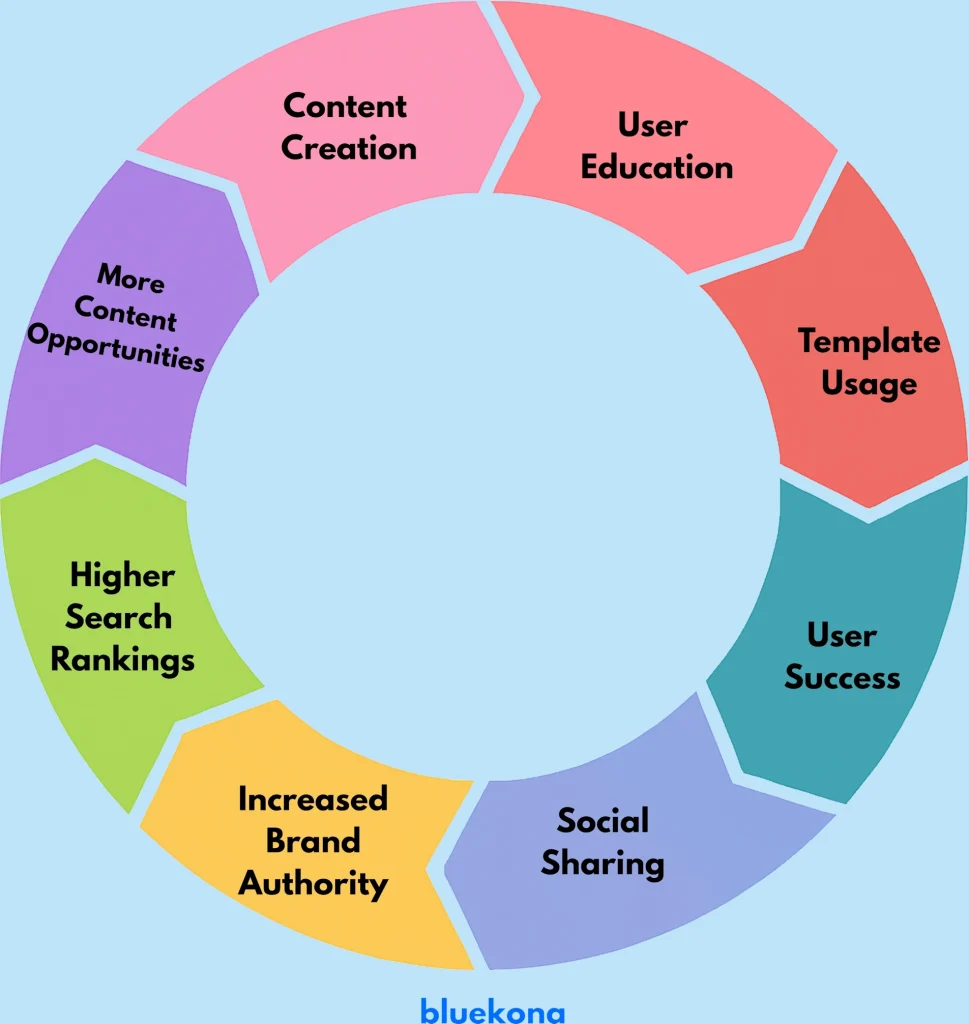
    Canva’s SEO Flywheel

    Canva doesn’t see SEO as just a way to get traffic. They see it as an ecosystem, where each page, template, and tutorial supports the others.

    At the core of this approach is a self-sustaining flywheel.

    Educational content drives template usage. Template success generates user data. Data fuels smarter content creation. Everything is indexed, linked together, and optimized for intent.

    canva content flywheel - how it works

    The outcome? It was not just about search rankings. It’s about achieving lasting organic strength and creating an SEO advantage that competitors can’t easily replicate.

    1. Targeting Genuine Design Intent, Not Just Popular Keywords

    While most SaaS tools compete for broad terms like “best design software,” Canva explored the complete range of real user needs

    • Tactical outcomes like “How to make a resume,” “How to design a flyer.”
    • Contextual use cases such as “Wedding invitation design,” “Restaurant menu templates.”
    • Skill development content like, “Typography basics,” “Color theory for beginners.”
    • Industry verticals, for instance “Real estate flyer design,” “School newsletter templates.”

    This detailed targeting reaches users at every stage of their design journey, from total beginners to niche professionals. It connects them directly to Canva’s template ecosystem.

    Each keyword cluster serves as a high-conversion gateway into the product.

    2. Internal Linking

    This is where Canva really stands out from the crowd.

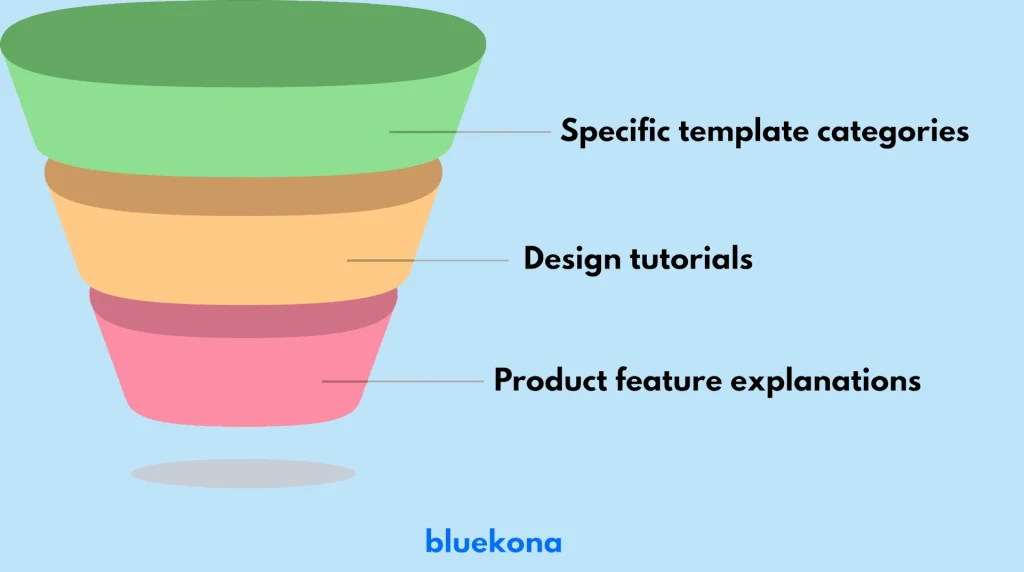
    Their internal linking is not random. It’s a carefully crafted funnel that takes you to the bottom even before you realize it

    • Specific template categories
    • Design tutorials
    • Product feature explanations

    Let’s see how this works in practice. The page how to make a resume for your first job, links to entry-level resume templates with the CTA “Choose a free template to get started”. At the end of this page, you see other follow-up guides like “How to write a cover letter”

    This internal structure boosts:

    • SEO performance (through distributed link equity and crawlability)
    • Engagement metrics (lower bounce rates and higher time on site)
    • Conversions (fewer obstacles between intent and action)

    It’s all about shaping the user journey as an SEO strategy. And it really scales.

    3. Content Clustering for Authority and Conversion

    Canva builds topical clusters instead of standalone articles. Their resume hub includes

    • Resume writing fundamentals
    • Layout tips and formatting guides
    • Industry-specific resume advice
    • Cover letter writing tutorials
    • LinkedIn profile optimization

    Each piece supports the others and links across the cluster. And the benefits are clear:

    • Google recognizes the thorough coverage of topics, leading to better rankings
    • Users can easily explore related subjects, resulting in longer session times
    • More opportunities for calls to action and template placements, boosting conversions

    It’s a perfect blend of SEO, user experience, and funnel strategy.

    Why Competitors Can’t Copy This?

    Sure, anyone can whip up a blog post on “how to make a resume.” But let’s be real,it’s almost impossible to create a flywheel as effective as Canva’s.

    To pull that off, you’d need:

    • In-depth keyword research and a solid understanding of user intent
    • Content operations that can scale while maintaining editorial precision
    • A product that allows for the immediate application of what users learn
    • A smart internal linking and taxonomy strategy
    • A long-term dedication to teaching first and selling second resource library

    Most people won’t go the extra mile. But Canva already has.

    How bluekona Helps You Build a Content Moat Like Canva, Without the Manual Labour

    Canva built its content moat over years of hard work involving writers, SEOs, video editors, template designers, and endless revisions.

    With bluekona, you can achieve the same level of success, minus the massive team.

    It automates the key elements of Canva’s strategy such as, repurposing content, distributing it across different formats, internal linking, and tracking performance.

    What took Canva years to develop, you can establish in just a few months.

    Transform One Asset into a Multi-Format Ecosystem

    Your top-performing content is already doing its job. bluekona helps it shine everywhere.

    From a single long-form article, you can effortlessly create 10s of content.

    Understand What to Scale and What to Let Go

    Stop playing the guessing game. bluekona’s AI-driven content performance engine shows you:

    • Which content formats lead to the most trial starts, demo requests, or purchases
    • Which topics generate links, shares, and deeper engagement across platforms
    • What content paths actually guide users from learning to converting

    You’ll have a clear roadmap of where to invest your efforts. And most importantly, you’ll know what to cut.

    Build Topical Authority on Autopilot

    bluekona groups your content around themes, similar to Canva’s resume system, and fills in the gaps.

    It identifies internal linking opportunities to share SEO value. It creates hub-and-spoke content calendars to increase domain authority. It suggests long-tail keywords based on actual user behavior and ranking potential.

    What once took SEO strategists weeks to plan, bluekona accomplishes automatically.

    You provide the expertise, and bluekona transforms it into a content system that educates, scales, and compounds

    Want to build a content moat like Canva?

    Start with a free bluekona Content Performance Audit.

    Identify your highest-performing educational assets.
    See where your ecosystem is strongest and where it’s lacking.
    Get a customized roadmap to scale what’s working and improve what’s not.

    Find your best educational content. Turn it into your growth engine.