Here’s a reality check: Google is no longer the starting point for product discovery.
An entire generation has shifted their search behavior to TikTok, YouTube, and Instagram. They’re not typing “best running shoes” into Google—they’re scrolling TikTok reviews, watching YouTube unboxings, and swiping through Instagram carousels. For Gen Z, social platforms are the search engines.
But most brands are still stuck in “post and pray” mode. They publish once, hope for engagement, and move on. The result? Content that vanishes into the feed instead of compounding into visibility.
The brands that win social search know content isn’t disposable—it’s recyclable. They build repurposing workflows that transform a single asset into multiple searchable entry points across every platform like TikTok explainers, YouTube Shorts, Instagram carousels, LinkedIn posts, even Pinterest how-tos.
This isn’t about chasing viral luck. It’s about engineering discovery—turning every blog, video, or podcast into an ecosystem of searchable content that works 24/7.
The question is: will your brand keep treating posts like throwaways, or start building workflows that make you impossible to miss?
Why Social Search > Traditional SEO in 2025
The numbers don’t lie: traditional search is losing the discovery battle.
90% of consumers now rely on social to track trends and discover products. This isn’t passive scrolling—it’s intentional, search-driven behavior that’s replacing the old Google funnel.
TikTok has dethroned Google as Gen Z’s go-to search engine. Instead of reading SEO blog posts, they’re watching 60-second creator reviews, searching hashtags, and scanning comments for unfiltered feedback. TikTok delivers authenticity at scale—something Google can’t replicate.
YouTube isn’t just for entertainment—it’s a 2.5B-user search engine. From “how to fix a leaky faucet” to “best budget smartphone 2025,” users treat it as the visual version of Google. With 3B+ monthly searches, it’s the second-largest search engine in the world.
Instagram is now a full-blown product discovery hub. With 61% of users researching purchases on-platform, discovery flows seamlessly into shopping via Stories, Reels, carousels, and tags.
The shift is clear. SEO gives you answers, but social search gives you experiences. And for modern consumers, experiences win every time.
The Problem with One-and-Done Posting
Here’s the brutal truth: most brands are stuck in a “post once and vanish” cycle. They spend weeks creating a single piece of content, publish it, maybe cross-post once or twice—and then move on. Within 48 hours, that content is buried in the algorithm’s graveyard, never to be seen again. It’s the marketing equivalent of designing a billboard and hiding it in your basement.
Over 80% of brand content is never repurposed. That means teams are treating every post as disposable while sitting on goldmines of insights, tutorials, and stories that could be multiplied into dozens of searchable touchpoints. In an attention economy, that’s not just wasteful—it’s strategically devastating.
Without systematic distribution, even your best content is invisible in social search. TikTok, YouTube, Instagram—they reward consistency and omnipresence. Users don’t just want one perfect video or post; they look for brands that keep showing up with answers.
The math is simple: create 100 posts, you get 100 chances to be discovered. Create 50 and repurpose each into 10 formats across platforms—you now have 500 chances. Guess which brand wins in social search?
The leaders aren’t creating more content. They’re creating smarter workflows that turn every idea into an ecosystem of discovery.
Social Search Optimization Through Repurposing
The secret to winning social search isn’t pumping out endless new content—it’s multiplying the discoverability of what you already have. Every piece of content is a seed that can grow into a searchable forest—if you repurpose it strategically.
Take a single blog post on healthy smoothie recipes. Instead of posting once and moving on, you can break it down into:
TikTok explainers answering “What’s the best smoothie for energy?”
YouTube Shorts showing quick recipe demos
Instagram carousels with ingredient breakdowns
FAQ snippets tackling questions like “Are smoothies good for weight loss?”
Each one becomes its own searchable doorway into your brand.
The key is phrasing content the way people actually search:
“Best smoothie recipes for weight loss”
“How to make a high-protein smoothie”
“Green smoothie vs fruit smoothie benefits”
This isn’t just algorithm-friendly—it mirrors human behavior.
The result? They’re not betting on one viral hit. They’ve built a search ecosystem where every query has a Prime-related entry point. That’s the real power of repurposing.
Platform-by-Platform Breakdown
Each platform has its own search DNA, and winning brands repurpose content to match how users actually discover.
TikTok
TikTok is built for immediate, search-driven answers. Lead with searchable hooks like:
“POV: you need the best skincare routine”
“If you’re wondering how to meal prep…”
Repurpose content into “best of” lists, quick explainers, and trending Q&As. TikTok’s search function prioritizes videos that answer queries directly, so packaging multiple tips into digestible clips multiplies discoverability.
YouTube
Think of YouTube as a dual search engine. Long-form tutorials capture high-intent queries, while Shorts act as snackable discovery tools. Smart brands pin their most searchable Shorts—like “Top 5 budget cameras 2025”—so they serve as permanent entry points that funnel viewers into deeper tutorials.
Instagram
Here, it’s about balance. Carousels = evergreen discovery. Each slide can hit different keywords while the whole post stays searchable long-term.
Reels = immediate attention. They ride trending audio and hashtags to surface in Explore.
LinkedIn
LinkedIn rewards authority-driven repurposing. Turn insights into trend analyses, “lessons learned,” or frameworks broken down in carousel posts. This positions you as the expert people find when they search for professional growth and industry knowledge.
Pinterest & Reddit
These are the evergreen discovery engines. Pinterest thrives on “how-to” content, tutorials, and visual inspiration that users save with purchase intent.
Reddit is the validation hub—repurpose content into comparison posts, authentic reviews, and community-friendly breakdowns that answer niche queries.
The takeaway: Don’t just repurpose content. Reformat it to match each platform’s search psychology—that’s how you create a net that captures discovery everywhere.
The Workflow That Wins
Most brands overcomplicate content creation. The ones dominating social search run systematic workflows that multiply every asset into a network of discovery.
Start with a high-value core asset. A blog, video tutorial, webinar, or case study—the “mother ship” packed with insights and answers people actually search for.
Repurpose into 10+ formats. Not random reposts, but strategic multiplications. From one asset you can create:
TikTok quick tips
Instagram carousel breakdowns
YouTube Shorts
LinkedIn thought leadership posts
Pinterest visual guides
Reddit/FAQ-style explainers Each format mirrors different search behaviors while staying rooted in the same core message.
Distribute with precision. Don’t scatter posts everywhere—map formats to platforms where they win. TikTok for snackable tips, Instagram for visual storytelling, LinkedIn for authority, Pinterest for evergreen how-tos.
Measure and double down. Track what surfaces in search, drives saves, or fuels engagement. Then reinvest in those winning formats and scale harder.
The result is a content multiplication effect: one strategic asset becomes dozens of searchable entry points across every platform. Instead of chasing endless new content, you’re building a system where your ideas keep resurfacing—making your brand not just visible, but unavoidable.
The Automation Advantage
Here’s the reality: everything we’ve outlined—repurposing, platform-specific optimization, systematic distribution, and measurement—takes serious time and coordination. Most teams can’t sustain it manually. That’s exactly why Bluekona exists.
Bluekona automates the repurposing workflow that powers social search dominance. What used to take weeks of manual slicing, formatting, and scheduling now happens in minutes.
The workflow becomes simple:
Create once → optimize everywhere.
Upload a blog, video, or podcast → Bluekona transforms it into TikTok hooks, Instagram carousels, YouTube Shorts, LinkedIn posts, and Pinterest-ready guides.
Every format is search-optimized with phrasing that matches how people actually look for solutions.
The result? Every core asset turns into a comprehensive search funnel, multiplying your chances of discovery across every platform that matters. Instead of hoping one post hits, you’re systematically everywhere your audience is searching.
The social search revolution isn’t coming—it’s here. The only question is whether you’ll try to keep up manually… or win with Bluekona’s automation.
Here’s the brutal truth about content marketing, posting more doesn’t mean creating more.
While your team is busy trying to fill up seven content calendars, brands like Duolingo and HubSpot are taking a smarter approach. Instead of churning out 30 separate pieces, they focus on crafting one strong idea and breaking it down into over 30 effective, platform-specific posts.
This isn’t just lazy recycling or half-hearted repurposing. We’re talking about Atomic Content — a strategic, no-nonsense method that treats every blog post, video, or webinar like precious material: rich, high-value content that can be split into numerous impactful microcontent pieces.
Take a 10-minute video, for instance. That can easily transform into 30 posts across Instagram, LinkedIn, TikTok, Threads, and YouTube Shorts. Or consider a single blog post; it can generate quote cards, carousels, threads, audiograms, FAQs, and snippets for newsletters. Same insights, but with a much wider reach and zero creative fatigue.
Trying to do this manually? That’s tough. But with BlueKona AI? It’s as easy as a single click.
Let’s dive into how the Atomic Content Strategy works and see how BlueKona automates everything from breaking down your content to publishing it, so you can post more without feeling overwhelmed.
What Is Atomic Content?
Atomic Content is breaking down a single core idea, like a blog post, podcast, webinar, or video, into smaller pieces that fit different platforms.
This approach helps you reach more people without doing extra work.
Think of it this way, instead of making 30 different posts from 30 brainstorming sessions, you create one valuable asset and deconstruct it into 30+ smaller pieces. Each one optimized for where it will be published — Instagram, LinkedIn, TikTok, Threads, Pinterest, and more.
The Media Company Mindset Shift
Here’s where many content teams go wrong. They act like bloggers who can distribute. They post once, move on, and repeat.
Smart brands operate like media companies. When CNN covers a story, it doesn’t stop with just one piece. They turn it into a morning segment, a social clip, a newsletter, a panel discussion, and a podcast episode.
Same story. Multiple formats. Maximum reach.
Your content deserves that kind of attention. That blog post you spent 10 hours crafting? It’s not “done.” It’s a valuable source waiting to be tapped.
Why Atomic Content Works?
The psychology is straightforward. Repetition = Reach Frequency = Familiarity.
Most people need to see your message 7 to 12 times before they take action. If you only post once, you’re relying on perfect timing. But if you post thoughtfully, you increase your chances.
With Atomic Content, you can reach your audience across various platforms and formats.
Miss them with Monday’s LinkedIn carousel? No problem—Wednesday’s Instagram quote card can pick up the slack. And Friday’s Twitter thread might just be the nudge that drives the click.
Same message. Different formats. Various moments of receptivity. That’s not spam. That’s strategic frequency.
The Manual Pain (Why Most Don’t Do It)?
If Atomic Content is so effective, why isn’t everyone jumping on board?
Well, the manual execution can be a real headache. Repurposing content sounds like a great idea, until you find yourself deep in the process.
1. The Time Trap
Let’s take a closer look at what it actually takes to break down a single piece of content by hand
Creating the original asset (like a blog, video, or webinar): 3–8 hours
Writing captions (tailored for each platform): 2.5 hours
Scheduling and optimizing: 2 hours
Total: 22+ hours for just one content asset.
Most teams can barely get their main content out the door, let alone spend another full day breaking it down into smaller pieces.
2. The Format Nightmare
Every platform has its own quirks. Instagram demands 1080×1080 squares, 9:16 Reels, and those attention-grabbing hooks in the first 3 seconds. Don’t forget about stories.
LinkedIn likes carousels, but they have to be professional yet engaging. Text posts? They need to be insightful and shareable.
TikTok requires vertical, fast-paced edits with captions and trending audio.
Twitter/X versus Threads? Same message, but the tone and structure need to be completely different.
YouTube Shorts calls for native edits, catchy captions, and a vertical format.
Your designer is juggling 47 different aspect ratios. Your editor is buried under clips they’ll never revisit. Your copywriter is rephrasing the same idea a dozen times.
3. The Creative Burnout Cycle
Here’s how manual repurposing typically unfolds
Week 1: “Let’s transform this blog into 20 pieces of content!”
Week 2: The designer spends 6 hours on quote cards, while the editor is working late.
Week 3: The copywriter is exhausted, and the editor is falling behind on everything else.
Week 4: “Forget it, let’s just post the blog and move on.”
The team gets stuck in a cycle of production purgatory, resizing, reformatting, and rewriting when they should be focusing on what they do.
The Blueprint. How to Go From 1 to 30?
Enough theory, here’s how Atomic Content works in practice. One core idea. Thirty native posts. A month of content from a single asset.
Let’s walk through it using a real example, say your core post is, “The 5 Psychology Triggers That Double Email Open Rates.” This is a 12-minute YouTube video full of useful insights, examples, and results.
Original Content Asset
Format: 12-minute YouTube video (or a long blog post, webinar, or podcast)
Time investment: about 8 hours for research, scripting, filming, and editing
Initial reach: One post, one platform, one chance
The Atomic Breakdown. 30 Pieces
3 Quote Cards (Instagram/LinkedIn)
“Fear of missing out drives 34% more opens than curiosity.”
“Questions in subject lines increase opens by 23%.”
“Numbers outperform words: ‘5 tips’ beats ‘several tips’ every time.”
3 Video Snippets (Reels/Shorts/TikTok)
60-second breakdown of the curiosity gap
30-second subject line makeover
45-second rapid-fire on all 5 triggers
1 Carousel (LinkedIn/Instagram)
8-slide format, one trigger per slide with examples
3 Pinterest Pins
Infographic, step-by-step
Checklist
2 FAQ Snippets (SEO-rich blog sidebars or schema)
“What psychology triggers increase email open rates?”
“How do you write subject lines that get clicked?”
2 LinkedIn Text Posts
“I analyzed 10,000 subject lines. Here’s what actually works…”
“Your open rates are low. Here’s why (and how to fix them)…”
1 Twitter/X Thread (republished on Threads)
8-tweet breakdown of each trigger
1 Newsletter Blurb
150-word teaser with a CTA for the full video
1 Reddit or Quora Answer
Direct reply to “What makes people open marketing emails?”
3 Audiograms
30 to 60 seconds of soundbites with waveform visuals for LinkedIn/X
Reposts + Remixes ( 1 Republish)
1 Republished Version – Fresh angle: “Why Your Subject Lines Are Killing Your Sales.”
5 Scheduled Reposts (spread out across platforms)
Week 2: Instagram quote repost
Week 3: LinkedIn carousel replay
Month 2: TikTok snippet with trending audio
Month 3: Threads thread repost
Month 6: Full video repost with a “Did you miss this?” hook
3 Platform Variants
Different thumbnails, headlines, or CTAs
The Math That Changes Everything
Old model: 1 video = 1 post
Atomic model: 1 video = 30 posts across 7 platforms over 6 months
Same core idea. 30 times the visibility. Zero burnout.
Output, Visibility, and Performance
When you implement Atomic Content systematically, it doesn’t just increase output. It changes your whole content operation. This is how leading brands boost their presence without increasing their team size.
Higher Frequency Without Burnout
Before Atomic Content: –
3 to 4 posts per week across all platforms
Team scrambling for fresh ideas
50-plus hour weeks to maintain consistency
Constant panic about having nothing to post
After Atomic Content: –
15 to 20 posts per week with the same team
6 months of content planned from 5 to 6 core ideas
Creators focus on strategy instead of formatting
Content calendar stays full without the rush
A two-person agency team increased their output from 12 to over 60 posts per month. They did this by creating 5 deep assets each month and breaking them down into smaller pieces.
Content isn’t just about frequency. It’s also about being consistently present. You show up everywhere your audience is.
Virality equals the right idea, the right platform, and the right timing. With traditional content, you get one chance. With Atomic Content, you get over 30 chances for the same core insight to succeed.
Authority grows faster through repeated angles and conversion rates increase due to familiar content.
Moreover, creation becomes easier as you dive deeper rather than wider
Bottom line: Atomic Content turns your best ideas into engines for growth, not one-off posts lost to the algorithm.
Ready to Multiply Your Content?
Run your Atomic Content Audit. Drop in your last blog post and instantly see how many platform-native pieces it could become.
BlueKona turns one idea into a month of content, automatically. No extra hours. No burnout. Just scale.
Most brands repurpose content. But almost none can prove if it’s worth it.
Sure, you can track likes, clicks, or views. But when one podcast becomes a LinkedIn post, a YouTube short, an email snippet, and a blog quote — which one actually delivered value?
Without a clear view of repurposed content ROI, brands overcommit to content that flops and underuse what performs.
This is where AI changes everything.
Bluekona’s Social Media Audit connects the dots across channels, formats, and timelines, revealing how each repurposed asset contributes to real business outcomes. Engagement. Traffic. Leads. ROI.
Let’s break down why measuring repurposing ROI is so hard — and how Bluekona makes it automatic.
The Real ROI Problem in Repurposing
Repurposing content sounds efficient in theory — but in practice, it’s often where marketing data goes to die.
Manual tracking is painfully slow and riddled with errors. Spreadsheets break. UTM tags get skipped. Team members forget what went where.
Platforms don’t talk to each other. YouTube tracks views. LinkedIn counts impressions. Instagram cares about reach. There’s no unified picture of performance.
Performance gets fragmented. One idea spawns multiple assets. But how do you compare the original YouTube video to its Instagram Reel or LinkedIn quote card? You can’t — not without painful stitching.
The result? Teams double down on content that looks good in isolation but delivers little ROI.
Meanwhile, high-performing repurposed assets go unnoticed or get used once and forgotten.
The biggest problem isn’t creating more content — it’s not knowing which content is actually worth creating again.
What ROI of Repurposing Should Include
Most content teams track surface-level metrics — likes, views, maybe CTR. But repurposing ROI goes deeper. To make smart decisions about what to keep creating (and what to stop), you need to measure impact holistically.
Measuring ROI isn’t just about likes. It’s about efficiency and impact — across every repurposed asset.
1. Platform-by-Platform Engagement
How did each version of your content perform — not just in aggregate, but per channel?
A LinkedIn snippet may drive comments, while the same clip on Instagram gets ignored. You need to know what works where, not just that something worked.
2. Time Saved vs. Reach Gained
Repurposing is supposed to be efficient — but is it?
ROI should weigh how much time and effort was saved versus how much additional reach or engagement was actually earned. Did the five social edits justify the edit hours?
3. Attribution to Leads, Traffic, or Growth
Which repurposed pieces are pulling their weight in real business terms?
ROI means tracking back to outcomes — clicks, form fills, subscribers, pipeline. Not every post will convert, but patterns reveal which formats move people forward.
4. Frequency of Reuse vs. Effectiveness
How many times did an asset get reused — and how did performance hold up? Some formats degrade after the first post.
Others get stronger with iteration. ROI measurement should help you identify when to repurpose again, reformat, or retire.
With this level of visibility, you’re not just tracking content but you’re also optimizing your entire repurposing strategy for efficiency and impact.
What It Takes to Measure ROI of Repurposed Content
To get real visibility into repurposed content performance, teams need more than scattered analytics. The process should be automated, connected, and insight-driven. Here’s what an effective solution looks like
Bluekona gives you full visibility into how your repurposed content performs.
Each feature is designed to solve a specific pain point and help you make smarter, faster decisions about what to reuse, reformat, or retire.
1. Cross-Platform Content Mapping
Manually connecting performance across channels is messy and time-consuming.
Bluekona automatically links every version of a content piece, whether it’s original posts, repurposed formats, or cross-posts, so you can measure their performance together or separately, all in one place.
2. AI-Powered Content Grouping
The AI clusters similar content types, like quote cards or short-form reels, and then ties them to actual results.
It maps each group to key metrics like engagement, lead generation, and click-through rates.
3. Timeline-Based ROI Views
Tracking repurposed content over time is nearly impossible without a system.
Bluekona gives you a timeline view that shows how a single idea performs across platforms and over weeks or months. This makes you see momentum, fatigue, or missed opportunities.
4. Cross-Platform Attribution and Scoring
Performance isn’t just about views. To measure impact, content should be evaluated on what it actually drives — clicks, form fills, new followers.
Ideally, each asset should carry an engagement score that factors in all of its appearances, even across different platforms.
5. Smart Recommendations Engine
Deciding what to repurpose again shouldn’t be a guessing game.
Bluekona analyzes performance patterns and gives clear guidance on whether to republish, reformat, or retire each asset based on data.
This lets your team focus time and budget on what’s proven to work.
See Bluekona in Action
A well-executed repurposing strategy isn’t just about content output. It’s about visibility into what’s working, where, and why.
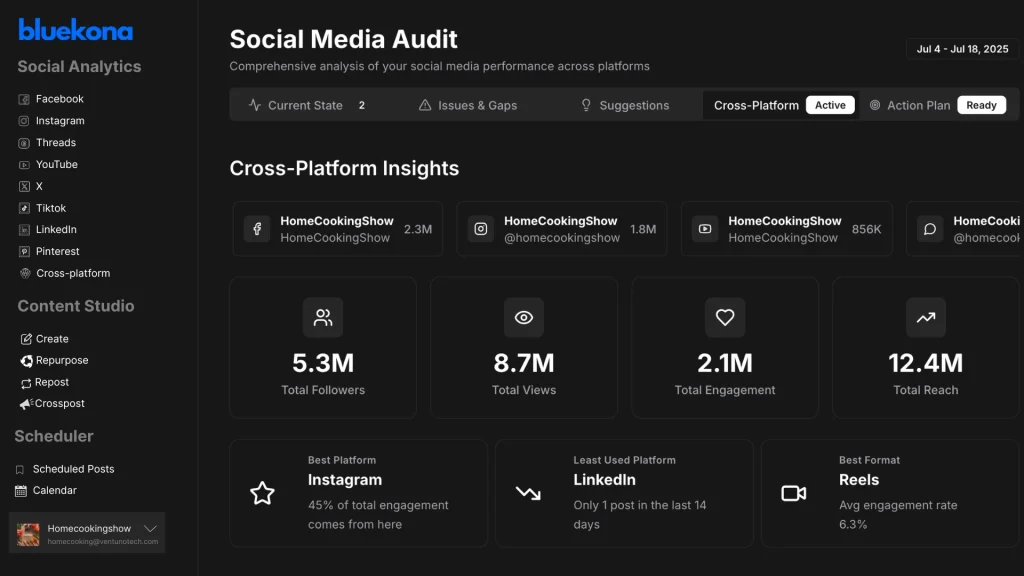
Dashboards like this one provide a centralized view of cross-platform performance so you can stop guessing and start optimizing.
Here is what to look for in the dashboard
1. Unified Performance Across Platforms
The dashboard pulls in metrics from each social channel — including views, engagement, and reach.
This allows you to compare performance side by side. No more toggling between apps or exporting CSVs.
2. Total Impact at a Glance
Core metrics like Total Followers, Views, Engagement, and Reach are displayed across all platforms. This makes it easy to measure the full return on marketing efforts, even when it’s scattered into different channels.
3. Format-Specific Wins
In this example, Reels are identified as the best-performing format with a 6.3% average engagement rate.
Knowing which format consistently drives ROI helps you decide where to focus future repurposing efforts.
4. Platform Gaps and Opportunities
While Instagram drives nearly half of the total engagement, LinkedIn has seen almost no recent activity.
This type of insight helps justify reallocating team time — or testing underused platforms with proven content.
Insight in action: Repost high-performing Instagram content to LinkedIn to fill engagement gaps.
This kind of visual breakdown gives your team the clarity to stop guessing, start tracking, and make every repurposed asset count.
What to Do With This Data
It’s not enough to know how your content performed — you need to act on it. ROI insights like these turn your repurposing efforts into a high-efficiency growth strategy.
Cut the Waste
If certain formats consistently underperform, stop investing time in them.
Low-engagement Stories, static posts with no clicks, or platforms with zero traction — this is where effort gets lost. Let the data make those calls for you.
Double Down on What Works
Use ROI insights to identify high-performing formats and platforms, then scale them.
If Instagram Reels drive the most engagement, views, or leads, make that your core repurposing focus. Invest more in what’s proven to deliver results.
Prove the Value of Your Content Team
Go beyond vanity metrics. Use hard data to measure impact of your team’s work — how much reach, engagement, and lead potential each repurposed asset is generating.
You’re not just making content — you’re building a system that multiplies returns.
This is the kind of insight that turns content strategy from a creative function into a measurable, defendable business asset.
Ready to See What’s Actually Working?
Book a free social media ROI audit and get a clear view of how your repurposed content is performing across every platform.
Stop guessing. Start measuring what matters.
Let BlueKona show you how every piece of content pays off — or doesn’t.
You’re posting consistently. Your follower count is growing—slowly. Some posts even get a decent number of likes. But somehow, your Facebook page still feels dead. No comments. No shares. No real engagement that turns into leads or sales.
If that sounds familiar, you’re not alone. Most solopreneurs and solo marketers are misled by surface metrics. They obsess over post frequency and follower counts while ignoring the real issue: content gaps.
These are the blind spots in your content strategy—the missing formats, ignored audience behaviors, and timing misfires that quietly sabotage your reach. They don’t show up in your vanity metrics, but Facebook’s algorithm notices. So does your audience.
This post is about exposing those invisible flaws and showing you exactly how to fix them fast.
What Are Content Gaps ?
Content gaps are the hidden cracks in your Facebook strategy. they’re the silent killers of your Facebook performance. These are the missing pieces between what your audience wants, what the algorithm rewards, and what you’re actually posting.
And the worst part? They’re easy to miss.
You might think your Facebook strategy is solid. But if you’re not seeing engagement, clicks, or growth, you’re likely falling into one (or more) of these five common content gap traps
1. Ignoring High-Performing Formats
Facebook loves native video. But if you’re relying on link shares or static images, you’re handing visibility over to your competitors. Algorithm-friendly formats aren’t optional—they’re essential.
2. Posting at the Wrong Times
Consistency is great, but not if it’s inconvenient for your audience. You keep posting at 9 AM because it fits your schedule. Meanwhile, your audience is most active at 7 PM. Even great content flops when no one’s around to see it.
3. Off-Topic or Irrelevant Content
Your followers engage with tutorials and how-tos, but your last five posts were memes and motivational quotes. That disconnect kills relevance and consistency, both of which Facebook rewards.
4. No Clear CTA (Call-to-Action)
You’re sharing useful info, but never asking your audience to do anything. Every post should guide your audience. No CTA means no clicks, no comments, and no shares. Whether it’s “Tag a friend,” “Comment below,” or “Click to learn more,” your content needs direction or it takes your audience to dead-ends.
5. Engagement Black Holes
Low likes and zero comments? That’s a signal Facebook takes seriously. If your posts consistently underperform, the platform will start showing them to fewer people. That’s a downward spiral you don’t want.
If you’re seeing low reach or weak engagement, don’t just blame the algorithm. Run a content gap audit. Identify what’s missing, adjust your strategy, and watch your performance climb.
How AI Audits Reveal These Gaps
Surface-level metrics like likes and reach are not enough.They make your content look good on the surface, but they rarely tell the full story. If you’re relying on those numbers to guide your strategy, you’re flying blind.
That’s where BlueKona’s AI audit flips the script.
Instead of just measuring what happened, it dives into why it happened—and more importantly, what to fix. BlueKona uses artificial intelligence to detect the blind spots your team (and even your analytics tools) are missing.
It’s not just data—it’s diagnosis.
Here’s how BlueKona uncovers what’s really holding your content back
1. Engagement by Post Type
Are your native videos secretly outperforming everything else? Are carousel posts killing it while quote images tank? BlueKona dissects engagement by content type, so you know which formats to scale—and which ones to retire.
2. Behavioral Drop-Off Analysis
Are people commenting and then vanishing? Are they clicking but not sharing? Are they clicking but not converting? BlueKona identifies where interest dies, so you can fix the friction.
3. Topics That Get Shared vs. Scrolled Past
Not all engagement is equal. A like is easy. A share or save means your content hit home. BlueKona highlights which topics get shared, saved, or spread. And also which ones your audience scrolls past without a second thought.
4. Spotting Repeatable Wins
You may have nailed a format or topic once and never repeated it. BlueKona identifies the high-performing content patterns you didn’t notice—so you can rinse, repeat, and scale what works.
This isn’t just analytics. It’s diagnosis. BlueKona gives you specific, data-backed insight into why your content is flatlining and what to do next.
Why You Don’t See These Gaps Yourself?
Let’s clear something up — this isn’t about laziness or lack of effort.
You’re posting consistently. You’re diving into Facebook Insights. You’re adjusting your content strategy on the fly.
But in reality, you’re still flying blind.
And it’s not your fault. Here’s why even smart marketers fail to see the gaps in their content strategy
1. You’re Too Emotionally Attached to Your Content
When you’re the one writing the captions, choosing the images, and crafting the message, you see the intention. But your audience only sees the output—and if it doesn’t hit the mark, the intent doesn’t matter. You’re inside the bottle, trying to read the label.
2. You’re Chasing Likes Instead of Reading Patterns
A single post gets 50 likes and it feels like a win. But without comparing post types, engagement trends, or time-based performance clusters, that success is just noise—not signal. One good post doesn’t mean your strategy is working.
3. Facebook Insights Are Data-Rich, But Insight-Poor
Sure, Facebook tells you what happened—but not why. You get raw numbers, not strategic clarity. No context. No benchmarks. No roadmap for what to improve or double down on.
4. You Don’t Have Time to Become a Data Scientist
Tracking post formats, timing, engagement depth, and thematic trends across dozens of posts? That’s a full-time job which no solo marketer can keep up.
That’s why content gaps stay invisible. But only until AI pulls them out into the open.
BlueKona doesn’t overwhelm you with data. It gives you answers. Actionable insights. Strategic next steps. The kind of clarity that transforms content from hit-or-miss to high-performance.
How to Fix Content Gaps on Facebook?
You don’t need more tools. You need a system. Fixing content gaps isn’t about guessing or “posting better”—it’s about auditing, spotting patterns, and scaling what works.
Here’s how to do that, solo
Step 1: Run an AI-Powered Content Audit
Before you can fix the problem, you need to see it.
BlueKona’s AI scans your Facebook content across post formats, topics, timing, and interaction types.
It pinpoints the exact elements driving engagement and highlights the ones dragging you down.
You’ll know what to keep, cut, and create—backed by hard data.
Step 2: Identify Winning Patterns
Sort your posts by post type, topic, and time. Analyze what consistently performs.
Create a Content Matrix by combining your top-performing:
Topics (e.g., tutorials, story-based posts, industry tips)
Formats (videos, carousels, polls, live streams)
Timings (evenings, weekends, lunch hours)
This becomes your plug-and-play calendar.
Stop guessing. And start executing a plan designed to win.
Step 4: Repurpose What Already Works
Stop reinventing the wheel. Start repurposing your best content.
Turn a high-performing video into a quote graphic or reel
Break long posts into shorter carousels or Q&A formats
Update and repost evergreen winners on a new schedule
BlueKona tracks how often you’ve reused content. So you can maximize results without becoming repetitive.
Step 5: Fill the Gaps with Smart Content
Need new content ideas?
BlueKona gives AI-powered prompts based on your missing content types, ignored topics, or dead time zones. It’s not just “what to post”—it’s “what’s missing and will likely work.”
Fixing content gaps isn’t about working harder—it’s about working with precision.
BlueKona gives you the blueprint, the tools, and the patterns so you can post with confidence, not guesswork.
More Posts ≠ More Growth
Most solopreneurs try to fix a slow Facebook page by posting more. But more content on top of a broken strategy just buries the problem deeper.
If you’re serious about growing your reach, engagement, and leads—stop guessing. Start auditing.
Content gaps are the silent killers of growth. They don’t show up in likes or reach. But they explain why your posts get ignored, your audience drifts, and your funnel stays dry.
The smart move isn’t more content. It’s better content, driven by patterns you didn’t know to look for. BlueKona shows you those patterns—and tells you exactly what to do next.
You’ve probably published hundreds of blog posts, landing pages, social content, and resource guides over the years. But be honest — how many of those assets are still driving meaningful results today?
If you’re like most marketing teams, the answer is “very few”.
Research shows that more than 60% of published content generates little to no organic traffic after just six months. That means the bulk of your hard work is quietly rotting away — outdated, ignored, and invisible in search.
Yet within that giant content graveyard, there are often hidden pages with proven audience interest, or past traffic that just needs a boost.
The real challenge is knowing what deserves a second chance, and what should be put out of its misery for good.
In this post, I’ll break down a simple, repeatable content repurposing strategy that helps you
Pinpoint high-potential content worth reviving
Spot obsolete pieces you can safely retire
Streamline the entire process with AI-powered content audit tools that take the guesswork out of prioritization
You’ll get a clear, tactical framework and see exactly how to apply it using an automated content lifecycle management approach.
Let’s transform your bloated content library into a lean, ROI-generating machine.
Why Some Content Deserves a Second Life?
Not every piece of underperforming content should be tossed in the trash. In fact, some of your best growth opportunities may come from evergreen topics that have simply decayed over time.
Think of it like a house with solid foundations but peeling paint. The core idea is still valuable — it just needs a refresh.
Here’s why giving existing content a second life is such a smart move:
Evergreen + decaying content = low-hanging fruit
If you already covered an evergreen topic that once performed well, updating it is far easier (and faster) than creating something from scratch. You’ve got a head start with backlinks, a history of ranking keywords, and some brand familiarity.
Updating can outperform net-new creation
Many marketers think publishing more content is always the answer. But updated content often sees ranking improvements much faster than brand-new posts, thanks to Google’s preference for freshness. In fact, a well-optimized update can reclaim traffic and authority in weeks — while new content can take months to ramp up.
Repurposing helps you reach new audiences
You can breathe fresh life into proven ideas by reshaping them for different channels:
Turn a top blog post into a short-form video
Slice it into a LinkedIn carousel
Summarize it for a Twitter thread
Adapt it for a webinar or newsletter
That way, you’re maximizing every ounce of value from content you already know resonates — without reinventing the wheel.
Instead of burning resources on constantly reinventing the next “big post,” you’ll get far more leverage by systematically repurposing what’s already working.
How to Identify Content Worth Repurposing
So, how do you separate the content with real second-life potential from the pieces that should stay buried?
You don’t want to repurpose just any outdated post. You want to focus on assets with enough existing value that a strategic refresh can turn them into winners again.
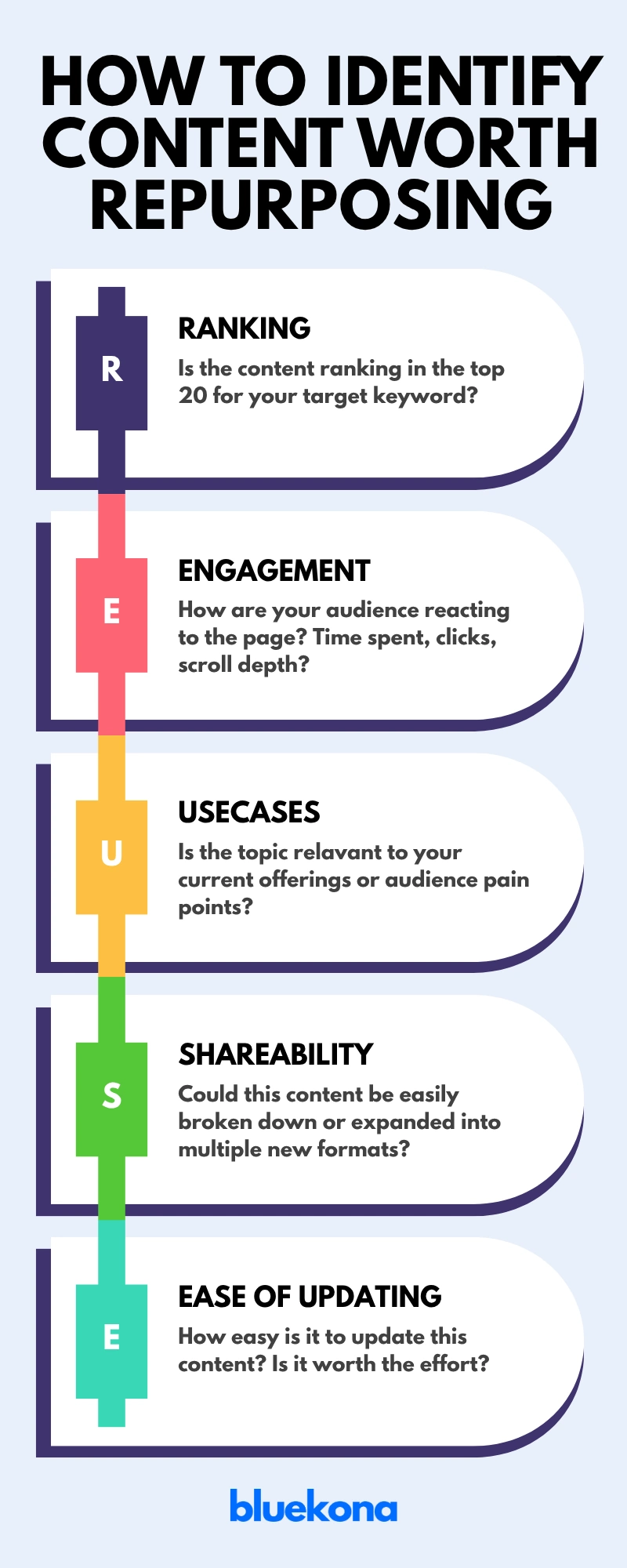
To make this process dead simple, use the REUSE Score — a five-part framework that helps you instantly evaluate whether a piece of content is worth repurposing.
R — Rankings
Is the content ranking in the top 20 for any target keyword?
Even if it’s on page 2 of Google, that’s a sign it has ranking potential worth reviving.
E — Engagement
Does it have decent time on page, comments, or social shares?
Good engagement signals mean your audience already found it valuable once — a perfect candidate to repackage or update.
U — Use Cases
Is the topic still relevant to your business today?
Does it align with your current offerings or audience pain points?
If yes, repurposing makes sense. If no, consider retiring it.
S — Shareability
Could this content be easily broken down or expanded into multiple new formats?
Social posts
Short-form videos
Infographics
Podcasts
If yes, you’ll get more ROI from repurposing.
E — Ease of Updating
Can you modernize it quickly with fresh data, visuals, or a minor rewrite?
Or does it need a complete overhaul?
Easy wins should go straight to the top of your repurposing list.
By applying the REUSE Score, you’ll never again waste time guessing which pieces deserve a second life. You’ll have a simple, repeatable way to prioritize high-ROI repurposing opportunities.
How to Spot Content That Needs to Be Retired
Not every piece of old content deserves a second chance. Some posts are simply beyond rescue — and keeping them live might actually hurt your site’s performance by wasting crawl budget, confusing search engines, or cannibalizing your rankings.
Here’s how to know when to retire content, confidently and guilt-free.
Outdated Stats or Irrelevant Topics
If the post covers data from five years ago, or trends that no longer exist, it’s a poor fit for today’s audience.
If the topic is no longer relevant to your current brand or offering, let it go.
Zero Traffic for 12+ Months
Check Google Search Console and Google Analytics:
Has the post delivered no meaningful organic or referral traffic for a year or more?
If so, it’s usually dead weight.
Competing (Cannibalizing) Pages
Sometimes multiple pages target the same keyword and end up fighting each other in Google.
Look in Search Console:
Do impressions and clicks seem split across similar pages?
If yes, consider consolidating into one stronger post, and retire the duplicate.
Off-Brand or Legacy Campaigns
Older content tied to discontinued products, seasonal campaigns, or outdated messaging can damage your brand if left online.
Ask yourself: Would I feel proud to show this to a prospect today?
If the answer is no, archive or redirect it.
Quick Metrics to Check Before Hitting Delete
In Google Search Console
CTR steadily dropping over 6–12 months
Impressions flatlined or trending to zero
Position stuck outside the top 30
In Ahrefs or SEMrush
Zero backlinks or lost all referring domains
No keyword rankings in the top 50
Traffic estimates = zero
When you see these patterns, don’t waste time trying to save that content. Retire it, redirect if necessary, and refocus your energy on assets with true repurposing potential.
Manual Audit? Painful. Here’s the AI Shortcut.
Let’s be honest, auditing hundreds of posts manually can be a nightmare. You’d have to pore over spreadsheets, cross-check traffic stats, analyze keyword cannibalization, check backlinks, and then figure out repurposing formats — one by one.
No wonder so many content teams procrastinate, or worse, keep guessing about what to update.
That’s exactly why we built Bluekona AI — to automate the entire repurposing audit process and help you reclaim more ROI from your content library in minutes, not weeks.
Here’s how it works
Auto-Detects High-Potential, Decaying Posts
Bluekona continuously scans your content inventory and spots pages showing organic traffic decay but with strong past performance signals — the perfect repurposing targets.
Pulls Performance Data from Every Platform
Instead of you jumping between Google Analytics, Search Console, Ahrefs, or social metrics, Bluekona ingests them all automatically. You get a unified dashboard showing exactly which posts are underperforming, and why.
Suggests the Best Repurposing Format
Should you turn that stale blog post into a LinkedIn carousel? A short-form video? A tweet thread? Bluekona analyzes engagement patterns to recommend the right format to breathe new life into your existing content.
Flags Irrelevant or Obsolete Posts to Archive
No more guessing which posts to kill off. Bluekona flags content with zero relevance, outdated messaging, or keyword cannibalization, so you can retire it confidently and keep your content library lean and high-performing.
Stop Guessing. Start Repurposing With Purpose.
Your content library is a goldmine — but only if you know how to separate the hidden gems from the dead weight.
Most brands waste hundreds of dollars creating new content while ignoring existing assets that could be updated and repurposed to drive 2–3x more results, with a fraction of the effort.
By applying a systematic, data-backed framework like the REUSE Score — and leveraging AI to automate the heavy lifting — you’ll never have to second-guess what to revive, what to retire, or how to prioritize.
It’s time to transform your content operations from a guessing game into a precision growth engine.
Let Bluekona AI audit your content library and show you the high-ROI opportunities in minutes — so you can repurpose with purpose, and win back your valuable time.
You’re showing up everywhere: LinkedIn, Instagram, TikTok, YouTube.
But the second someone asks, “Hey, what’s actually working?” you freeze.
Panic.
Twenty browser tabs.
A spaghetti bowl of spreadsheets.
Sounds familiar?
Tracking your content shouldn’t feel like a part-time data analyst gig. But for most content marketers, founders, or agency teams, that’s exactly what it is — unless you rethink the system.
Let’s break down why cross-platform analytics feels so broken right now — and how to fix it with tools built for the modern content stack.
Why Traditional Content Tracking Fails (Miserably)
Let’s be brutally honest.
Traditional content tracking is broken.
Because every platform plays by its own rules — and its own metrics.
LinkedIn wants you to look at impressions, clicks, and reactions.
Instagram dashboard shows you reach, saves, and story taps.
TikTok pushes watch time, shares, and comments.
YouTube emphasizes on average view duration, CTR, and subscriber growth.
It’s a Tower of Babel for marketers.
Different formats. Different goals. Different numbers.
So what happens? You end up trying to stitch all this chaos together by hand
Exporting reports from five different platforms
Copy-pasting the data into a spreadsheet
Normalizing metrics that may not even measure the same behavior
Manually building pivot tables or charts
Emailing updates to your boss or client days later
By the time you finish all that?
The data is old.
The conversation has moved on.
The insights are ignored.
Data delayed is data denied.
And it’s not just about the time you waste.
It’s about what you’re not measuring.
Most teams stop at vanity metrics — likes, comments, views — because they’re easy to screenshot and easy to explain.
But the truth is
Likes don’t pay your team’s salaries
Views don’t pay your ad budget
Comments don’t guarantee business growth
The real metrics such as traffic generated, leads collected, deals closed, content reused — get buried in the spreadsheet shuffle.
And that’s when teams fall back on gut feelings:
“That post felt good, let’s do more like it.”
“My boss liked the design, so let me reuse it.”
“This one got a lot of hearts on Instagram, so it must be a winner.”
But, feelings are not a strategy.
If you’re running a lean team or juggling multiple clients, you can’t afford to base decisions on your gut. You need performance-led reuse of what actually drives results, not what simply looks good.
But with traditional tracking, you never get there.
That’s why spreadsheets and platform-native dashboards fail you — they’re designed for reporting, not for making smarter, faster decisions.
What You Should Be Tracking
OK, let’s be real. You don’t want to live in spreadsheets. You want to know
“Is my content working?”
But what does working even mean?
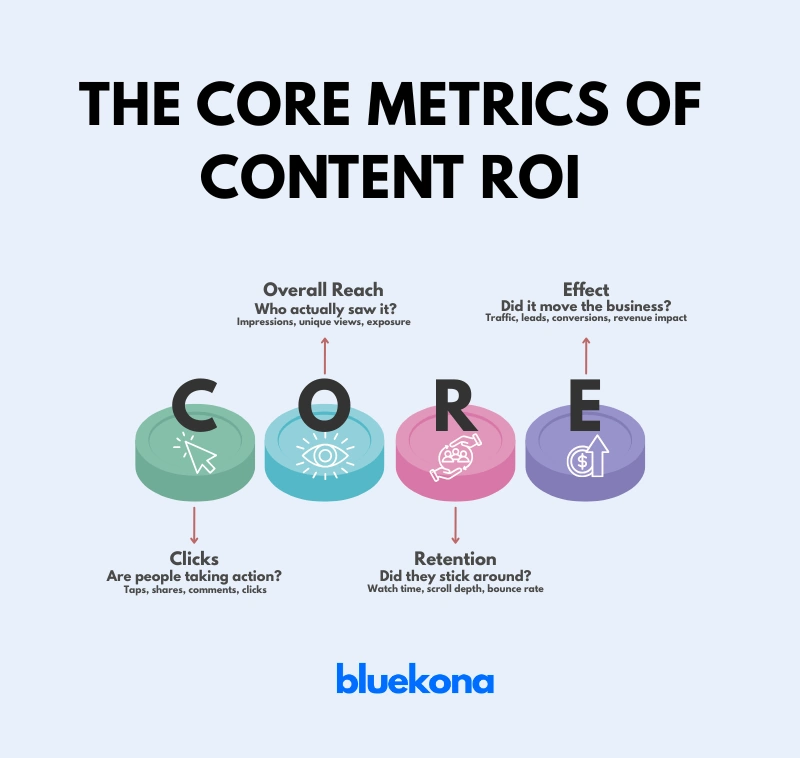
Let’s ditch the fluff metrics and look at what actually matters. Here’s a simple, memorable framework you can steal right now — I call it the CORE Metrics of Content ROI
C: Clicks (or Engagement)
First, you need to know if your content moves people.
Did they click your CTA?
Did they comment, share, save, or react?
Did they swipe through all the slides?
If no one is interacting, the rest of the funnel doesn’t matter. Think of clicks and engagement as your first proof of life.
O: Overall Reach
Next, look at how many people even saw your content in the first place.
Impressions
Views
Reach
This tells you if your distribution is working. Because no matter how amazing your video is, if only 14 people see it, you can’t scale its impact.
Pro tip: Combine reach with engagement to find your engagement rate — a stronger indicator of how well your creative resonates.
R: Retention (or View Duration)
Retention is the forgotten hero of content analytics.
Yes, it’s awesome if people see your video. But do they finish it? Or do they bounce after two seconds?
Retention shows you
whether your hook works
whether your story structure keeps attention
whether people are getting real value
For video, measure average watch time or % viewed.
For blogs, measure time on page or scroll depth.
Retention is the difference between a scroller and a future customer.
E: Effect (Repurposed Content That Drives Traffic/Leads)
Finally, measure the effect.
This is where many teams fail — they post once, look at the likes, and move on.Smart content teams reuse high-performing assets across other platforms or formats.
But realistically, you’re too busy jumping between channels, copying data, and fighting spreadsheets.
That’s why a modern tracking tool should do this heavy lifting for you.
So you can stop guessing — and start scaling.
The Dream Setup
Okay. Let’s imagine for a second that you weren’t stuck in spreadsheet hell.
Instead, you had a dream setup built perfectly for a modern content team.
Here’s what that would look like.
A Unified Dashboard
First off, picture one single dashboard pulling in:
LinkedIn stats
Instagram engagement
TikTok watch time
YouTube retention
Blog traffic
Even email campaign clicks
No more bouncing between tabs, exporting CSVs, or wasting hours merging data.
A unified view means you instantly spot patterns across all your channels.
Because let’s be honest — your audience doesn’t live on just one platform. Neither should your reporting.
Real-Time Updates from All Platforms
The second piece of the dream: fresh, live data.
Real-time updates mean you’re not making decisions on week-old metrics.
You see what’s working today
You see what tanked yesterday
You can adjust campaigns before wasting more budget
Real-time signals let you pivot fast.
If a LinkedIn carousel is going viral, you want to double-down immediately. If your YouTube Shorts are tanking, you can pause and rethink before investing more.
In a content world that moves at the speed of memes, stale data is worthless.
Visual Indicators: What to Double Down On, What to Stop
You shouldn’t have to become a data scientist to spot patterns.
A dream dashboard would give you visual cues — at a glance
Green = winning content worth boosting
Yellow = test more, not sure yet
Red = content that’s burning money or attention
Think of it like traffic lights for your content.
Instead of digging through 45 rows of numbers, you’d have a clear, visual answer
This is what to keep. This is what to kill.
Actionable Insights, Not Just Raw Data
Finally — the best setup doesn’t just dump data on your lap.
It tells you what to do with it.
Repurpose this high-retention video into a blog post
Cut spending on this Instagram ad — no conversions
Double your budget on these TikTok themes — high ROI
You want decisions, not data paralysis.
Because here’s the truth:
Data is only powerful if it changes your behavior.
The dream setup takes away all the busywork of aggregating, cleaning, and guessing — and gives you the confidence to act today.
Of course, most teams can’t build this from scratch. You’d need:
data engineers
data scientists
a reporting platform
constant maintenance
budget your CFO will never approve
And that’s exactly why Bluekona AI steps in — to give you this dream system without the nightmare build-out.
Enter Bluekona AI: Tracking Without the Spreadsheet
Here’s where tools like Bluekona AI flip the old process on its head.
Instead of manual tracking, you get
Data pulled automatically from every platform you post to
Content auto-tagged by theme, asset type, or campaign
Metrics tracked for reuse — see what’s repurposed, what drives ROI, what fizzles
Smart recommendations on what to remix or repost
In other words, Bluekona AI takes your messy content data soup and turns it into a clear, actionable strategy.
It’s like having a strategist + analyst living inside your content engine — powered by AI.
How Bluekona AI Works (A Quick Walkthrough)
Here’s how it might look in practice:
1. Connect Your Platforms
Plug in your LinkedIn, TikTok, YouTube, Instagram, and beyond.
2. See Everything in One Place
Bluekona pulls your metrics and maps them to a consistent framework (the CORE Metrics)
3. Get AI Recommendations
Instead of combing through a spreadsheet, you’ll get instant suggestions:
what to remix
what to repost
what to retire
Your time goes into strategy, not spreadsheet busywork.
Track Less, Learn More, Scale Faster
Let’s face it. If you can’t measure, you can’t scale.
It’s not enough to know what feels good on social media. You need to know — with clarity and confidence — what’s actually driving business results.
But you shouldn’t have to turn yourself (or your team) into a data scientist just to answer these questions.
Bluekona AI takes the grunt work off your plate, automatically handling. From pulling the data to tagging and organizing your content, from analyzing performance across every channel to recommending your next best move.
With Bluekona, you track less, but you learn more — because insights are delivered to you, ready for action.
Did you know 78% of businesses skip regular audits of their Facebook Business Page, leaving engagement—and ROI—on the table?
Whether you’re a content creator juggling multiple platforms, a solopreneur wearing every hat in the company, or a marketer aiming to maximize ad spend, a systematic Facebook page audit is your secret weapon for 2025.
From profile and branding checks to deep dives into content performance, audience demographics, and ad campaigns, you’ll gain all the tools and tactics you need.
Plus, we’ll share advanced tips—like A/B testing CTAs and leveraging Meta’s latest features—to keep you ahead of the curve.
Ready to transform your Facebook presence from “set it and forget it” to a growth engine? Let’s dive in!
Why Audit Your Facebook Page?
You wouldn’t launch a product without testing it—and your Facebook Page deserves the same treatment. Here’s why regular audits are non‑negotiable:
Boost Engagement Discover which posts spark likes, comments, and shares—and double down on those formats.
Maximize Ad ROI Pinpoint underperforming campaigns, refine targeting, and reallocate budget where it truly pays off.
Align with Business Goals Whether you’re driving sales, growing your audience, or building your brand, an audit ensures every element—from your About section to your CTA button—supports your objectives.
Stay Current with Platform Changes Facebook rolls out new features and algorithm tweaks constantly. Regular audits help you adopt fresh tools (like Reels or Shops) before your competitors do.
Outshine Competitors Benchmark against similar pages to uncover gaps and opportunities that set you apart in your niche.
Preparing for Your Audit
Before diving in, arm yourself with the right toolkit and a clear roadmap. These essentials will help you move quickly from data to decisions—no more guessing or juggling apps.
Meta Business Suite: Export your Page Insights (reach, engagement, demographics) in just a few clicks.
Google Analytics: Track referral traffic from Facebook to your website and measure on‑site behavior.
Canva: Design eye‑catching visuals for A/B testing cover images, post templates, and Stories.
With these tools at your fingertips, you’ll be ready to move through each audit phase confidently—and discover insights that drive real growth.
Performance Check: Use Meta Business Suite to review reach, reactions, shares, and comments. Highlight top-performing formats (e.g., Reels vs. image posts).
Content Mix: Are you balancing educational, entertaining, and promotional content? Aim for the 80/20 rule—value first, sell second.
Post Types: Diversify with Reels, carousels, stories, and live sessions. Facebook’s algorithm favors varied formats.
Frequency: Maintain a consistent posting cadence—ideally 3–5 times per week for most creators and small businesses.
Visuals & Copy: Are your graphics scroll-stopping and your captions concise yet compelling? Use tools like Canva and BlueKona AI to enhance quality and consistency.
Advanced Tip: Use BlueKona AI to identify underperforming content themes and auto-suggest high-potential replacements based on engagement trends.
Step 3: Audience and Engagement Analysis
Understanding who interacts with your content, and how. This is the key to growth.
Engagement Quality: Go beyond likes—look at comment sentiment and share frequency. Are people just scrolling, or are they truly connecting?
Peak Times: Discover when your audience is most active (Insights > Posts) and adjust your posting schedule accordingly.
Top Fans: Identify loyal followers and consider rewarding or engaging them more directly through DMs or exclusive content.
Advanced Tip: Let BlueKona AI cluster your audience segments and surface insights to personalize content strategies for each group—automatically.
Step 4: Advertising Audit (If Applicable)
If you’re running Facebook ads, auditing them is crucial to ensure your budget is working hard for you.
Performance Metrics: Check key metrics like CPC (Cost-Per-Click), CTR (Click-Through Rate), and ROAS (Return on Ad Spend).
Audience Targeting: Are your ad sets reaching the right people? Look at relevance scores and audience overlap.
Creative Effectiveness: Evaluate your visuals and copy—what’s converting and what’s getting skipped?
Budget Allocation: Match your spending to top-performing campaigns and cut underperformers.
Advanced Tip: Experiment with Facebook’s Advantage+ campaigns for AI-driven ad optimization.
Step 5: Maintenance and Cleanup
Keeping your Facebook page clean and professional is just as important as creating new content.
Moderate Comments: Hide spam, respond to questions, and address negative feedback constructively.
Review Page Settings: Ensure your business hours, contact info, and privacy settings are current.
Remove Duplicates: If old or unofficial pages exist, merge or delete them to avoid confusion.
Broken Links & Outdated Info: Double-check pinned posts, bio links, and tabs for accuracy.
Analyzing and Acting on Audit Results
Once your audit is complete, the real value lies in what you do next. Interpreting the data helps you uncover what’s working, what’s not, and where to focus your energy for growth.
Interpreting Data
Engagement Rate: Calculate likes, comments, and shares relative to reach—aim for 5%+ as a healthy benchmark.
Follower Growth: A steady, consistent rise signals strong brand presence.
Content Performance: Identify top-performing formats (Reels, carousels, links) and topics.
Ad Effectiveness: Compare cost-per-click (CPC), return on ad spend (ROAS), and conversion rates.
Audience Insights: Use demographic and behavioral data to refine content targeting.
Action Plan
Turn insights into impact with a focused 30-day improvement plan. Prioritize quick wins and set measurable goals to boost results efficiently. Here’s how:
Double down on what works: If Reels or carousel posts drive the most engagement, increase their frequency in your content calendar.
Adjust ad targeting: If conversion rates are low, refine your audience segments or test new creatives using Facebook’s built-in A/B tools.
Tweak posting schedule: Post during your audience’s peak activity hours based on Insights data.
Update outdated assets: Refresh bios, CTAs, and pinned posts to align with current goals or campaigns.
Use BlueKona AI to track progress: Let the platform monitor key metrics and suggest your next steps—no spreadsheets required.
Common Mistakes to Avoid
Even experienced creators and marketers can overlook these Facebook page audit pitfalls. Here’s what to steer clear of:
Neglecting Mobile Optimization Over 90% of users access Facebook via mobile. If your visuals, CTAs, or links don’t render well on small screens, you’re losing engagement.
Ignoring Negative Feedback Dismissing critical comments means missing out on valuable user insights. Turn feedback into fuel for improvement.
Inconsistent Branding A mismatched tone, outdated profile photo, or unclear messaging can confuse your audience and dilute your brand trust.
Overposting or Underposting Posting too often can annoy followers, at the same time, posting too little can make you irrelevant. Strike the right balance based on your Insights data.
Using a “Set It and Forget It” Strategy Facebook evolves constantly. What worked six months ago may not work now—regular audits are key.
Relying Only on Vanity Metrics Likes and follower counts are surface-level. Prioritize metrics like click-through rate, saves, shares, and comments for a truer measure of impact.
Avoiding these mistakes sets the foundation for a stronger, more strategic Facebook presence.
Wrap Up
Auditing your Facebook Business Page isn’t just a once-a-year task—it’s a habit that separates thriving brands from forgotten ones. Whether you’re a solo creator, a marketer juggling multiple pages, or a growing business, a well-executed audit helps you stay relevant, strategic, and connected to your audience.
With tools like Bluekona AI, you can turn overwhelming audits into quick, actionable insights—freeing up more time to create, engage, and grow.
Now’s the time to revisit your page, make data-backed improvements, and set yourself up for a stronger digital presence in 2025.
Ever wonder why some YouTube channels explode with views while others barely budge? The secret often boils down to one thing: regular, ruthless audits. A YouTube channel audit is like a tune-up for your car—skip it, and you’ll stall out. But nail it, and you’re cruising at peak performance.
In this guide, you’ll learn exactly how to dissect your channel’s branding, content, SEO, and engagement—step by step. We’re not talking vague “check your analytics” advice. You’ll get concrete, actionable tactics to pinpoint what’s working, fix what’s broken, and turbocharge your growth.
Whether you’re just starting out or you’ve been uploading videos for years, a thorough audit can change the game. You’ll uncover hidden opportunities, outmaneuver competitors, and boost your subscriber count—and yes, you’ll actually use this data to make smarter decisions.
Ready to uncover why your channel isn’t already winning? Let’s dive in and give your YouTube presence the overhaul it deserves.
Why Audit Your YouTube Channel?
Let’s be real: uploading video after video without a plan is like throwing spaghetti at the wall—you might hit something, but you’ll never know why.
A channel audit takes the guesswork out of growth. Here’s why it matters:
Uncover Hidden Strengths You might be underestimating a goldmine. Maybe your “easy recipe” tutorial has 10× more watch time than your polished “restaurant-style dish” video. Auditing shines a light on what’s already resonating so you can double down.
Fix Killer Weaknesses Those cringe thumbnails or rambling intros? An audit calls them out. Once you see which videos have high drop-off rates or low click-throughs, you know exactly what to tweak—no more wasted uploads.
Boost Discoverability YouTube is a search engine. Optimizing titles, tags, and descriptions isn’t optional—it’s crucial. A solid audit spots keyword gaps and metadata blunders so your videos rank higher and reach the right audience.
Maximize Revenue Monetization isn’t just about ads. Sponsorships, affiliate links, memberships—they all hinge on solid performance metrics. An audit helps you identify top-earning content, niche opportunities, and underutilized revenue streams.
In short, auditing is the difference between “upload and hope” and “upload with purpose.” Ready to supercharge your channel? Let’s break down the steps.
Step 1: Analyze Channel Branding and Settings
Branding isn’t about pretty logos—it’s about trust. Your channel’s look and feel should instantly tell viewers, “You’re in the right place.” Here’s how to audit and optimize your branding:
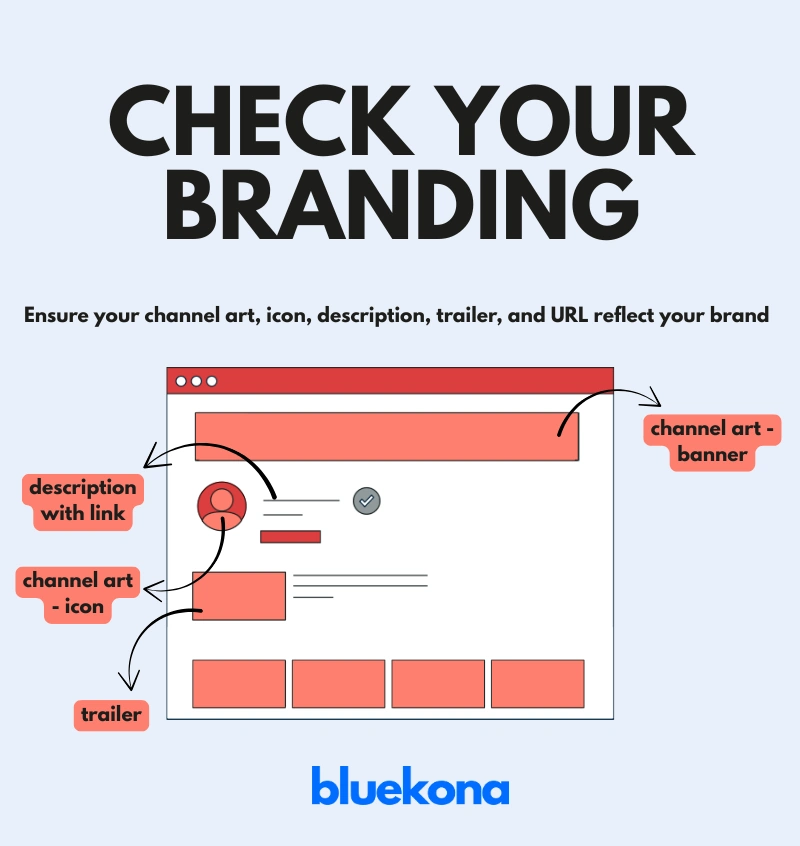
1. Channel Art and Icon
Banner Dimensions Matter: Use a 2048 × 1152 px image (16:9 ratio) so it looks crisp on all devices.
Consistent Visual Identity: If you’re a gaming channel, bold, neon colors and dynamic imagery scream “let’s play.” If you’re in tech, sleek fonts and minimal design reinforce expertise.
Legibility Check: Step back—does your channel name and tagline read clearly on mobile? Over 70% of YouTube traffic is on smartphones.
2. Channel Description (About Section)
Keyword-Rich but Human: Start with your core value proposition. Drop in high-impact keywords—“budget laptops,” “smartphone hacks,” “AI tutorials.”
Clear Call-to-Action: Tell viewers what to do: “Subscribe for 2 new videos every week” or “Hit the bell icon to never miss a tutorial.”
Link Strategically: Use the description’s “Links” section to drive traffic—website, social profiles, or a Lead Magnet page.
3. Channel Trailer
Keep It Under 60 Seconds: Attention spans on YouTube are short. Your trailer should highlight your best content, showcase personality, and end with a strong subscribe prompt.
Match Your Niche: A clean tech channel might open with a crisp unboxing scene. A fitness channel could start with a high-energy training montage.
Preview Your Schedule: If you post every Monday and Thursday, say so—consistency builds subscriber habits.
4. Custom URL
Make It Memorable: If eligible (100+ subscribers), claim a custom URL like youtube.com/ChannelName. Shorter is better—youtube.com/Channel beats youtube.com/user/Channel12345.
Brand Alignment: Ensure it matches your channel name to avoid confusion and make it easy for viewers to share offline.
Pro Tip: Open YouTube Studio on mobile and desktop to preview how your branding looks in different contexts. If the banner crops oddly or the icon is pixelated, fix it now—first impressions matter.
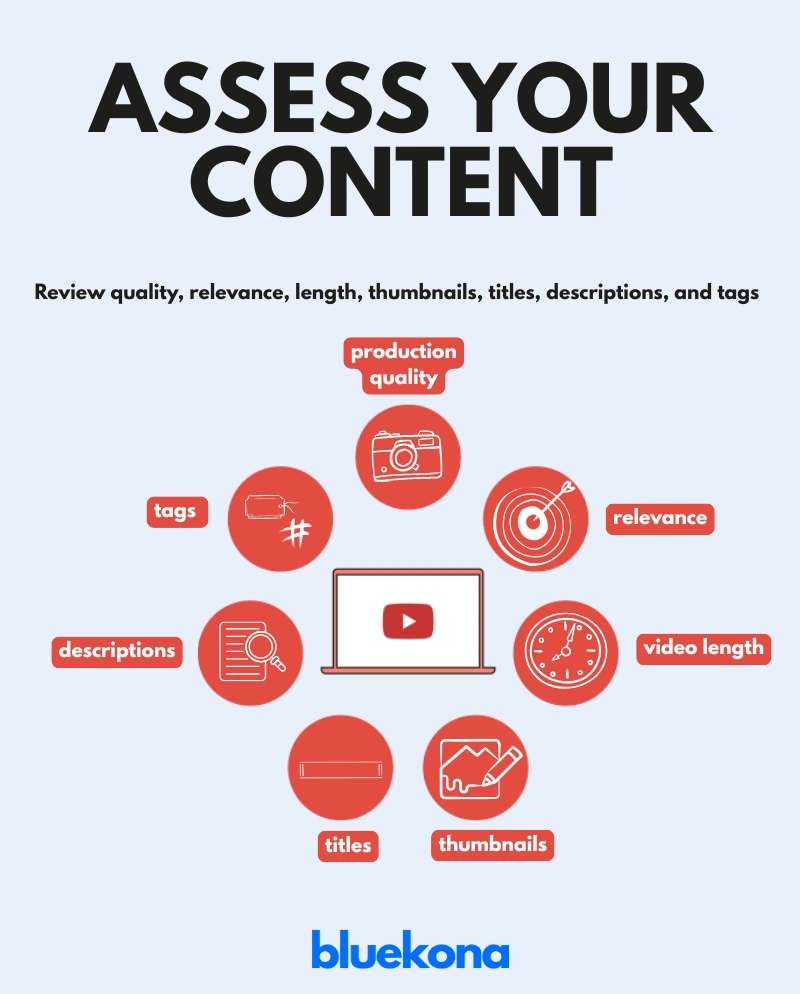
Step 2: Evaluate Video Content Quality and Relevance
Your content is the core of your channel—if it’s off, everything else suffers. This step shows you exactly how to audit each element so your videos pack a punch.
1. Production Quality
Audio Clarity: Poor audio is a deal-breaker. Even a $50 USB mic can outperform your laptop’s built-in mic. Listen for static, background noise, or low volume.
Video Resolution: Aim for at least 1080p. If your footage looks grainy or out of focus, viewers click away. A simple phone tripod and good lighting can take you from “meh” to “pro.”
Editing Polish: Are your cuts clean? Do you use jump cuts or B-roll to keep viewers interested? A rushed edit with long pauses or awkward transitions kills retention.
Quick Test: Pick a recent video, mute the audio, and watch without sound. If you’re lost, improve your editing flow or add on-screen text to guide viewers.
2. Relevance to Your Niche
Stay on Brand: If you’re a cooking channel, every video should tie back to food. A random lifestyle vlog might gain views but confuses subscribers.
Audience Interests: Open YouTube Analytics and check the “Overview” tab. Are 60% of your viewers searching for “quick recipes”? Double down on those. If “kitchen gadget reviews” underperforms, shelve it.
Consistency: Post topics that align. If you upload tutorials, follow them with related how-tos or behind-the-scenes cooking demos. Predictability builds trust.
Tip: Survey your audience via the Community Tab or Instagram Stories—ask directly, “What recipe would you like to see next?” Use their answers to guide relevance.
3. Video Length & Retention
Find Your Sweet Spot: Go to “Audience Retention” in YouTube Studio. If viewers drop off after 2 minutes in a 10-minute video, trim the intro or cut filler. Most tutorials do well in the 8–12 minute range.
First 15 Seconds Matter: Hook viewers immediately—pose a question (“Want perfect pasta in 5 minutes?”), tease the result, or show a quick montage of what’s coming.
Pace & Structure: Break your video into clear sections (intro, main steps, wrap-up). Use on-screen titles to segment. A well-structured video keeps retention high.
Action: Pick your last five uploads, check their 30-second retention rates, and adjust the next video’s intro or pacing based on what you learn.
4. Thumbnails That Get Clicked
Bold, Clean Design: Use high-contrast colors and large, readable text. A cluttered thumbnail gets scrolled past.
Emotional Cues: Faces with expressive reactions (surprise, delight) boost click-through rates (aim for 5–10% CTR). If you’re demonstrating a recipe, show the final dish close-up with a happy, inviting expression.
Consistency: Stick to a consistent style—same fonts, color swatches, and logo placement—so your thumbnails become instantly recognizable.
Example: Use a consistent corner overlay with your logo and a bright border that matches your brand palette.
5. Titles and Descriptions for SEO
Front-Load Keywords: Put the main keyword at the beginning of your title—e.g., “How to Cook Pasta Fast (5-Minute Recipe).”
Compelling Hooks: Avoid “My Latest Cooking Video.” Instead use “5-Minute Pasta Recipe: Dinner Tomorrow?” Tease value, not just content.
Rich Descriptions: In the first 200 characters (the part YouTube often displays), include your primary keyword and a brief summary. Then add timestamps, relevant links (website, social channels), and a clear CTA (“Subscribe for weekly cooking hacks”).
Tags That Matter: Use a mix of broad and long-tail tags. If your keyword is “easy pasta recipes,” add tags like “1-minute pasta tutorial,” “weeknight dinner,” and “Italian cooking at home.” YouTube’s auto-suggest can spark ideas; type your keyword into the tag field and see what’s suggested.
Action: Take three older videos that underperformed and update their titles, descriptions, and tags. Log results over 30 days to see if CTR and watch time improve.
Nailing production quality, relevance, length, thumbnails, titles, and tags turns good videos into great ones—and great ones into viral hits. Now that you’ve audited content quality, let’s move on to audience engagement metrics.
Step 3: Assess Performance Metrics and Audience Engagement
Metrics are more than vanity numbers—they’re your GPS to growth. Let’s dig into YouTube Analytics and find out exactly what’s working, what’s not, and how to keep viewers glued to your channel.
1. Key Metrics to Watch
Watch Time: This is gold. YouTube rewards watch time over views, so focus on total minutes watched. If your average watch time is low, viewers aren’t sticking around. Action: Sort your videos by watch time and identify the top 3. Study their structure—how long is the intro? What pacing did you use? Build your next video around those insights.
Click-Through Rate (CTR): Your thumbnail and title combo determine this. Aim for a 5–10% CTR—anything below 2% means your thumbnails or titles need a revamp. Action: Take your bottom 3 videos by CTR, swap out their thumbnails using bolder visuals and clearer text, then monitor for a 30-day improvement.
Average Percentage Viewed (APV): What percentage of each video do people actually watch? If your APV is under 50%, tighten your content. Cut filler, speed up your editing, or restructure your intro. Action: Identify videos with APV below 50%. Shorten intros or use on-screen bullet points to highlight key moments, then compare APV after reupload.
Engagement (Likes, Comments, Shares): These interactions signal YouTube’s algorithm that your content resonates. A video with high watch time but low likes/comments is missing the engagement hook. Action: End each video with a clear call-to-action—ask a question in the comments (“Which flavor should I cook next?”) or encourage shares (“Tag a friend who needs this tip.”).
2. Top Videos: Learn from Your Winners
Identify Your Top Performers: In YouTube Studio’s Analytics, sort videos by watch time or views over the past 90 days. Which videos consistently top the list? Action: Create a quick “Best Of” playlist featuring these winners. Then, analyze patterns: topic, format, thumbnail style, video length. Your goal—replicate these elements in your upcoming content.
Analyze Content Patterns: Do “listicle” videos outperform deep dives? Are shorter tutorials getting more watch time than long-form explainers? Action: If your “Top 5 Kitchen Hacks” reel is killing it, plan two more “Top 5” videos next month—perhaps “Top 5 Baking Tools” or “Top 5 Spice Mixes.”
3. Audience Demographics: Know Who’s Watching
Age, Gender, Location: Check if your core audience skews 18–24 or 35–44. If 40% of viewers are in India, consider adding English subtitles or occasional Hindi phrases. Action: In Analytics → Audience → Demographics, note the top three countries. Create a video tailored to that region—maybe a local cuisine tutorial or a culturally relevant challenge.
Viewer Interests: YouTube shows “Other Channels Your Audience Watches.” If 60% also watch “Budget Gadget Reviews,” a video titled “Top 5 Budget Cooking Gadgets” could cross-pollinate audiences. Action: Run a poll in the Community Tab asking, “Which gadget helps you cook faster?” Use the results to craft a targeted video.
4. Engagement: Interact and Retain
Comments: Replies build community. If a viewer asks, “What’s the secret to perfect pasta?” respond directly or even make a follow-up video answering that question. Action: Set aside 15 minutes daily to reply to new comments. Track which replies spark more discussion—this feedback loop fuels engagement.
Shares and Saves: These are gold—shares indicate your content is valuable enough to broadcast, and saves mean viewers want to revisit. Note which videos get more saves (e.g., “Holiday Recipes”) and consider turning that format into a series. Action: For videos with high saves, add a pinned comment linking to related playlists, maximizing watch time.
Community Tab & Polls: Use polls to crowdsource video ideas (“What’s next: Cake Decor Tips or Bread Baking Hacks?”). Polls boost engagement and give you direct insight into audience preferences. Action: Publish a weekly poll. Feature the winner in next week’s video, then mention the audience by name (“Thanks to @CookingWithAnita for suggesting cake decorating!”).
Now that you’ve mapped your performance metrics and audience behaviors, it’s time to optimize your SEO and channel discoverability.
In Step 4, we drill into keyword research, metadata tweaks, and end-screen strategies that push your channel to the top of search results. Let’s keep those stats climbing!
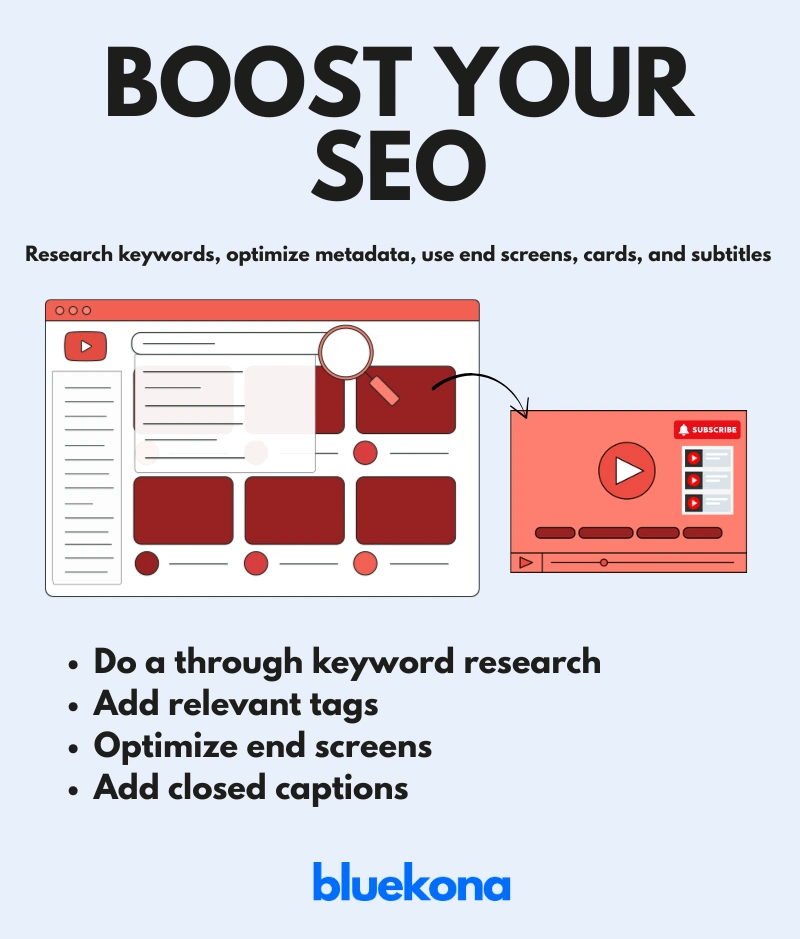
Step 4: Optimize for SEO and Discoverability
YouTube is a search engine—if you aren’t optimizing your videos, you’re invisible. In this step, we’ll tackle keyword research, metadata tweaks, and other SEO hacks to ensure your content gets found and binged.
1. Keyword Research: Find What People Actually Search For
Plug in your core topic (e.g., “easy pasta recipes”) and find related long-tail phrases like “5-minute pasta recipe” or “vegan pasta dinners.”
Compare search interest over time. If “one-pot pasta” spikes in winter, plan your next video accordingly.
Check top-performing channels in your niche—what keywords are they ranking for? Use those as inspiration, not duplicates.
Action: Make a list of 10 high-volume, low-competition keywords, then incorporate one into your next title and description.
2. Metadata: Titles, Descriptions, & Tags
Front-Load Your Title: Place the main keyword within the first 60 characters. For example: “5-Minute Pasta Recipe | Quick Dinner Ideas”
Craft a Compelling Description:
First 200 Characters Matter: Summarize your video with primary keywords (“Learn how to make a 5-minute pasta recipe that’s perfect for busy weeknights”).
Include Timestamps & Links: Time-stamps boost watch time by letting users jump to specific sections. Add links to your website, social profiles, and related playlists.
Repeat Keywords Naturally: Use your target phrase 2–3 times within the first 300 words—don’t keyword-stuff, keep it human.
Select Tags Strategically:
Mix Broad + Long-Tail Tags: Use “pasta recipes” (broad) and “easy vegan pasta dinner” (long-tail).
Check YouTube’s Auto-Suggest: Start typing your seed keyword in the tag field and note suggested phrases. Those are real searches.
Action: Update three of your highest-view videos with optimized titles, revamped descriptions, and refined tags. Track if CTR and rankings improve over the next 30 days.
3. End Screens & Cards: Keep Viewers Bingeing
Link to Related Content: Use end screens to promote your most-viewed playlists or a related how-to series (e.g., link “Top 5 Pasta Hacks” at the 60-second mark).
Add a Subscribe Button: Position your subscribe CTA in the final 5–10 seconds so viewers can click without scrolling away.
Interactive Cards: Place a card mid-video linking to a “Beginners’ Guide” playlist if retention dips at a certain timestamp. Cards can reroute viewers before they click away.
Action: For your next three videos, add relevant cards at 50% mark and end screens linking to your top 2 playlists. Measure watch time lift.
4. Subtitles & Closed Captions: Unlock Accessibility & SEO Gains
Transcribe & Upload SRT Files: YouTube automatically generates captions, but they’re often inaccurate. Upload your own SRT file to ensure precision.
Embed Keywords in Subtitles: When describing actions (“Add garlic to pan”), sprinkle in your target keyword naturally if it fits. Captions improve search indexing by 16%.
Multilingual Captions: If a sizable chunk of your audience is non-English-speaking, add subtitles in their language. More languages equals more discoverability.
Action: Pick one popular video, generate an accurate SRT transcript, and upload it. Then add one additional language subtitle (e.g., Spanish or Hindi) based on your demographic data.
5. Optimize Thumbnails for SEO Impact
Descriptive Text Overlays: Use your main keyword on the thumbnail sparingly—e.g., “5-Min Pasta” in big, readable text.
Consistent Branding Elements: Include your logo or a distinct visual hook so viewers instantly recognize your videos in search results or recommendations.
A/B Test Variations: Create two thumbnail versions and use TubeBuddy’s AB test feature. Let the data decide which design drives higher CTR.
Action: A/B test thumbnails for your top 5 underperforming videos. Evaluate CTR differences after one week and adopt the winner for future uploads.
By implementing these SEO best practices—keyword research, optimized metadata, engaging cards/end screens, accurate captions, and A/B-tested thumbnails—you’ll dramatically improve your channel’s discoverability. Next up: we’ll benchmark your channel against competitors and uncover fresh growth opportunities.
Step 5: Compare with Competitors
If you’re not watching your competitors, you’re flying blind.
Analyzing similar creators in your niche helps you spot content gaps, decode what’s working for them, and find areas where you can stand out. This isn’t about copying—it’s about outsmarting.
1. Identify Your Real Competitors
Not every big channel in your space is your true competition. Look for creators who:
Target the same audience
Create similar content types
Have a subscriber count close to yours or slightly higher
Example: If you run a food vlog with South Indian recipes, competitors might include other regional cooking channels—not general food vloggers with millions of subscribers.
2. Analyze Their Channel Strategy
Once you’ve picked 3–5 competitors, dig into their:
✅ Content Types
Are they doing how-tos, listicles, shorts, or vlogs?
What’s their most viewed content?
✅ Thumbnails
Are their thumbnails more vibrant or stylized than yours?
Do they use text overlays or face shots effectively?
✅ Titles
Are their titles curiosity-driven (“You’ve Been Cooking Rice Wrong!”) or keyword-heavy (“How to Cook Fluffy Rice | Beginner’s Guide”)?
✅ Posting Frequency
Do they post weekly? Twice a month?
Is there a noticeable boost in views during certain times?
✅ Engagement
Look at like ratios, comments, and community posts.
What kind of content gets them the most discussion?
Tool Tip: Use Social Blade or Noxinfluencer to track competitor subscriber growth, video performance, and upload consistency.
3. Find What They’re Doing Better (and Worse)
Compare their videos to yours and ask:
What’s visually stronger about their branding?
Are they explaining things more clearly?
Do they lead viewers to subscribe more effectively?
What topics have they NOT covered that you could?
Pro Tip: Use their “Videos” tab and sort by Most Popular. Study what’s resonated and how you can create a better version with your own twist.
4. Position Yourself Differently
To win, you need a value proposition that’s clear and unique.
Ask:
What’s your special sauce? (e.g., deeper breakdowns, humor, cultural lens, faster pacing)
How can you visually differentiate? (e.g., different thumbnail color scheme, on-screen animations)
Can you bring something they’re missing—like better storytelling or pro-level visuals?
Example: If all your competitors use voiceovers, you could appear on camera to make it more personal and relatable.
5. Track & Iterate
Competitive analysis isn’t a one-time thing. It’s a habit.
Action Plan:
Monthly: Review 3 top-performing videos from each competitor.
Quarterly: Identify one new tactic they’re using—and test it on your channel.
Bottom line:If you want to grow on YouTube, don’t just focus inward. Watch the competition, learn fast, and adapt even faster. Next, we’ll tackle how to make sure you’re monetizing every view and click.
Step 6: Review Monetization and Revenue Streams
Let’s be real—if you’re putting in hours planning, filming, editing, and uploading, you should be earning from it too. But many creators leave money on the table by not fully tapping into YouTube’s monetization ecosystem.
This step helps you make sure your channel is generating revenue smartly—not just through ads, but through multiple income streams.
1. Audit Your Ad Revenue
Start with YouTube’s built-in monetization: AdSense.
Go to YouTube Studio → Analytics → Revenue Tab
Check:
RPM (Revenue per Mille): How much you earn per 1,000 views.
CPM (Cost per Mille): What advertisers pay per 1,000 ad impressions.
Top-earning videos: What’s making you money now?
Tip: Videos longer than 8 minutes can include mid-roll ads, which can significantly boost earnings. Don’t stretch your content—but if it naturally fits, use this feature.
2. Explore Affiliate Marketing
Recommend products you already use and love—and earn a cut from each sale.
Join platforms like:
Amazon Associates
ShareASale
Impact
Add affiliate links in your description and mention them in the video.
Example: A tech reviewer can link to gadgets they review. A cooking channel can share utensils, ingredients, or kitchen appliances.
Pro Tip: Always use a disclosure (like: “Links may earn a small commission”) to stay compliant with platform rules.
3. Sell Your Own Products or Services
Create and promote something of your own:
Merch (T-shirts, mugs, digital downloads)
Courses or eBooks
Templates or presets
Consulting or coaching
Example: A beauty creator could offer a paid skin-care guide or one-on-one sessions. A food channel could offer an eCookbook or spice kits.
You can promote these in:
Descriptions
End screens
Pinned comments
Community tab
4. Use Fan-Funding Options
Let your audience support you directly.
YouTube Memberships: Offer perks like exclusive videos or emojis.
Super Chat / Super Stickers: For live streams.
Patreon: Offer tiered memberships with behind-the-scenes content, shoutouts, or downloadable bonuses.
Example: A gaming channel might offer early access to walkthroughs or bonus game commentary for members.
5. Track What’s Working
Monetization isn’t “set it and forget it.”
Review which affiliate links get clicks.
Compare RPMs across video types.
Test different product placements or calls-to-action (CTAs).
Action Item: Try one new revenue stream this month—whether it’s adding affiliate links, launching a mini product, or setting up channel memberships.
Bottom Line: Monetizing on YouTube isn’t just about turning on ads. It’s about turning your content into a revenue machine—through strategy, experimentation, and genuine value. Next up, let’s talk about how to grow beyond YouTube by expanding your reach across platforms.
Step 7: Check Cross-Platform Integration
Creating amazing content on YouTube is only half the battle. If you want to grow faster and reach wider audiences, you have to go where your viewers hang out—outside of YouTube. That’s where cross-platform integration comes in.
This step focuses on amplifying your content by distributing and repurposing it across social media, blogs, and more. Think of it as building an ecosystem around your channel.
1. Repurpose for Social Media
Your long-form video can be a goldmine for short-form content.
X (formerly Twitter): Share behind-the-scenes moments, quotes, or quick takes.
Instagram: Use Reels, Stories, and carousel posts for short tips or teasers.
TikTok: Cut 60-second highlights or how-to demos from your full video.
Pinterest: Pin your videos (especially tutorials or how-tos) with keyword-optimized captions.
Example: If you posted a 10-minute recipe video, pull out a 30-second montage of the final dish and post it as a Reel or TikTok.
Tool Tip: Use tools like CapCut, InShot, or Descript to quickly repurpose and format videos for each platform.
2. Embed in Your Website or Blog
If you have a website, use it to extend your video’s life.
Write a short blog post summarizing the video.
Embed the full YouTube video.
Optimize the blog post for SEO using the same keywords from your video.
Example: A finance creator might write a blog titled “How to Save $1,000 in 30 Days” and embed the matching YouTube video in the article.
This helps in:
Driving search traffic from Google.
Increasing video watch time directly from your site.
Improving your domain authority and overall brand presence.
3. Use Email Marketing
Yes, email still works. If you have a subscriber list:
Send a weekly update with your latest video.
Add a personal note or bonus tip to increase open rates.
Include links to your social profiles to cross-pollinate platforms.
Pro Tip: Use free tools like MailerLite or ConvertKit to start building your list.
4. Collaborate Cross-Platform
Sometimes the best growth hack is tapping into someone else’s audience.
Team up with a creator on Instagram or TikTok and cross-promote each other’s YouTube content.
Share content in Facebook Groups or Reddit communities that allow relevant self-promotion.
Action Plan
Build a simple cross-promotion system for every upload.
Step 8: Compile Findings and Create an Action Plan
Now that you’ve dug deep into your channel’s branding, content, performance, SEO, monetization, and distribution, it’s time to bring it all together. This is where analysis turns into action—and action turns into growth.
Think of this as your YouTube GPS: it shows where you are, where you want to go, and how to get there.
1. Summarize Your Audit
Start by mapping out your audit findings using a SWOT framework
Writing this out helps you see the bigger picture. Are your thumbnails hurting performance? Are your top videos short and punchy? Are you missing out on collab opportunities?
2. Build an Action Plan (With Deadlines!)
Turn your insights into clear, achievable steps. Prioritize them based on impact and ease of implementation.
Use tools like Trello, Notion, or even a Google Sheet to track progress.
3. Set Clear, Measurable Goals
Without goals, it’s hard to know if your changes are working. Set goals tied to real numbers:
Increase watch time by 20% in 2 months
Hit 5% CTR across new videos
Reach 1,000 subscribers by Q4
Boost revenue by adding 2 affiliate links per video
Make your goals SMART: Specific, Measurable, Achievable, Relevant, and Time-bound.
4. Schedule Regular Check-ins
A one-time audit is good. A recurring one is game-changing.
Quarterly: Do a full audit every 3 months.
Monthly: Review key metrics and note any major shifts.
Weekly: Track progress on your action plan.
Pro Tip: Block time in your calendar now so you actually follow through.
This keeps the process focused, fast, and measurable.
Remember: An audit is only valuable if it leads to action. Use what you’ve learned to improve, experiment, and evolve your channel with purpose. Up next: bonus growth tips, real-life inspiration, and answers to your most pressing YouTube audit questions. Let’s wrap this up strong.
Bonus Tips for YouTube Growth
Consistency: Post on a schedule (e.g., every Wednesday) to build viewer habits.
Trends: Use YouTube’s trending page for timely content ideas.
Community: Host Q&As or live streams to deepen connections.
Case Study: Yoga and You
Take Yoga and You, a channel by Ventuno Yoga (YouTube link). Instead of chasing trends or uploading randomly, they focused on:
High-quality yoga content: Each video offers professionally shot sessions guided by trained instructors.
Consistency: They post regularly, making it easier for viewers to build a habit.
Audience engagement: Their community tab reflect genuine conversations and feedback.
Result? Yoga and You has built a loyal global audience by combining value-driven content with smart branding and routine.
FAQ
What is a YouTube channel audit?
A detailed review of your channel’s performance, content, and strategy.
Why is it important?
It boosts visibility, engagement, and revenue while keeping you competitive.
How often should I audit my YouTube channel?
Every 3–6 months to stay on track.
What tools help?
YouTube Studio, Bluekona AI
How do I improve performance?
Enhance content quality, optimize SEO, and engage your audience.
Take Your Channel to the Next Level
Auditing your YouTube channel isn’t a one-off task—it’s a habit that fuels long-term success.
Start today, implement these steps, and watch your channel thrive.
Have questions or results to share? Drop them below—I’d love to hear your story!
With over 930 million professionals on LinkedIn as of 2025, your company page is more than just an online brochure—it’s a dynamic hub for networking, thought leadership, and lead generation.
But are you truly leveraging its full power?
A systematic LinkedIn page audit helps you pinpoint what’s working, uncover hidden gaps, and adapt to the platform’s rapid evolution—over 50 feature updates in 2024 alone.
In this comprehensive guide, we’ll walk you through a step-by-step audit process tailored for 2025’s LinkedIn landscape. You’ll learn how to define SMART goals, optimize your page setup, refine team profiles, analyze content performance, benchmark against competitors, and tap into new features like enhanced video discovery and post analytics.
Whether you’re a small business, a B2B marketer, or an HR leader, these strategies will ensure your LinkedIn presence drives real engagement, attracts top talent, and supports your broader business objectives.
Ready to transform your LinkedIn page from a static profile into a growth engine? Let’s dive in.
Why Conduct a LinkedIn Page Audit?
Simply posting updates isn’t enough—LinkedIn is constantly evolving, and what worked last year may underperform today. A regular LinkedIn page audit ensures you’re:
Aligned with Your Goals Are you aiming for brand awareness, lead generation, or talent acquisition? An audit confirms your content and activity directly support those objectives—and highlights gaps where you can refocus.
Speaking to the Right Audience LinkedIn analytics reveal who’s following you—industries, job titles, locations, and more. Use those insights to tailor posts that resonate, rather than broadcasting generic updates.
Maximizing Feature Use With over 50 updates rolled out in 2024—like post scheduling, enhanced video analytics, and interactive carousels—an audit spotlights new tools you may be overlooking.
Staying Competitive Your competitors are also optimizing. By benchmarking their growth, content mix, and engagement tactics, you can identify opportunities to differentiate and lead in your niche.
Driving Measurable Results An audit moves you beyond vanity metrics. You’ll track the right KPIs—follower growth, post performance, website clicks—and refine your strategy based on data, not guesswork.
A thorough audit keeps your LinkedIn page fresh, strategic, and geared for real business impact. Next up: defining clear, SMART goals to guide your audit process.
Step-by-Step Guide to Auditing Your LinkedIn Page
Ready to take action? Follow this clear, step-by-step guide to audit every aspect of your LinkedIn page—from profile setup to content strategy—so you can optimize performance and drive real results. Let’s jump in!
Step 1: Define Your LinkedIn Goals
Before you tweak banners or analyze posts, nail down why you’re auditing. Clear goals keep your efforts focused and measurable.
Brand Awareness: Grow your follower count by 20% in six months to increase top-of-funnel visibility.
Lead Generation: Drive a 15% lift in website clicks from LinkedIn by Q3 2025.
Talent Acquisition: Boost “Careers” page views by 25% to attract qualified candidates.
Thought Leadership: Increase post engagement (likes, comments, shares) by 10% on industry insights.
Actionable Tip: Make each goal SMART—Specific, Measurable, Achievable, Relevant, and Time-bound.
For example:“Secure 200 new followers and 50 website visits from LinkedIn in 3 months by posting weekly case studies.”
Jot down your goals, then align every audit step to them. Next, we’ll optimize your page setup to support these objectives.
Step 2: Optimize Your Company Page
Your LinkedIn Company Page is your digital storefront. If it looks outdated or incomplete, you’re losing trust—and traffic.
Profile Essentials
Logo: Upload a high-res, professional logo (300×300 px). This is what shows in search and employee profiles.
Banner Image: Use a branded image (1128×191 px) that reflects your identity. Add a CTA like “Follow us for weekly insights.”
Headline: Craft a keyword-rich tagline. Example: “B2B SaaS for Growth-Driven Teams | Trusted by 10,000+ Users.”
About Section
First 156 characters count most—they show up in previews. Hook readers with your value prop early.
Full Description (up to 2,000 characters): Cover mission, solutions, audience, and a strong CTA.
Include a link to your website and add relevant keywords naturally—no keyword stuffing.
Additional Fields
Industry, company size, and specialties boost discoverability.
Set a custom button (like “Contact Us” or “Visit Website”) to drive conversions.
SEO Tip: Customize your page URL (e.g., linkedin.com/company/yourbrandname) and sprinkle in location-based terms if relevant.
Data Point: LinkedIn says pages with complete info get 30% more weekly views.
Next, we’ll make sure your team is aligned and optimized as brand advocates.
Step 3: Enhance Team Profiles
Your team members are brand ambassadors, and their profiles impact your company’s reputation. Ensure:
All team members have professional profile pictures, preferably showing their faces for recognizability.
Profiles are tagged on the company page to show association.
Consider using LinkedIn’s Employee Advocacy Program to track and encourage employees to share company content, as they are 14x more likely to engage, boosting brand awareness. Actionable tip: Host a workshop to guide employees on optimizing their profiles and sharing content effectively
Step 4: Analyze and Refine Content Strategy
Content is your LinkedIn engine—it drives visibility, engagement, and conversions. But not all content performs equally. This step is about using data to guide your efforts.
Review Post Performance
Dive into LinkedIn Analytics and look at:
Impressions & Reach – Are people seeing your posts?
Text Posts – Great for storytelling and thought leadership.
Image Carousels – High-performing for guides, tips, and visual storytelling.
Videos – Get 20x more shares than other types (LinkedIn, 2024).
Polls – Excellent for boosting engagement and feedback.
Articles – Ideal for deep dives and authority building.
Pro Tip: Posts with multiple images tend to drive more engagement than single-image posts (Socialinsider, 2024).
Best Time to Post
Based on 2024 data, optimal windows are:
Tues–Thurs, 8 AM–2 PM (local time)
Fridays at 11 AM or 12 PM also see strong engagement
Test and refine based on your own analytics.
Engagement Practices
Reply to every comment—quickly. This boosts reach and builds community.
Tag relevant employees or partners when appropriate to amplify visibility.
Actionable Tip: Create a monthly content calendar with a mix of insights, updates, videos, and community features. Track each post’s success and adjust as needed.
Next up: let’s get specific about your audience and how to tailor content for them.
Step 5: Understand Your Audience
You can’t engage if you don’t know who you’re talking to. This step is about turning data into understanding—and understanding into content that connects.
Demographic Insights
Use LinkedIn’s built-in analytics to uncover:
Job Functions – Are they marketers, HR professionals, or C-level execs?
Seniority Levels – Entry, mid, senior, or decision-makers?
Industries & Company Sizes – Are you attracting startups, enterprises, or something in between?
Locations – Where is your audience based?
Knowing this helps you shape your tone, topics, and content formats.
Example: If most of your followers are mid-level IT professionals at large firms, focus on actionable insights, career growth, and technology trends—not beginner guides or broad thought leadership.
Engagement Data
Look beyond who they are—analyze what they care about:
Which posts get the most likes, shares, and comments?
What topics generate conversation?
Do videos or carousels resonate more with your top segments?
Trend to Watch (2025): Audience filters now let you see how different content types perform across segments (e.g., HR managers vs. operations leads). Leverage this to fine-tune content delivery.
Tailored Content = Higher Impact
Segment your audience in your planning process.
Create specific content for each segment (e.g., industry reports for execs, how-to guides for junior roles).
Speak their language—solve their challenges.
Actionable Tip: Create 2–3 audience personas based on LinkedIn data. Write posts specifically targeting each persona at least once per month.
Step 6: Benchmark Against Competitors
To stand out, first you need to know where you stand.
Benchmarking your LinkedIn presence against competitors reveals strategic gaps, performance benchmarks, and content opportunities that can set your brand apart.
Identify Your Competitors
Start with 3–5 companies that:
Offer similar products/services
Target the same audience
Actively publish content on LinkedIn
Use LinkedIn search or tools like Sales Navigator to shortlist these brands.
Look at:
Content types: Do they post more carousels, videos, or thought leadership?
Engagement: Are their posts sparking conversation?
Tone and visuals: How do they brand their messaging?
Learn and Differentiate
Steal like a strategist:
Adopt what works: If competitors get traction with polls or case studies—try your spin on it.
Spot the gaps: Are they ignoring employee stories or trending topics? You can fill that void.
Differentiate: Use your unique value prop or brand voice to stand out where others blend in.
Actionable Tip: Set up a monthly competitive content review. Use it to inspire campaigns, content formats, and engagement strategies.
Step 7: Leverage LinkedIn Features
Tap into LinkedIn’s built-in tools to amplify reach, engagement, and brand credibility.
LinkedIn is no longer just a job board—it’s a content platform, a video hub, and an event stage. If you’re not using its full feature set, you’re leaving visibility on the table.
Key Features to Use
Showcase Pages: Create dedicated pages for specific products, services, or sub-brands. Great for targeted audiences or campaigns.
Events & LinkedIn Live: Host webinars, AMAs, or workshops. These tools boost visibility and position your company as a thought leader.
Polls & Articles: Encourage interaction through polls. Use long-form articles to dive deep into topics your audience cares about.
Post Scheduling (2025 Update): Schedule content natively to stay consistent. No third-party tool needed.
“Videos for You” Feature: Leverage LinkedIn’s improved video discovery tool to boost reach. Short videos, behind-the-scenes clips, and explainers work best.
Premium Company Pages: If available to you, unlock enhanced analytics and audience insights.
Why It Matters
These features aren’t gimmicks—they’re algorithm-friendly, engagement-boosting tools designed to make your brand more visible. Companies that use video, events, and employee-generated content often outperform those that don’t.
Actionable Tip: Choose 2–3 features you’re not using today. Run a 30-day test and track engagement uplift.
Step 8: Review Paid Campaigns (If Applicable)
If you’re running LinkedIn ads, it’s time to dig into the data—not just spend and impressions, but real business outcomes.
Paid campaigns can supercharge your reach, but only if they’re aligned with your goals and targeted with precision. An audit ensures you’re not wasting budget on underperforming content or audiences.
What to Review
Campaign Objectives: Are your campaigns tied to clear goals—awareness, lead gen, or conversions? Match each ad to the appropriate funnel stage.
Targeting Accuracy: Reassess your audience filters — job titles, industries, company size, location. Narrow targeting often performs better on LinkedIn.
Creative Elements: Audit your headlines, visuals, CTAs, and ad formats (video vs. single image vs. carousel). A/B test what’s working.
Budget Allocation: Look at ROI per campaign. Double down on top-performers and pause or refine low-impact spend.
Conversion Tracking: Use LinkedIn’s Campaign Manager and conversion tracking to measure clicks, form fills, site visits, or job applicants.
Actionable Tip: Create a monthly reporting template that includes: 1. Spend vs. ROI 2. Top-performing creatives 3. CTR and conversion rates 4. Audience insights Use this to decide on ongoing optimization and justify budget increases—or cuts.
Step 9: Utilize Analytics and Tools
You can’t optimize what you don’t measure.
LinkedIn’s built-in analytics can uncover what’s working, what’s not, and what to do next.
An audit is only as good as the insights it delivers. Metrics help you validate strategy, fine-tune content, and prove ROI.
Page views
Key Areas to Monitor
Follower growth
Post impressions
Engagement rate (likes, comments, shares)
Click-throughs
Follower demographics
Monitor profile views driven by specific posts, and follower gains from video content. These fresh insights reveal what truly moves the needle.
While LinkedIn’s native tools are powerful, there are many platforms like HubSpot or Hootsuite that offer enhanced scheduling, reporting, and competitor tracking.
Actionable Tip: Avoid tool overload—choose a smart tool like Bluekona that not only provide analytics but also suggestions to level you up.
Step 10: Regularly Update and Re-audit
A single audit is powerful—regular audits are transformative. LinkedIn evolves quickly, and your business does too. Staying updated ensures your page never falls behind.
Why It Matters:
Algorithms shift. Features roll out. Your audience grows. A quarterly or monthly re-audit helps you adapt, stay competitive, and maintain momentum.
Actionable Tip: Create a repeatable checklist to make future audits easier and more efficient. Document what you review, what tools you use, and who’s responsible. This becomes your LinkedIn playbook.
Addressing Common Pitfalls
Even with a solid strategy, LinkedIn pages often underperform due to avoidable missteps. Spotting these early can save time, improve ROI, and keep your brand ahead.
Common LinkedIn Audit Mistakes (and How to Fix Them)
1. Neglecting Team Profiles Your employees are brand ambassadors. Incomplete or outdated profiles diminish credibility. Fix: Encourage team members to update photos, headlines, and link their profiles to the company page.
2. Ignoring Analytics If you’re not using LinkedIn’s built-in insights, you’re flying blind. Fix: Regularly review analytics to identify what’s working and double down.
3. Overlooking Competitor Benchmarks Without external reference points, your audit exists in a vacuum. Fix: Compare engagement, follower growth, and content strategy with 2–3 competitors quarterly.
4. Failing to Engage with Followers Publishing content is half the game—engagement builds trust and visibility. Fix: Respond to comments, DMs, and reactions. Set aside time weekly for community interaction.
5. Stale or Inconsistent Content Posting randomly or recycling outdated updates won’t keep your audience interested. Fix: Use a content calendar and mix in fresh formats like polls, carousels, and short-form videos.
6. Not Testing New Features LinkedIn constantly evolves. Skipping new features = missed opportunities. Fix: Test emerging tools like LinkedIn Live, post scheduling, and video carousels to stay ahead.
Pro Tip: Run a quarterly “Pitfall Checkup” alongside your audit to catch and correct these common issues. Small tweaks here can create massive improvements in performance.
The Role of AI in LinkedIn Audits
Artificial Intelligence is rapidly reshaping how brands approach LinkedIn optimization.
Gone are the days of manual guesswork—AI-driven insights now allow marketers to audit smarter, faster, and with greater accuracy.
Why AI Matters in Your LinkedIn Audit
Data-Backed Decisions: AI helps you uncover patterns in audience behavior, engagement trends, and content performance that human analysis might miss.
Content Optimization: AI tools can suggest best-performing post formats, optimal posting times, and even recommend keywords or hashtags tailored to your audience.
Real-Time Alerts: Track dips or spikes in metrics as they happen, allowing for faster course corrections.
BlueKona.ai—a specialized AI tool built to streamline LinkedIn audits for brands and agencies.
What BlueKona Does:
Analyzes your company page performance across data points.
Recommends actionable tasks prioritized by potential ROI.
Detects algorithm shifts and suggests strategy updates proactively.
💡 Example: Instead of guessing which post formats work, BlueKona might show you that carousels outperform whitepaper links by 3x in engagement—giving you the clarity to adjust instantly.
How to Use AI in Your Next Audit
Run your LinkedIn page through an AI-powered audit tool like BlueKona.
Review auto-generated reports showing gaps, wins, and quick wins.
Apply AI-suggested optimizations to content cadence, targeting, and messaging.
Set monthly AI-powered check-ins to stay agile and informed.
Bottom line: AI transforms LinkedIn audits from a static report into a living, evolving strategy map. If you’re still relying on spreadsheets, it’s time to upgrade your toolkit.
Conclusion
Auditing your LinkedIn company page isn’t just a best practice in 2025—it’s a business necessity. With LinkedIn evolving rapidly and B2B competition fiercer than ever, a structured audit gives you the clarity to sharpen your strategy, engage your audience, and drive measurable results.
By following this step-by-step audit guide—from setting goals and optimizing your page to leveraging AI tools like BlueKona.ai—you position your brand to not only keep up with platform changes but to stay ahead of the curve.
Final Tip: Make LinkedIn audits a regular part of your marketing workflow—quarterly if possible. With each cycle, you’ll uncover new opportunities, fix what’s broken, and fine-tune what’s working.
Your next move? Block 60 minutes on your calendar, run your first audit, and take the first step toward a smarter, more strategic LinkedIn presence.
Instagram is more than just a social media app—it’s a powerful growth engine for brands, creators, and businesses. But without a clear roadmap, you’re essentially flying blind: posting content, hoping for engagement, and wondering why growth stalls.
That’s where an Instagram audit comes in. By regularly reviewing your profile, content, audience, and competitors, you’ll uncover hidden opportunities, refine your strategy, and boost performance.
Whether you’re a local shop or a global brand, this step-by-step audit will give you the insights you need to evaluate key areas (profile, content, audience, and metrics), and turn your Instagram into your most reliable marketing channel.
What is an Instagram audit?
An Instagram audit is a systematic review of your profile, content, audience, and performance metrics to uncover strengths and opportunities for improvement.
Why audit your Instagram account?
Regular audits help you boost engagement, sharpen your content strategy, and adapt to Instagram’s ever-changing algorithm—making your posts more discoverable both by users and by AI-driven search engines.
Steps to Audit Your Instagram Account
Ready to turn your Instagram from guesswork into a growth machine?
Before diving into your audit, gather the right tools to streamline data collection and analysis. Here are the essentials:
Instagram Insights tracks reach, engagement, and follower demographics.
Hootsuite schedules posts and monitors performance trends across multiple accounts.
Iconosquare analyzes hashtag performance and benchmarks competitors.
Sprout Social generates detailed reports on audience behavior and content effectiveness.
Pro Tip: Opt for an all-in-one platform like BlueKona that consolidates these features and automates your entire Instagram audit process — so you can get comprehensive insights without juggling multiple apps.
Step 2: Conduct Your Instagram Audit — Key Areas to Review
Now that you’ve gathered your tools, it’s time to dive into your audit. We’ll break this into four key areas—profile, content, audience, and metrics—so you can tackle each systematically.
2.1 Profile Audit
Goal: Make a killer first impression.
Profile Picture: Use a high-resolution, brand-consistent image.
Bio: Write a clear, keyword-rich description (e.g., “LA Fitness Coach”) with a call-to-action.
Link: Point to a relevant landing page or use a Linktree for multiple destinations.
Highlights: Organize Stories into branded covers and logical categories
Action: Update any outdated details, tighten your bio copy, and swap in fresh highlight covers.
2.2 Content Audit
Goal: Identify your top performers and gaps.
Post Types: Compare Reels, carousels, single images, and Stories.
Story Performance: Monitor view counts, forward taps, and exits.
Action: Set benchmarks for each metric and identify any content types that consistently miss the mark.
With these four areas audited, you’ll have a clear map of strengths, weaknesses, and quick-win opportunities.
Step 3: Turn Insights into Action
Your audit has revealed what’s working—and what isn’t. Now it’s time to act on those findings to boost performance and engagement.
Follow these targeted tactics based on common audit outcomes:
If engagement is low on static posts: Experiment with Reels or carousel posts. Video formats often drive higher reach and saves.
If follower growth has stagnated: Refresh your hashtag strategy—mix niche, location-based, and trending tags. Or partner with micro-influencers in your niche to tap new audiences.
If your bio isn’t converting: Rewrite it with a stronger call-to-action (e.g., “Book your free consult today!”) and include a keyword relevant to your audience.
If your posting schedule is inconsistent: Use instagram’s scheduling features to plan and maintain a steady content calendar—aim for 3–5 quality posts per week.
Step 4: Keep Auditing
An Instagram audit isn’t a one-and-done task—it’s a continuous cycle of review, action, and refinement.
Schedule your next audit every 3–6 months, or after any major campaign, to stay ahead of trends and algorithm shifts.
Review your checklist: Revisit each audit area—profile, content, audience, and metrics—to ensure your improvements stick.
Measure progress: Compare new metrics against your audit benchmarks to see what’s working.
Iterate quickly: Double down on successful tactics and pivot away from underperforming ones.
By making audits a habit, you’ll not only maintain peak performance but also uncover fresh opportunities to engage your audience, grow your following, and outshine competitors.
Wrap Up
Auditing your Instagram account turns guesswork into strategy. By regularly reviewing your profile, content, audience, and metrics, you’ll spot what’s working, uncover hidden gaps, and fuel continuous growth.
Remember, social media isn’t static—algorithms change, audiences evolve, and new features emerge.
Scheduling an audit every 3–6 months keeps you agile and ahead of the curve.