Most brands try to buy attention. Gymshark built a $1.45B empire by earning it.
Founded in 2012 in a garage by teenager Ben Francis, Gymshark didn’t win by outspending Nike or Adidas. They won by out-creating them—turning influencers into athletes, community into currency, and content into the engine of compounding growth. Paid ads? They used them, sure—but only as fuel for what was already catching fire.
While competitors were burning through ad budgets, Gymshark was building content people actually searched for, shared, and showed up for. That’s the difference between hype and a flywheel.
In this breakdown, we’ll dissect how Gymshark went from garage startup to global powerhouse in just over a decade—and, more importantly, how you can steal their playbook and start applying it today.
Garage to Global — The Fast Growth Timeline
In 2012, Ben Francis wasn’t a founder with investors or a roadmap—he was a teenager stitching gym clothes in his parents’ garage. Fast forward to 2025: Gymshark is valued at $1.45 billion.
The real turning point? The 2013 BodyPower Expo. While legacy brands rolled out sterile booths and glossy displays, Gymshark rolled in with creators like Lex Griffin, Steve Cook, and Nikki Blackketter—athletes who were already embedded in the fitness culture. They weren’t paid mouthpieces; they were real people with real followings who wore Gymshark because it felt authentic.
The effect was explosive. Not a 48-hour viral blip, but the kind of organic buzz that turns heads, builds waitlists, and cements a brand inside a community.
And Gymshark didn’t let it fade. They turned that moment into a system: fast-cycle product launches built on community feedback, limited drops that created genuine scarcity, and a marketing engine that always started with the people living the lifestyle—not a boardroom strategy deck.
The solopreneur steal: Your breakthrough won’t come from a clever ad hack. It’ll come from embedding yourself in the community you serve—and letting them pull your brand forward.
The Content Flywheel — How Gymshark Built a Machine That Compounds
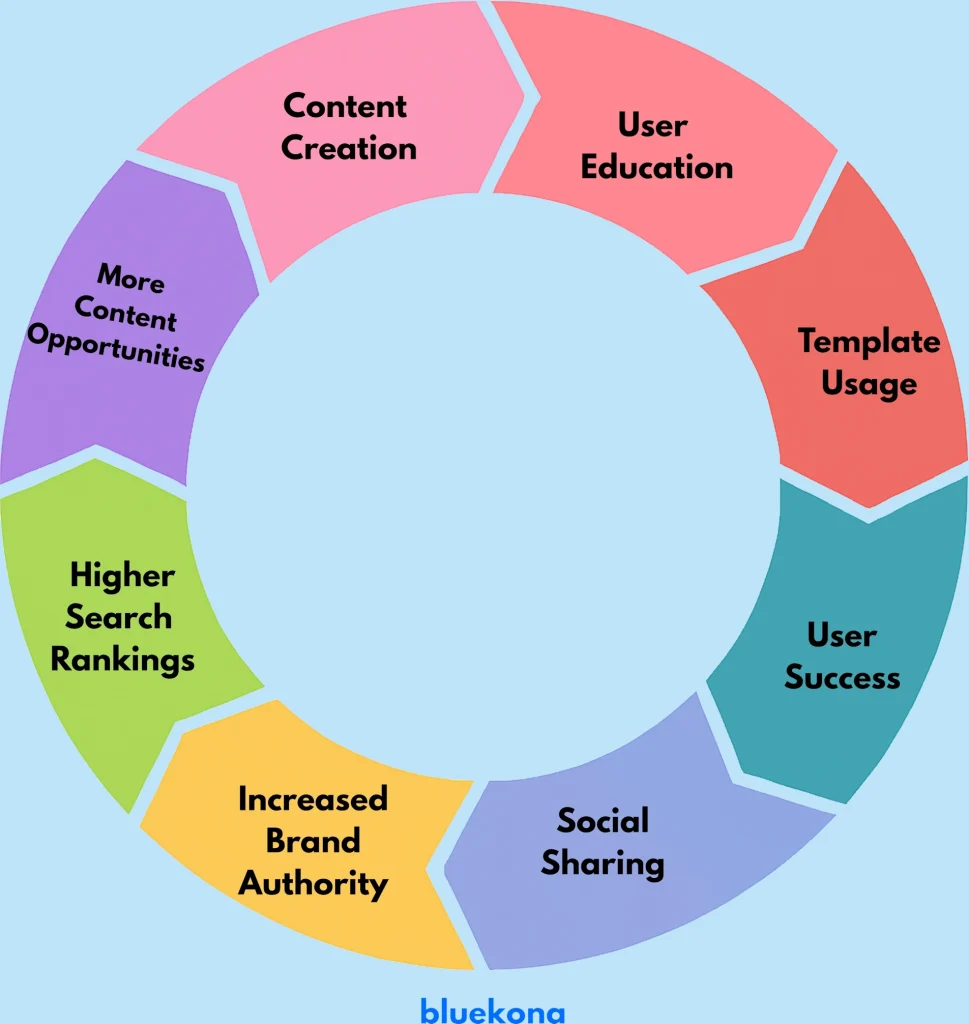
Most brands are still debating whether to chase TikTok trends or double down on Instagram. Gymshark skipped the debate and built something more powerful: a content ecosystem that feeds itself. Every piece of content fueled the next, creating a flywheel of compounding growth.
Creator-Led Marketing (Before It Was Cool)
Those early partnerships with Lex Griffin, Steve Cook, and Nikki Blackketter weren’t just influencer shoutouts. Gymshark called them “athletes,” but really, they were ambassadors living the lifestyle and bringing their audiences with them. By 2023, the network had grown to 125+ creators, driving more than 30% of Gymshark’s social-driven revenue.
The solopreneur steal: Don’t rent billboards disguised as influencers. Build long-term partnerships with creators whose audiences trust them. Authenticity scales better than follower counts.
Content Systems That Compound
Here’s where Gymshark played chess while everyone else played algorithm roulette. Instead of random posting, they built repeatable systems across every major channel:
Instagram (7.7M+ followers): Athlete-driven content, customer transformations, and workouts worth saving—not just polished product shots.
TikTok (4.3M+ followers): They didn’t just hop on trends, they created them. The “66 Days: Change Your Life” challenge alone drove 200M+ views.
YouTube (long-form depth): Series like Gymshark Lifts gave the brand authority and loyalty beyond 15-second clips.
Blog (Gymshark Central): Ranking for 356K keywords and pulling in 1.5M organic visits monthly (Ahrefs, 2025). An SEO gold mine powering the entire funnel.
The brilliance? Every piece of content did double (or triple) duty. A single YouTube video became Instagram clips, TikTok challenges, and blog material. One photoshoot stocked months of social posts. Creator collabs amplified across all platforms.
That’s the flywheel. Not random hype, but a system where content compounds instead of fades.
Paid Ads Were an Amplifier, Not Foundation
Here’s where most marketers misread the Gymshark story. They assume it was all organic magic—that a billion-dollar brand grew without ever touching paid ads. Wrong. Gymshark did use ads—they just didn’t rely on them as the foundation.
While competitors were burning cash on generic product pushes, Gymshark used paid media as an amplifier. The playbook was simple: test content organically, then scale only what proved it could stand on its own.
Take their “66 Days: Change Your Life” challenge. It racked up 200M+ views organically before Gymshark spent a dime. Only then did they push paid media behind it—pouring gasoline on a fire that was already roaring.
And when they did spend, it wasn’t on sterile “buy now” ads. It was creator-led videos, user-generated transformations, and challenges people were already sharing. Paid ads extended reach; authenticity did the heavy lifting.
The solopreneur steal: Don’t use ads to test whether your content is good. Use them to scale what’s already proven to resonate. If your content can’t get traction without paid spend, no budget in the world will save it. But nail the organic first, and ads become the multiplier every scrappy brand dreams of.
The Moat: Community as Growth Engine
Here’s what separated Gymshark from every other brand trying to copy their success: they didn’t just build an audience—they built a community.
Offline Experiences That Created Online Legends
While “digital-first” brands obsessed over dashboards, Gymshark was doubling down on the real world. The Gymshark Lifting Club wasn’t just a gym—it was a pilgrimage site. Pop-ups weren’t sales activations—they were gatherings of the tribe. And when they took over Venice Beach, the 70M+ impressions weren’t the point—the cultural signal was.
The solopreneur steal: Even if you run a digital business, find ways to meet your community offline. A coffee chat, a local meetup, or an annual event can forge loyalty no algorithm can touch.
Owned Channels: Where Belonging Happens
Gymshark also built moats on platforms they controlled. Their app, blog, and Discord-style communities weren’t just content distribution—they were connection engines. Members shared transformations, tracked workouts, swapped advice, and held each other accountable.
That’s the difference between customers and evangelists. Customers buy your products. Evangelists defend your brand, recruit new members, and stick with you when competitors come knocking.
The solopreneur steal: Stop chasing “followers.” Start facilitating connections. Your job isn’t just to push content—it’s to create spaces where your people can find each other. Products can be copied. Communities can’t.
What Solopreneurs and Marketers Can Learn
Gymshark didn’t stumble into a $1.45B valuation. They built a system—and you can too, even without a billion-dollar budget. Here’s the playbook worth stealing:
Invest in Content Systems That Compound Forget chasing the next viral TikTok. Gymshark’s blog pulls 1.5M monthly organic visits and their YouTube series keep attracting new fans because they built assets that pay dividends long after publishing. Your move: Start building your own media engine—SEO, blogs, YouTube. Boring? Maybe. Effective? Absolutely.
Build Creator Relationships, Not Transactions Gymshark didn’t rent influencers. They partnered with people who lived the lifestyle. By 2023, those authentic voices drove 30%+ of social-driven revenue. Your move: Don’t buy followers. Find aligned creators—even small ones—who actually believe in what you’re building.
Treat Paid Media Like Gasoline, Not the Engine Most solopreneurs burn money trying to force mediocre content to work. Gymshark only spent when they knew content resonated—turning sparks into bonfires. Your move: Prove it works organically first. Then, use paid to amplify—not compensate.
Close the Feedback Loop Gymshark didn’t guess what content or creators worked. They measured, refined, and doubled down. Your move: Use tools like BlueKonaAI to track performance across channels, spot what drives real engagement, and kill what doesn’t. Guessing is for amateurs—feedback loops are your competitive edge.
The bottom line: Gymshark’s secret wasn’t ads, luck, or hype. It was systems—content, community, creators—that compound. The only question is whether you’re ready to stop winging it and start building your own flywheel.
If I had a dollar every time someone lobbed that cookie-cutter advice at struggling creators, I’d have enough to buy Twitter back from Elon. The problem isn’t that it’s wrong—it’s just about as useful as telling someone to “be yourself” on a first date. Like, thanks, but what does that actually mean?
Here’s the reality check: virality isn’t lightning in a bottle or divine favor from the algorithm gods. Viral content follows predictable patterns, triggers specific psychological responses, and yes—it can be reverse-engineered.
So let’s stop throwing spaghetti at the wall and start cooking with actual intention. This isn’t a motivational pep talk. It’s psychology + data, served with a side of sass and zero fluff. Because if you’re going to spend time creating content, you deserve to understand the science behind why people smash that share button.
Myth-Busting: Virality Isn’t Random
Viral content isn’t lightning in a bottle—or Mercury retrograde blessing one lucky creator who posted at 3:47 PM on a Tuesday. That kind of magical thinking keeps you refreshing your analytics, praying for a miracle, instead of actually engineering one.
The truth? Every creator who consistently goes viral—whether it’s MrBeast, Gary Vee, or that random TikToker you’d never heard of until last week—isn’t lucky. They’re hitting specific psychological triggers that make our lizard brains scream: MUST. SHARE. NOW.
Look closely at almost any viral post and you’ll spot the same ingredients:
Emotion: anger, joy, shock, nostalgia.
Story arc: setup + twist that hooks attention.
Timing: landing when the topic’s hot.
Cultural wink: a pop culture reference that makes people feel in on the joke.
Not coincidence—pattern recognition. So what are the levers you can pull to tilt the odds? Let’s break them down.
Lever 1: The Plot Twist Hook
Oh, you thought you were getting a straightforward business tip? Plot twist: we’re starting with why your brain just perked up at the words “plot twist.”
Here’s the psychology: our brains are dopamine junkies. When you set up an expectation and then flip it with a surprise reveal, you trigger that did NOT see that coming rush. It’s the same reason you binge Netflix or keep scrolling TikTok—you’re chasing twists.
Example? That viral LinkedIn post: “I thought I was hiring a graphic designer for $500. Turns out, I accidentally hired my biggest competitor’s CEO.” Setup (normal transaction) → twist (competitor’s CEO) → reveal (awkward but valuable conversation) = instant shares.
How to apply: use the Setup → Expectation → Surprise → Reveal formula.
Pitfall: don’t spoil the twist in your headline or make it so cryptic your audience feels tricked. The best twists feel surprising and make sense in hindsight.
Lever 2: The Emotion Bomb
Want to know the difference between content that gets a polite “like” and content that explodes in group chats?
One word: feelings. Not the warm fuzzy kind either—we’re talking emotions that make people practically vibrate with the need to hit share.
The psychology: when we feel something intensely, logic goes out the window. High-arousal emotions bypass the “should I share this?” filter and push us straight into action mode. It’s evolutionary—back in the tribe days, if something sparked outrage, joy, or fear, you had to tell others to survive.
Example: That corporate tweet everyone dunked on (anger), the surprise pregnancy announcement video (joy), the plot twist TikTok (shock), or that “only 2000s kids will remember” thread (nostalgia). Each hit one of the Big Four and spread like wildfire.
How to apply: Audit your best-performing content for the Big Four—anger, joy, shock, nostalgia—and craft around them.
Pitfall: Don’t fake it. Manufactured outrage = instant credibility loss. If you’re not genuinely feeling it, your audience won’t either.
Lever 3: The Hot Take Hack
Here’s the thing about trending topics: everyone’s talking about them, which usually means everyone’s saying the same thing. It’s like showing up to a party where 47 people are wearing the same outfit—except instead of changing, you throw on accessories that make you unforgettable.
Psychology explains it: our brains are wired to pay attention to novelty within familiar contexts. A trending topic primes us to notice it—but what stops the scroll is when someone adds a perspective we hadn’t considered. That’s the “wait, what?… oh damn, they’re right” effect.
Example: When ChatGPT blew up, most takes were either panic (“AI kills jobs”) or hype (“AI boosts productivity”). The viral takes were nuanced: “AI won’t replace writers—it’ll expose the bad ones.” or “As a therapist, here’s why ChatGPT could actually deepen human connection.”
How to apply: Spot a trend (set up Google Alerts for topics in your niche). Ask, “What’s everyone missing?” Then layer your expertise or contrarian lens. Formula: Popular Topic + Your Unique Angle + Actionable Insight = Viral fuel.
Pitfall: parroting headlines or slapping “Thoughts?” at the end. That’s not a hot take—it’s laziness.
Lever 4: The Pop Culture Cheat Code
Pop culture references are the social media equivalent of knowing the secret handshake. Done right? Pure magic. Done wrong? It’s your dad dabbing at graduation—painful for everyone.
The psychology: shared cultural references create instant in-group bonding. When someone gets your reference, their brain lights up with recognition and belonging. It’s like an inside joke and social proof rolled into one. Plus, references act as shortcuts—you can communicate complex ideas in a single meme.
How to apply: Only reference what you genuinely consume and what your audience will actually get. If you have to Google it, skip it. Reference to enhance your point, not overshadow it.
Pitfall: forcing memes that don’t fit your brand. Nothing screams “How do you do, fellow kids?” louder.
Ready to Stop Posting Blind?
Virality isn’t luck—it’s strategy. You’ve got the toolkit now: plot twists that hijack attention, emotions that demand sharing, hot takes that cut through noise, and pop culture winks that make people feel in on the joke.
But here’s the catch—those levers work differently for every audience. What sends your followers into a frenzy might flop somewhere else. That’s why bluekona exists: We analyze your actual content history to show you which levers, formats, and timing patterns already resonate.
Stop guessing. Stop hoping. Stop throwing spaghetti at the algorithm and crossing your fingers.
Because “just post more” is advice for people with unlimited time and zero strategy.
Social listening sounds simple. Track mentions of your brand, competitors, or industry, set up a few alerts, and respond when customers speak up.
Useful? Sure. But here’s the catch: most SMBs treat it like a smoke alarm. It beeps when something’s burning, you scramble to put out the fire, then move on. The problem? Smoke alarms don’t build empires.
And while 48% of consumers now interact with brands more often on social than they did six months ago, most small businesses are still stuck in reactive mode — playing digital whack-a-mole. They reply fast but don’t shape narratives. They monitor mentions but don’t set trends.
The brutal truth: if all you do is listen and reply, you’ll stay invisible. Competitors who use those same signals to fuel fresh content, sharpen positioning, and spot trends early will leave you behind — no matter how small their teams or budgets.
Social listening is step one. What you do next decides whether your brand leads or just follows.
The Upside of Social Listening (When Done Right)
When wielded strategically, social listening isn’t just a safety net — it’s one of the most cost-effective growth tools an SMB can use. Here’s how it works when done right
1. Customer insights that drive action
Skip the overpriced surveys. Customers are already telling you what they love, hate, and wish existed — right in their comments.
A small coffee roaster noticed Instagram chatter about using their beans for cold brew. They doubled down, launched a cold brew blend, and turned it into a bestseller.
2. Spotting trends before competitors
Big brands wait for reports, small teams can see trends bubbling up in real conversations. Restaurants tracking food hashtags saw the plant-based wave long before McDonald’s, and had vegan menu items ready while the giants were still testing. Listening gives SMBs agility that money can’t buy.
3. Direct fuel for product and content
Your audience writes your roadmap for you. A skincare startup seeing constant questions about sensitive skin products in competitor comment sections can respond with a gentle formula and a content series around skin sensitivity — doubling their revenue in a year.
4. Protecting reputation before crises flare
Social listening is an early warning system. A single bad review can snowball, but listening lets you catch sparks before they turn into fires.
The smartest SMBs go further, they track sentiment shifts to prevent issues before they explode.
5. A competitive edge against giants
Enterprise brands are slow. SMBs can move fast. When a major brand stumbles, small competitors who are listening can pivot messaging instantly and capture attention.
Same intelligence, but with speed on your side — that’s your David vs. Goliath advantage.
Done right, these benefits don’t add up — they compound. Customer insights shape products, trends feed your content, reputation monitoring protects your brand, and agility keeps you ahead. Social listening becomes a flywheel that powers every part of your business.
The Pitfalls SMBs Fall Into
Here’s the painful truth, most SMBs know social listening matters. They invest time, sometimes money, but end up stuck in patterns that drain resources without driving growth.
1. Listening ≠ Leading
Most SMBs confuse speed with strategy. They pride themselves on replying in minutes, but quick responses don’t build memorable brands — they make you forgettable. If you’re just echoing customers and competitors, you’re not shaping the conversation, you’re trapped in it.
2. Time and Resource Drain
For small teams, social listening can quickly become a black hole. The marketing manager already juggling five jobs now spends hours scrolling mentions and parsing hashtags.
What was supposed to be a growth lever turns into daily busywork, often abandoned because it feels like “extra,” not essential.
3. Expensive Tools, Wasted Data
Many SMBs overspend on enterprise tools that spit out overwhelming dashboards. You end up with hundreds of dollars in fees, thousands of alerts, and zero actionable decisions. Data piles up, but no one has the bandwidth to execute. Insights die in the dashboard.
4. The Reactive Trap
The biggest pitfall is always playing defense. Competitor launches? You scramble to copy. Customers complain? You apologize quietly. New trends? You follow late. Instead of leading, you become a prisoner of other people’s narratives.
The Reactive Trap: Why Most SMBs Stay Stuck in Level 2?
Think of social listening maturity as a ladder. Most SMBs never climb past the second rung.
Level 1: Passive Monitoring You’ve set up a few alerts, maybe check mentions occasionally. Opportunities slip by. Better than nothing, but barely.
Level 2: Reactive Responders This is where most SMBs get stuck. You monitor consistently, respond quickly, and feel productive because you’re “doing social listening.” Metrics look good — response times, engagement rates, mention counts. But here’s the trap: you’re measuring activity, not impact. You reply fast, but you don’t set the agenda.
Level 3: Proactive Leaders This is where growth happens. You don’t just ask “How can we respond?” — you ask “How can we lead?” You use customer questions to fuel content, spot competitor weaknesses and position against them, and jump on conversations before they peak. You stop reacting and start shaping.
Most SMBs stall at Level 2 because it feels safe and measurable. Breaking through requires a mindset shift: from monitoring what’s happening to shaping what happens next.
How to Break Out of the Trap (Actionable Framework)
Breaking free from reactive social listening isn’t about ditching monitoring — it’s about turning what you hear into moves that make competitors chase you. Here’s how:
1. Balance listening with bold creative moves
Don’t just match your competitors’ tone or echo customer comments. Use insights to spark conversations they’re too timid to start. A small agency did this by publishing “Why We Can’t Guarantee Your Marketing Results (And Why You Should Run From Anyone Who Does).” It went against the grain, drew debate, and positioned them as refreshingly honest in a sea of overpromising.
2. Turn insights into repurposable content ecosystems
Every customer question or trend is content fuel. Don’t waste it on a single reply. Repurpose it across formats:
A TikTok demo for quick answers
A LinkedIn thought post reframing the pain point
A YouTube tutorial for deeper dives
A blog post that becomes the evergreen resource One SaaS startup did this with a recurring “How do I export my data?” question — turning it into a video, blog, and LinkedIn series that boosted visibility and trust while competitors stayed silent.
3. Turn complaints into positioning advantages
Complaints about your industry = opportunities to own the narrative. A boutique fitness studio leaned into frustrations about overcrowded gyms with their “Anti-Gym Movement” campaign, reframing the problem and presenting themselves as the solution. Look for patterns:
“Too confusing” → Brand yourself as simple.
“Too expensive” → Show transparent pricing.
“Terrible support” → Highlight your human touch.
4. Track what actually matters
Likes and mentions are vanity. The real metric is, are you shifting conversations?
Ask:
Are people associating you with topics you want to own?
Are competitors responding to your content?
Are influencers picking up your language? One B2B brand tracked how often their CEO’s LinkedIn posts sparked debates competitors had to weigh in on — proof they were setting the agenda, not following it.
5. Follow the 80/20 rule
Spend 20% of your time monitoring and responding. Spend 80% creating the content, narratives, and positioning that make others respond to you.
The brands that win aren’t just listening — they’re leading louder.
The Audit → Act → Adapt Cycle
Most social listening tools stop at “here’s what people are saying.” But in reality you need to go further — turning insights into action and impact:
Audit: See which conversations you should join, uncover gaps competitors are ignoring, and spot trends you could lead.
Act: Transform insights into multi-platform content that positions you proactively, not reactively. That pricing transparency insight? Turn it into a TikTok series, LinkedIn thought leadership post, YouTube explainer, and email campaign — all working together to own the conversation.
Adapt: Measure whether your actions shifted perception, increased discovery, or moved the competitive landscape. Use these results to refine your next cycle.
Bluekona ensures insights never die in dashboards. Every trend, gap, or opportunity gets a clear action plan and measurable impact. For SMBs, this isn’t just monitoring — it’s turning social intelligence into competitive advantage.
Lead the conversation. Don’t just follow it.
The Choice Every SMB Faces
Social listening isn’t going away. 90% of consumers rely on social platforms to track trends, and 36% trust brand information on social more than Google or AI chatbots. Monitoring these conversations is now table stakes.
But here’s the difference between blending in and standing out: listening is essential, but only proactive brands win.
You can respond to every mention, match your competitors’ tone, and feel busy—but you’ll just blend into the background noise. Or you can turn those same conversations into fuel for leadership:
Transform customer questions into content strategies.
Turn competitor weaknesses into positioning opportunities.
Spot emerging trends and claim them before anyone else does.
Stop asking, “How should we respond?” Start asking, “How can we lead?”
With the right system, every conversation becomes fuel for leadership. The brands that thrive won’t just listen best—they’ll lead loudest. Bluekona doesn’t just show you what’s happening. We show you what to do next—and make sure it gets done.
Most tools tell you what’s happening. Bluekona shows you what to do next — and makes sure it gets done. Join early access.
Every post you drop into the feed void has a 24-hour lifespan—maybe less. Engagement spikes, then dies. By tomorrow? It’s digital graveyard material.
Here’s the shift most brands are missing: by 2025, TikTok, YouTube, and Instagram aren’t “social” anymore—they’re search-first platforms. Gen Z already treats TikTok as their #1 discovery engine, and 36% of consumers now trust brand info from social search more than Google.
That means if your content only lives in feeds, it’s invisible to the fastest-growing search behavior.
Also, only ~20% of content actually gets repurposed across platforms—leaving 80% of discoverability on the table.
This workbook isn’t about squeezing out more posts. It’s about future-proofing them by designing assets that survive algorithm shifts, stay searchable, and keep working long after the hype fades.
Future-Proof Audit
Most audits obsess over vanity metrics—likes, shares, quick spikes. None of that matters if your content can’t survive without the algorithm’s life support.
This audit is about shelf life. If your work dies in 24 hours, you don’t own attention—you’re just renting it.
The Survival Test: Three Brutal Questions
1. Which of your posts still bring traffic 3+ months later? Pull up analytics for content 90+ days old. What’s still driving views or clicks? If the answer is “almost nothing,” you’re designing for decay, not discovery. Evergreen content compounds. Feed-only content vanishes.
2. If TikTok killed the For You Page tomorrow, would your content still rank in search? Search your own profile with keywords your audience would use. Can you find your videos? If not, you’re building on rented land. Search rankings are the only real estate you control.
3. How many of your video titles would someone actually type into a search bar? “POV: This changed everything” won’t survive. “How to fix a leaky faucet in 5 minutes” will. Trend titles get attention today but search titles work forever.
Your Results: Where You Actually Stand
Feed Addict: If<10% survives past 30 days. Dependent on algorithm roulette.
Hybrid Creator: If ~30% has search potential, but no system.
Search Savvy: If 60%+ discoverable months later. You get search but miss feed momentum.
Platform Master: If content thrives in both feed + search. Rare.
Most brands think they’re Hybrid. But the audit shows they’re Feed Addicts.
Wake-up call: If your content dies within weeks, you’re not broken—you’re just outdated. The good news? Every new piece can be engineered for survival.
Think your content can survive the algorithm apocalypse? Let’s test it.
The Search Survival Matrix
Not all platforms are created equal. Some bury your content by breakfast. Others let it resurface months or even years later.
Creators lose because they treat every platform the same. They spend 80% of their energy on feeds that consume content instantly, and almost none on search platforms that compound.
Feed-First Platforms – The 24-Hour Gamble
Threads, X (Twitter), Instagram Stories, Facebook Feed, LinkedIn Feed
Visibility peaks within hours, then collapses.
Discovery is algorithm roulette, not search.
Old posts are practically unfindable.
Think about it: when was the last time you scrolled back 90 days on someone’s Twitter feed? Exactly.
Search-First Platforms – The Compound Interest Play
Discovery happens through search queries + related content.
Old posts keep pulling traffic long after publish.
Your “how to negotiate salary” TikTok from last year can still rank today. That YouTube tutorial? Still feeding leads while you sleep.
Feed-first posts are like the groceries you buy to eat right away. Whereas, search-first are like planting fruit trees, where you put in the effort once and enjoy the harvest for years to come.
Workbook Exercise: Rebalance Your Portfolio 1. Pick a home base. Choose one search-first hub (YouTube, TikTok, or Pinterest) and design everything else as distribution spokes. 2. Audit last 30 days. List your posts. Tag each as Feed-first or Search-first. 3. Calculate your ratio. If >70% of your time is on feed-first, you’re burning effort for short-term hits. 4. Shift your mix. Aim for 30% feed-first (quick engagement) and 70% search-first (long-term discovery).
Evergreen Repurposing Framework
Most brands treat repurposing like leftovers: cut one piece of content into smaller scraps, toss them across platforms, and call it “strategy.” That’s not future-proofing—it’s efficiency theater.
Real repurposing means engineering content to live two lives at once: the immediate burst of feed attention and the long-term compound effect of search discoverability.
Think of every idea as having two timelines:
Feed Bait – short, sharp, designed to spark momentum.
Search Hooks – durable, optimized to keep working months or years later.
When both timelines run together, you get the compound effect: short-term buzz feeding into long-term growth.
The Dual-Timeline Strategy
Feed Bait is the spark. It thrives in feeds where immediacy rules. These posts:
Peak within hours, sometimes minutes.
Live on trends, curiosity, and FOMO.
Are designed to be shared and consumed quickly.
Search Hooks are the fuel. They’re built for search engines—on TikTok, YouTube, Pinterest, and Reddit—where discoverability compounds. These pieces:
Can keep generating traffic for months or years.
Are optimized to answer questions and solve problems.
Get surfaced whenever someone actively looks for the solution you’ve already created.
On their own, each timeline has a weakness. Feed Bait dies fast. Search Hooks take time to gain traction. Together, they solve each other’s problems. Feed Bait drives immediate attention into your Search Hooks, which then capture that interest and sustain it long after feeds move on.
The Framework in Action: Feature Launch
Original idea:“We just launched a new feature.”
Most brands stop here—they make one announcement post and call it content marketing. Future-proof brands split the idea into both timelines.
Feed Bait:
A TikTok clip showing the team celebrating the launch. Hooked with: “POV: Your startup finally ships the feature everyone asked for.” CTA pushes viewers to the full tutorial.
An Instagram Story sequence showing the “before/after” pain point the feature solves. CTA: “See the full walkthrough on YouTube.”
Both create buzz, but within 24 hours they’re gone.
Search Hooks:
A YouTube tutorial: “How to [specific outcome] with [Feature Name] – Complete Tutorial 2025.” Optimized for “how to” search queries.
A Pinterest infographic: “5 Steps to [Desired Outcome].” A format designed to be saved and referenced.
A Reddit snippet: answering “What’s the best way to [solve this problem]?” in a relevant subreddit.
These assets don’t disappear. They’re discoverable for months or years, pulling in fresh traffic every time someone searches.
More Use Cases
Common Mistakes: A Twitter thread listing the top 3 mistakes (Feed Bait) links into a YouTube breakdown of why those mistakes matter and how to fix them (Search Hook).
Unusual Tools: A TikTok showing an unexpected tool hack (Feed Bait) drives to a detailed review and comparison on YouTube or Reddit (Search Hooks).
In each case, the short-term post sparks curiosity, while the long-term post captures intent.
Building the Bridge
The bridge is where most brands fail. They create Feed Bait and Search Hooks but never connect them. Without the bridge, the timelines don’t reinforce each other.
Your feed posts should always point directly to your searchable assets:
“Full tutorial in my bio.”
“I break this down step-by-step in my latest YouTube.”
“Save this infographic—link in comments for the deep dive.”
The bridge turns short-term attention into long-term traffic.
The Compound Effect
Month 1: Feed Bait spikes awareness.
Month 3: Search Hooks begin surfacing in queries.
Month 6: Search traffic surpasses the original feed burst.
Month 12: Search content continues to drive business with zero new effort.
This isn’t about creating more. It’s about creating smarter—where every content idea gets two lives, not one.
Algorithm-Proof Checklist
Algorithms shift daily. What ranks today might vanish tomorrow. But here’s the truth, the platforms don’t reward hacks—they reward content that looks and sounds like what people are already searching for.
Think of this checklist as your final pre-publish filter. Run every piece of content through it before you hit upload. If you can’t check the boxes, your content isn’t algorithm-proof—it’s algorithm-dependent.
1. Is your keyword spoken in the video, not just written in the caption?
Captions are metadata. Spoken words are signals. Platforms like TikTok and YouTube transcribe audio automatically. If your keyword is only buried in text, you’re invisible to search indexing. Say the keyword out loud. Make sure the algorithm—and your audience—hear it.
Example: Instead of captioning “How to fix a leaky faucet,” start your video by literally saying: “Here’s how to fix a leaky faucet in under 5 minutes.”
2. Is your hook framed as a question people actually search?
Hooks drive clicks. But the wrong kind of hook dies fast. Curiosity baits (“You won’t believe this…”) fade in feeds. Search-friendly hooks (“How do you…?” / “What’s the best way to…?”) live forever.
Example: ❌ “POV: When your faucet won’t stop dripping.” ✅ “How do you fix a faucet that won’t stop dripping?”
The second example maps directly to search queries. The first one gets a laugh and disappears.
3. Did you cross-link to longer-form, searchable content?
Feed posts spark attention, but if they end in dead-ends, the momentum dies. Always bridge short-form into your search assets: tutorials, blogs, AMAs, YouTube explainers.
Example: A TikTok trend clip about your new feature should point directly to your YouTube tutorial. The trend creates buzz. The tutorial captures intent. Without the bridge, you’re just tossing sparks into the wind.
Workbook Drill: Audit Your Last 5 Posts 1. Did you say the keyword out loud? 2. Was the hook framed as a searchable question? 3. Did you point viewers to a longer searchable asset? If you answered “no” to 2 or more, your content is built on algorithm roulette, not discoverability.
Stop gambling on algorithms. With bluekona, you can build content systems engineered to last—discoverable today, tomorrow, and years from now.
Here’s a reality check: Google is no longer the starting point for product discovery.
An entire generation has shifted their search behavior to TikTok, YouTube, and Instagram. They’re not typing “best running shoes” into Google—they’re scrolling TikTok reviews, watching YouTube unboxings, and swiping through Instagram carousels. For Gen Z, social platforms are the search engines.
But most brands are still stuck in “post and pray” mode. They publish once, hope for engagement, and move on. The result? Content that vanishes into the feed instead of compounding into visibility.
The brands that win social search know content isn’t disposable—it’s recyclable. They build repurposing workflows that transform a single asset into multiple searchable entry points across every platform like TikTok explainers, YouTube Shorts, Instagram carousels, LinkedIn posts, even Pinterest how-tos.
This isn’t about chasing viral luck. It’s about engineering discovery—turning every blog, video, or podcast into an ecosystem of searchable content that works 24/7.
The question is: will your brand keep treating posts like throwaways, or start building workflows that make you impossible to miss?
Why Social Search > Traditional SEO in 2025
The numbers don’t lie: traditional search is losing the discovery battle.
90% of consumers now rely on social to track trends and discover products. This isn’t passive scrolling—it’s intentional, search-driven behavior that’s replacing the old Google funnel.
TikTok has dethroned Google as Gen Z’s go-to search engine. Instead of reading SEO blog posts, they’re watching 60-second creator reviews, searching hashtags, and scanning comments for unfiltered feedback. TikTok delivers authenticity at scale—something Google can’t replicate.
YouTube isn’t just for entertainment—it’s a 2.5B-user search engine. From “how to fix a leaky faucet” to “best budget smartphone 2025,” users treat it as the visual version of Google. With 3B+ monthly searches, it’s the second-largest search engine in the world.
Instagram is now a full-blown product discovery hub. With 61% of users researching purchases on-platform, discovery flows seamlessly into shopping via Stories, Reels, carousels, and tags.
The shift is clear. SEO gives you answers, but social search gives you experiences. And for modern consumers, experiences win every time.
The Problem with One-and-Done Posting
Here’s the brutal truth: most brands are stuck in a “post once and vanish” cycle. They spend weeks creating a single piece of content, publish it, maybe cross-post once or twice—and then move on. Within 48 hours, that content is buried in the algorithm’s graveyard, never to be seen again. It’s the marketing equivalent of designing a billboard and hiding it in your basement.
Over 80% of brand content is never repurposed. That means teams are treating every post as disposable while sitting on goldmines of insights, tutorials, and stories that could be multiplied into dozens of searchable touchpoints. In an attention economy, that’s not just wasteful—it’s strategically devastating.
Without systematic distribution, even your best content is invisible in social search. TikTok, YouTube, Instagram—they reward consistency and omnipresence. Users don’t just want one perfect video or post; they look for brands that keep showing up with answers.
The math is simple: create 100 posts, you get 100 chances to be discovered. Create 50 and repurpose each into 10 formats across platforms—you now have 500 chances. Guess which brand wins in social search?
The leaders aren’t creating more content. They’re creating smarter workflows that turn every idea into an ecosystem of discovery.
Social Search Optimization Through Repurposing
The secret to winning social search isn’t pumping out endless new content—it’s multiplying the discoverability of what you already have. Every piece of content is a seed that can grow into a searchable forest—if you repurpose it strategically.
Take a single blog post on healthy smoothie recipes. Instead of posting once and moving on, you can break it down into:
TikTok explainers answering “What’s the best smoothie for energy?”
YouTube Shorts showing quick recipe demos
Instagram carousels with ingredient breakdowns
FAQ snippets tackling questions like “Are smoothies good for weight loss?”
Each one becomes its own searchable doorway into your brand.
The key is phrasing content the way people actually search:
“Best smoothie recipes for weight loss”
“How to make a high-protein smoothie”
“Green smoothie vs fruit smoothie benefits”
This isn’t just algorithm-friendly—it mirrors human behavior.
The result? They’re not betting on one viral hit. They’ve built a search ecosystem where every query has a Prime-related entry point. That’s the real power of repurposing.
Platform-by-Platform Breakdown
Each platform has its own search DNA, and winning brands repurpose content to match how users actually discover.
TikTok
TikTok is built for immediate, search-driven answers. Lead with searchable hooks like:
“POV: you need the best skincare routine”
“If you’re wondering how to meal prep…”
Repurpose content into “best of” lists, quick explainers, and trending Q&As. TikTok’s search function prioritizes videos that answer queries directly, so packaging multiple tips into digestible clips multiplies discoverability.
YouTube
Think of YouTube as a dual search engine. Long-form tutorials capture high-intent queries, while Shorts act as snackable discovery tools. Smart brands pin their most searchable Shorts—like “Top 5 budget cameras 2025”—so they serve as permanent entry points that funnel viewers into deeper tutorials.
Instagram
Here, it’s about balance. Carousels = evergreen discovery. Each slide can hit different keywords while the whole post stays searchable long-term.
Reels = immediate attention. They ride trending audio and hashtags to surface in Explore.
LinkedIn
LinkedIn rewards authority-driven repurposing. Turn insights into trend analyses, “lessons learned,” or frameworks broken down in carousel posts. This positions you as the expert people find when they search for professional growth and industry knowledge.
Pinterest & Reddit
These are the evergreen discovery engines. Pinterest thrives on “how-to” content, tutorials, and visual inspiration that users save with purchase intent.
Reddit is the validation hub—repurpose content into comparison posts, authentic reviews, and community-friendly breakdowns that answer niche queries.
The takeaway: Don’t just repurpose content. Reformat it to match each platform’s search psychology—that’s how you create a net that captures discovery everywhere.
The Workflow That Wins
Most brands overcomplicate content creation. The ones dominating social search run systematic workflows that multiply every asset into a network of discovery.
Start with a high-value core asset. A blog, video tutorial, webinar, or case study—the “mother ship” packed with insights and answers people actually search for.
Repurpose into 10+ formats. Not random reposts, but strategic multiplications. From one asset you can create:
TikTok quick tips
Instagram carousel breakdowns
YouTube Shorts
LinkedIn thought leadership posts
Pinterest visual guides
Reddit/FAQ-style explainers Each format mirrors different search behaviors while staying rooted in the same core message.
Distribute with precision. Don’t scatter posts everywhere—map formats to platforms where they win. TikTok for snackable tips, Instagram for visual storytelling, LinkedIn for authority, Pinterest for evergreen how-tos.
Measure and double down. Track what surfaces in search, drives saves, or fuels engagement. Then reinvest in those winning formats and scale harder.
The result is a content multiplication effect: one strategic asset becomes dozens of searchable entry points across every platform. Instead of chasing endless new content, you’re building a system where your ideas keep resurfacing—making your brand not just visible, but unavoidable.
The Automation Advantage
Here’s the reality: everything we’ve outlined—repurposing, platform-specific optimization, systematic distribution, and measurement—takes serious time and coordination. Most teams can’t sustain it manually. That’s exactly why Bluekona exists.
Bluekona automates the repurposing workflow that powers social search dominance. What used to take weeks of manual slicing, formatting, and scheduling now happens in minutes.
The workflow becomes simple:
Create once → optimize everywhere.
Upload a blog, video, or podcast → Bluekona transforms it into TikTok hooks, Instagram carousels, YouTube Shorts, LinkedIn posts, and Pinterest-ready guides.
Every format is search-optimized with phrasing that matches how people actually look for solutions.
The result? Every core asset turns into a comprehensive search funnel, multiplying your chances of discovery across every platform that matters. Instead of hoping one post hits, you’re systematically everywhere your audience is searching.
The social search revolution isn’t coming—it’s here. The only question is whether you’ll try to keep up manually… or win with Bluekona’s automation.
While most beverage brands were burning millions on Super Bowl ads and celebrity endorsements, Prime skipped the playbook. KSI and Logan Paul built something else entirely: a content machine that turned every drop into a cultural event, every meme into distribution fuel, and every sip into social currency.
No traditional ad budgets. No media buys. Just two creators who understood the rule most brands miss: repurposed and redistributed content beats content that’s created once and forgotten.
That’s why you’ve never seen a Prime TV commercial — but you’ve definitely seen Prime. TikTok unboxings, YouTube flavor rankings, Instagram hauls, and endless UGC clips kept the brand inescapable. That’s not accident. That’s architecture.
Prime cracked the code on content leverage — multiplying moments into touchpoints across every platform where audiences live. The result? A $1B brand powered not by ad spend, but by workflows built for scale.
Here’s how they did it — and how you can replicate the same flywheel without needing millions of followers or celebrity clout.
Prime’s Playbook: Content > Ads
Most beverage brands stick to the same old routine. Churn out products, pump out ads, blast them everywhere, and just hope something resonates. But Prime decided to do things differently.
Instead of chasing after TV commercials or billboards, Logan Paul and KSI turned their launches into content events.
Today, the most valuable billboard isn’t in Times Square — it’s the TikTok “For You” page. And you can’t just buy your way onto it. You have to earn it with content that people genuinely want to share.
The Scarcity-Content Loop
Prime’s brilliance wasn’t just about creating buzz — it was about creating buzz that could be captured on film. Each product drop was crafted to generate moments worth sharing, not just sales:
Scarcity creates urgency → Fans scramble to find Prime in stores
Urgency creates content → “Found Prime at Target!” becomes a TikTok sensation
Content creates discovery → New audiences catch wind of it and want to join in
Discovery fuels more scarcity → Demand starts to snowball
This cycle turned supply shortages into marketing gold — a testament to popularity that no ad campaign could replicate.
Cross-Platform Virality by Design
While Coke spends millions on a 30-second Super Bowl ad, Prime filled social media feeds daily with user-generated micro-ads across every platform
YouTube: Reactions, reviews, mentions on Logan/KSI’s podcast
Instagram: Story hauls, collaborations, eye-catching product shots
Twitter/X: Memes, trending hashtags, real-time updates on stock
Every clip acted as an unpaid advertisement. Every post felt genuine because it was genuine.
The outcome? Prime skyrocketed to a billion-dollar brand with almost no ad spend — not by buying attention, but by crafting content that spread organically.
The Repurposing Engine Behind the Hype
Prime’s real superpower wasn’t just creating viral content. It was multiplying it. Every launch became raw fuel for a content flywheel that spun across every platform.
The UGC Flywheel
A single flavor drop didn’t just launch a product — it launched a content ecosystem:
Reddit: Comparisons, availability threads, community debates
The kicker? Prime didn’t need to make this content. Fans did it for them — and every clip became free advertising that felt more authentic than any polished ad campaign.
The Logan/KSI Amplifier
Logan and KSI didn’t just mention Prime — they franchised it. One podcast shoutout spawned:
A full-length YouTube/Spotify episode
A highlight reel for TikTok & Reels
Quote graphics for Twitter & Instagram
Fan reaction compilations
Meme remixes that spread far beyond their own channels
Every collab, every drama cycle, every mention was sliced, remixed, and re-distributed — multiplying reach across formats and platforms.
Platform-First Repurposing
Prime knew repurposing wasn’t copy-paste. Each piece was re-optimized for the platform:
The same Prime moment looked different on every channel — but each version was engineered to win that platform’s algorithm.
The Snowball Effect
This wasn’t marketing, it was momentum. Every piece of content could go viral on its own, sparking the next wave of UGC, which created the next wave of discovery. One taste-test TikTok could pull in millions of new eyeballs — who then made their own content, feeding the cycle again.
Prime didn’t just repurpose content. They built a self-sustaining content ecosystem where every post fueled the next.
Distribution at Scale
Prime achieved what should have been impossible: billion-dollar brand awareness with virtually zero media spend. They cracked the code on organic distribution at paid scale — something most brands only dream of.
The BTS Meal Effect — Without the Price Tag
Remember when McDonald’s partnered with BTS and the internet exploded? Every influencer tried the meal, every platform buzzed, and McDonald’s sales spiked. That campaign cost millions in production, partnership fees, and media spend.
Prime achieved the same cultural penetration — organically.
Instead of one mega-collab, Prime generated thousands of micro-collaborations. Every creator who found a bottle became an unpaid brand partner. Every fan who hunted down a rare flavor became a walking ad. Scarcity didn’t just drive sales — it drove content.
Search as a Distribution Channel
Prime didn’t optimize for search in the traditional SEO sense. They optimized for searchable moments.
TikTok queries like:
“Prime flavors ranked” → 50M+ views across thousands of videos
“Prime energy drink review” → endless taste-tests and reactions
“Where to find Prime” → hunting content, real-time updates
“Prime vs Red Bull” → head-to-head comparison videos
Each query became a content funnel. One search turned into hours of bingeable Prime content — pulling in new audiences with every click.
Platform-Native Mastery
Prime knew distribution wasn’t about posting everywhere — it was about speaking each platform’s language.
Instagram: Vibrant bottles = instant aesthetic, UGC that looked pro without effort
Twitter/X: Real-time drops, memes, and availability updates kept Prime trending
The Compound Distribution Effect
Prime’s distribution system worked like this:
Logan Paul teases a new flavor on the podcast.
Clip spreads across TikTok, Instagram, Twitter.
Fans make reaction + hunting content.
New creators discover Prime → make their own content.
Their audiences join the frenzy, creating even more.
Each layer multiplied reach. This wasn’t a campaign. It was a self-replicating distribution network that money couldn’t buy.
The result? Prime didn’t purchase attention. They architected a system where their audience distributed the brand for them — willingly and at scale.
Lessons for Marketers
Prime’s story isn’t just entertainment — it’s a masterclass in modern marketing. Here are the lessons every brand can steal, no matter your size or budget:
1. Content > Ads
Prime flipped the traditional formula. Instead of: Product → Ads → Awareness → Sales They ran: Content → Attention → Community → Sales.
Result? $0 ad spend → $1B+ sales. Meanwhile, legacy beverage giants burn hundreds of millions on ads and still struggle to connect with Gen Z.
Prime’s real trick wasn’t creating more — it was multiplying every moment.
One podcast clip → 10+ social snippets
One collab → 20+ derivative posts
One viral moment → 50+ remixes
Repurposing isn’t laziness. It’s efficiency. It’s how you speak each platform’s native language while squeezing max ROI from every asset.
Action plan: Audit your process. Are you “create once, post once” — or “create once, adapt everywhere”?
3. Cross-Platform = Discovery Dominance
Prime didn’t just post — they built a discovery ecosystem.
Search: “Prime flavors ranked” videos on YouTube
Social feeds: TikToks, IG Stories, memes
Algorithms: TikTok FYP + YouTube recommendations
Communities: Reddit, Discord, comment sections
Omnipresence matters because your customers don’t live on one channel. If you’re only posting on LinkedIn or TikTok, you’re missing 80% of the funnel.
4. Community > Campaign
Prime’s biggest unlock wasn’t tactical — it was philosophical. They didn’t run campaigns; they built a community that was the campaign.
Every customer hunting for Prime became part of the story. Every fan posting their haul was unpaid marketing. Every meme, every reaction video, every Reddit thread amplified reach.
That’s the meta-lesson. You don’t need Logan Paul’s celebrity. You need Prime’s strategy — turning every customer into a content creator, and every content moment into a discovery engine.
The Reality Check — You Don’t Need Logan Paul, You Need His Workflow
Prime’s success feels impossible because we focus on what we don’t have: Logan Paul’s 23M YouTube subscribers, KSI’s cultural pull, their combined reach. But their real advantage wasn’t audience size — it was their content multiplication system.
Strip away the celebrity factor, and Prime’s playbook boils down to three workflows:
Create Once → Repurpose Everywhere One asset becomes dozens of platform-native posts — TikToks, Shorts, Reels, tweets, blogs.
Distribute Systematically Consistent posting beats sporadic bursts. Prime content wasn’t random — it was everywhere, always.
Analyze + Iterate Track what works, double down on winners, cut the dead weight.
These aren’t celebrity superpowers. They’re workflows. And workflows can be systematized, automated, and scaled — regardless of follower count.
The Bluekona Advantage
This is exactly what Bluekona automates:
Create Once → Repurpose Everywhere Upload one asset, and Bluekona reformats it for TikTok, YouTube Shorts, Instagram, LinkedIn, and more.
Analyze What Works Identify which platforms, formats, and themes drive engagement, traffic, and sales.
Distribute on Autopilot Post everywhere on schedule — optimized for each algorithm — without touching a calendar.
Build Your Flywheel Turn every launch, blog post, or video into weeks of multi-platform content.
No Celebrity Required
Prime proved content-driven growth beats ad-driven growth. You don’t need millions of followers to use their strategy — just the right system. Bluekona gives you that system.
The landscape of TikTok has shifted dramatically and brands that are paying attention are reaping the rewards. What used to be all about viral dances and comedy sketches has quietly transformed into something much more impactful — Gen Z’s favorite search engine for finding products, tutorials, and recommendations.
With a staggering 1.59 billion potential ad impressions and 82% of Gen Z active on the app, TikTok’s algorithm now favors videos that are searchable and driven by intent, rather than just random viral clips.
This means that using keyword-rich captions, on-screen text, and strong watch-time signals are no longer just nice-to-haves—they’re essential tools for driving organic sales.
The results are impressive: creators and brands are raking in seven-figure revenues without spending a dime on ads, simply by mastering TikTok SEO.
Plus, with 54% of users interacting with brand content every day and the average Android user logging 35 hours a month on the app TikTok isn’t merely competing with Google for searches, for Gen Z, it’s taking its place.
This isn’t just a fleeting trend. It’s a significant change in how search, social media, and e-commerce come together. The real question is whether your brand will keep up or risk being left behind.
The TikTok Search Shift
TikTok’s journey kicked off with a delightful mix of algorithmic luck. Users dove into the app, eager for surprises, as the For You Page dished out whatever was hot at the moment—think dances, memes, and hilarious skits. Content thrived or flopped based on engagement metrics like watch time and shares, with little thought given to long-term discoverability.
However, as the platform evolved, so did user habits. Instead of just scrolling for fun, people started looking for answers. Searches like “best skincare routine for acne,” “how to style curly hair,” or “Stanley cup review” began to fill TikTok’s search bar—something we used to reserve for Google.
TikTok’s algorithm was quick to catch on. When users search, it shows they have high intent, which translates to deeper engagement and better conversions. The platform began to favor videos that matched search queries, giving them a boost not just in search results but also on the For You Page.
This created a cycle: content that was easy to search for performed better, prompting more creators to optimize for search, which in turn trained users to see TikTok as a visual search engine.
Why Keywords Now Rule TikTok?
These days, TikTok is indexing nearly every bit of text associated with your video
Captions have become like meta descriptions—rich in keywords that tell TikTok exactly what your content is about.
Comments play a role in discoverability—using strategic keywords in audience Q&As can signal relevance to the algorithm.
Voiceovers and on-screen text are transcribed and indexed, giving you multiple opportunities for keyword optimization.
The bottom line? While entertainment is still key, searchability is what determines if your content gets noticed in the first place.
Creators who seamlessly incorporate targeted keywords into captions, conversations, and dialogue are crafting videos with longer lifespans—content that continues to attract views weeks or even months after it’s been posted.
Going viral isn’t just about luck anymore. It’s all about intent-driven discovery and the brand.
Why Gen Z Skips Google for TikTok?
Why is Gen Z turning away from Google and heading straight for TikTok? Well, understanding this shift in search behavior is just part of the puzzle. The bigger picture is why an entire generation now trusts a social media app more than the biggest search engine on the planet.
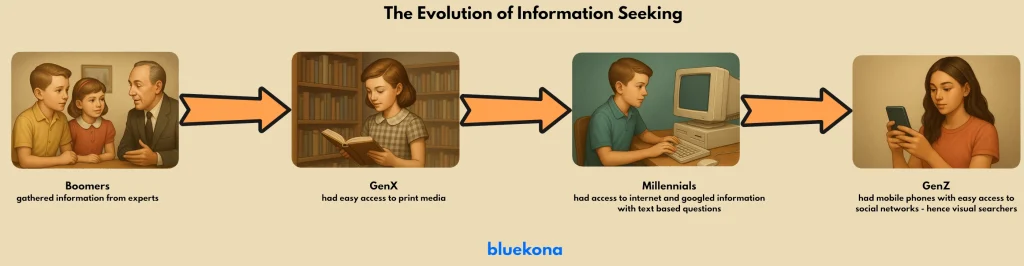
Unlike previous generations, Gen Z didn’t spend their childhood poring over manuals or encyclopedias. They’ve learned to tackle problems visually — think YouTube tutorials, Instagram stories, and now, those quick TikTok clips.
For them, visual learning isn’t just a preference, it’s what they always do. When they need to tie a tie, fix a leaky faucet, or pick out a new moisturizer, they’re not diving into a lengthy blog post — they’re watching someone demonstrate it live.
TikTok has truly mastered this visual-first approach. While Google’s search results often lean heavily on text that requires some patience to sift through, TikTok serves up short, practical videos that feel personal and immediately helpful.
Type “best affordable skincare routine” into Google, and you’ll find yourself wading through blog posts filled with disclaimers and backstories. Do the same on TikTok, and you’ll be greeted with 30-second clips of real people applying products, showcasing results, and sharing their genuine reactions.
That sense of authenticity is crucial. Google’s top results can often come off as overly commercial or optimized for clicks. On the other hand TikTok, feels like advice from a friend. Even sponsored content has to pass the test of real-time demonstration — you can see the product in action, catch those genuine expressions, and make your own judgment.
The real magic lies in what we call edutainment.TikTok’s effortless mix of learning and fun. There’s no clear boundary between “searching for answers” and “watching for enjoyment.” Users absorb information about products, solutions, and trends while they scroll, so by the time they’re ready to make a purchase, they’ve already been influenced — all without feeling like they’re being sold to.
For brands, the takeaway is straightforward, TikTok captures Gen Z’s attention by turning information into entertainment. Success isn’t about interrupting their scrolling with ads, it’s about crafting content so captivating that your product becomes part of the scroll itself.
The SEO Mechanics Inside TikTok
Understanding that TikTok functions as a search engine is one thing, but grasping how it ranks your videos is a whole different ball game.
The algorithm takes into account a blend of keyword signals and engagement metrics to determine which videos pop up in searches and on the For You Page.
1. Captions & Keyword Placement
TikTok scans every word in your caption, aligning it with user searches.
That casual morning skincare video in your feed starts with a hook built around its main keyword “My $8 morning routine for glowing skin.” Along the way, it naturally drops secondary keywords like “AM skincare,” “hydrating toner,” and “daily sunscreen.” The creator prompts interaction with calls-to-action such as “Save this for your next Target run” or “Which SPF do you use?” Finally, they tag 3–5 highly relevant hashtags to help TikTok categorize the content — #MorningSkincare, #GlowingSkin, #AffordableBeauty.
2. Subtitles & On-Screen Text
TikTok automatically generates captions from your audio and can read overlay text, making both searchable.
In the video, if you noticed, the creator syncs it all together — the voiceover says, “Morning skincare routine,” the on-screen text reads, “AM skincare steps,” and the caption might say, “Daily skincare routine for glowing skin.” That video didn’t just show up by chance — it’s the result of clever keyword clustering that boosts ranking across multiple related searches. And when the creator overlays product names, prices, and a “get it here” prompt, it sends an even stronger commercial intent signal to TikTok’s algorithm.
3. Watch-Time & Completion Rate — The Quality Filter
TikTok places a high value on videos that viewers finish watching (or replay).
Here are some key strategies:
Deliver your main message within the first 3 seconds
Show results before the process (after→before)
Create loopable content that viewers want to re-watch for clarity or satisfaction
Finish with a next-step hook (“Full ingredient list on my profile”)
The algorithm also monitors what happens after viewing — profile visits, related searches, and continued session time — and boosts videos that keep users engaged on the platform.
The key takeaway here is that TikTok SEO revolves around stacking signals. This means you should align your captions, spoken words, and on-screen text with intent-driven keywords. The goal is to create such valuable and engaging content that viewers can’t help but stick around, prompting the algorithm to share it even more widely.
Case Study 1: Danielle Athena – TikTok Shop Creator Success
What sets successful brands apart on TikTok from those that struggle isn’t just their budget — it’s all about strategy.
Take beauty creator Danielle Athena, for example. Rather than pouring money into ads, she cleverly utilized TikTok SEO to create a million-dollar sales funnel, racking up an impressive $5.6 million in beauty sales on TikTok Shop this year alone.
What’s her secret sauce? It’s all in her viral content, featuring reviews of popular tools like the Tymo Ring (which snagged 48 million views) and the Wavytalk 5-in-1 (with 25 million views).
But don’t be fooled into thinking it was just luck — it was all about smart search optimization. Athena crafted her videos around high-intent search phrases like “best hair straightener” and “affordable hair styling tools.”
The SEO Strategy Behind the Sales
She used keyword-rich captions that felt like genuine reviews (“This $30 hair straightener outperforms my $200 one — here’s why”).
She grabbed attention with striking visuals — dramatic before-and-after shots within the first 3 seconds to hook viewers. She also layered keyword signals throughout her captions, voiceovers, and on-screen text to maximize discoverability.
Engagement prompts like “Save this for later” or “Which tool should I test next?” encouraged comments and saves, which are strong signals for ranking.
Athena’s approach to integrating TikTok Shop was just as strategic. Instead of pushing hard sales, she presented each review as educational content, seamlessly incorporating purchase options.
Viewers didn’t feel like they were being sold to — they felt informed. The outcome? A significant boost in purchase intent and conversion rates.
Scaling the Playbook
Athena teamed up with Wavytalk to co-create new products, enriching her content pipeline with product launches, behind-the-scenes clips, and tutorials.
This consistency helped her establish a search monopoly for hair tools on TikTok — when users search, her content is what they find.
The Results
Danielle: $5.6 million in creator-driven sales.
Wavytalk: $12.6 million in TikTok Shop revenue in the first half of 2024
Case Study 2: Dee Pizza – From Small-Town Pizzeria to Global Footfall Magnet
https://www.tiktok.com/discover/dee-pizza
If Danielle Athena demonstrates how TikTok SEO can boost digital product sales, Dee Pizza showcases how the same principles can elevate a small-town eatery into a worldwide sensation.
Nestled in Llangollen, Wales, this family-owned pizzeria went viral thanks to a clever concept: the “First Eats Free” campaign. Each day, they captured the moment when their first customer received a complimentary meal — quick, POV-style videos that felt instantly relatable and were perfect for sharing.
The Local SEO StrategyThat Went Global
Dee Pizza didn’t leave things to chance. Their videos were carefully crafted around location-specific keywords like “best pizza in Wales,” “unique dining experiences,” and “food challenges.”
They complemented these with geographic hashtags to attract both local diners and curious tourists. And it paid off. One Saturday’s video exploded with 12.6 million views and 950,000 likes, creating a buzz that had people lining up before the restaurant even opened its doors.
Turning Customers Into Content
What made this campaign truly brilliant was its self-perpetuating cycle: engaging customers create captivating videos, which in turn draw in more customers eager to be part of the fun.
Even those who didn’t win on the freebie wheel left with positive memories and more chances for content creation. Every interaction became a marketing opportunity. Each video entertained followers, ranked well for local search terms, and inspired user-generated content, allowing Dee Pizza’s influence to stretch far beyond its small-town roots.
Scaling Success
This strategy led to impressive growth. With 700,000 followers on TikTok and plans for expansion already underway, Dee Pizza is now franchising its model — a testament to how TikTok SEO can drive not just clicks, but real-world foot traffic and sustainable business growth.
Dee Pizza didn’t win because of polished ads or big budgets. They won because they turned daily operations into SEO-driven storytelling — authentic, repeatable, and optimized for intent. Their playbook shows that on TikTok, the smartest marketing isn’t separate from the business; it is the business.
The Brand Playbook: $1M Funnels Without Ads
What do a beauty influencer and a cozy little pizzeria have in common? On TikTok, quite a lot! Danielle Athena and Dee Pizza show us that the brands making waves on the platform aren’t necessarily those with the deepest pockets — they’re the ones who know how to leverage TikTok SEO to create a sustainable growth engine.
1. Keywords Spark Discovery
Athena tailored her reviews around intent-driven searches like “best hair straightener.” Meanwhile, Dee Pizza focused on “best pizza in Wales.”
Both creators used captions, on-screen text, and hashtags to connect with what people were genuinely looking for.
2. Repeatable Formats Fuel Growth
Athena’s product demos followed a tried-and-true structure: hook → results → tutorial → CTA.
Dee Pizza’s “First Eats Free” campaign was straightforward, easy to replicate, and endlessly captivating.
They didn’t rely on fleeting viral moments — instead, they built a content system designed to deliver results time and again.
3. Authenticity Drives Conversions
These case studies highlight that TikTok users aren’t interested in ads — they crave answers and real experiences. Athena’s reviews felt like friendly advice rather than a sales pitch, while Dee Pizza’s POV clips captured genuine moments instead of scripted commercials. This authenticity fostered trust, which in turn led to conversions.
4. Content Transforms into Commerce
For Athena, her search-optimized videos seamlessly directed viewers to TikTok Shop, racking up over $5.6M in sales.
For Dee Pizza, their short videos sparked real-world demand, filling up their restaurant and paving the way for franchise growth. In both scenarios, entertainment morphed into education, and education turned into sales.
The Takeaway for Brands
You don’t need ads to thrive on TikTok. What you really need is content that’s searchable, authentic, and designed for repeatability. Whether you’re selling beauty products or delicious pizza, the strategy remains the same: stack those keyword signals, make your content easy to find, and let TikTok’s algorithm handle the scaling.
How to Optimize for TikTok Search
When it comes to optimizing for TikTok search, understanding how the platform has evolved is just the beginning—putting your own SEO strategy into action is where the real work lies.
The brands that are thriving on TikTok aren’t just hoping for the best. They’re following a well-thought-out system that revolves around keywords, consistency, and engagement triggers.
1. Embrace TikTok’s Unique Keyword Research
Believe it or not, TikTok itself is a fantastic keyword research tool. Start by typing in some basic terms in the search bar, like “skincare,” “pizza,” or “budget makeup,” and watch as the autocomplete suggestions pop up with high-intent queries such as “skincare routine for acne” or “best pizza in Wales.”
Dig a little deeper with long-tail variations like “skincare routine for teenagers” or “affordable curly hair tools.” These phrases often lead to more specific searches that face less competition.
Keep an eye out for emotional modifiers that TikTok suggests—words like “easy,” “quick,” “affordable,” or “healthy.” These terms give you insight into what users are really looking for.
Here’s a pro tip: Take a close look at the top-ranking videos in your niche. Pay attention to their captions, how they use keywords, and their engagement patterns. This reverse-engineering can reveal what TikTok’s algorithm is favoring.
And don’t forget about seasonality! Terms like “summer skincare,” “holiday outfits,” or “back-to-school makeup” tend to see spikes at certain times of the year. Make sure to align your content calendar with these trends.
2. Post Consistently, Vary the Format
To really shine on TikTok, consistency is key. But don’t confuse consistency with churning out the same video over and over. It’s all about showing up regularly—aim for once a day or three to five times a week, depending on your niche—and mixing things up with different formats and perspectives:
Quick tips that last 15 to 30 seconds
Longer tutorials that run 60 to 90 seconds
Product reviews or demos
Behind-the-scenes looks or POV content
Responses to questions from your comments
One of the smartest ways to scale your content is by batch-creating around specific keyword clusters. For instance, a fitness brand could develop a series focused on “home workouts” that targets phrases like
“home workout no equipment”
“home workout for abs”
“home workout quick results”
This strategy not only establishes your authority on the topic but also keeps your content feeling fresh and engaging.
3. Engineer Engagement That TikTok Rewards
TikTok doesn’t just count views, it looks for signs of real value. Here are the big three:
Comments → Pose specific questions: “Which of these products would you give a shot?”
Shares → Craft content that’s either super relatable or so good that people can’t help but share it.
Saves → Think tutorials, product info, or step-by-step guides that users will want to revisit later.
Don’t hesitate to pin your own strategic comments to give extra keyword context (like, “This $30 straightener outperforms my $200 one — and it’s safe for curly hair too”).
And remember to include CTAs such as: “Save this for your next Target trip.” “Tag a friend who needs to see this.” Early engagement is crucial.
Letting your loyal followers know or promoting your content on other platforms can give the algorithm a boost, but the ultimate aim is to create content that’s so helpful or entertaining that engagement happens naturally and consistently.
The Bottom Line: Achieving success with TikTok SEO isn’t about just wishing for your content to go viral. It’s about treating TikTok like a search engine: identify genuine user queries, consistently create content around those topics, and craft engagement signals that show TikTok your content is worthy of a higher ranking.
Pitfalls to Avoid
Even with a solid TikTok SEO strategy, small mistakes can kill your momentum. These pitfalls don’t just cap your reach — they can actively harm your account’s standing with the algorithm.
1. Overstuffing Keywords
Cramming every variation of a keyword into one caption makes content look spammy and hurts engagement.
Bad: “Best affordable skincare routine for acne-prone sensitive dry oily skin morning night products under $20.” Better: “This $12 cleanser cleared my acne in two weeks — here’s my sensitive-skin morning routine on a budget.”
The second example feels natural, still hits multiple keywords (affordable skincare, acne, sensitive skin, morning routine, budget), and delivers value without keyword overload. TikTok’s algorithm rewards contextual, conversational use — not robotic stuffing.
2. Ignoring Watch-Time Signals
TikTok doesn’t just care what you say — it cares if people stick around to watch it. Many creators lose viewers by delaying the payoff.
Bad: “Today I’m going to show you my skincare routine for dry skin.” (intro drags, users scroll away) Better: “This $8 moisturizer gave me glass skin in one week — here’s how.” (hook delivers instant value)
Watch-time is TikTok’s ultimate ranking filter. Focus on:
Strong hooks in the first 3 seconds.
Quick pacing and no fluff.
Clear visuals and audio.
Loop-ability (before/after reveals, fast demos, or content that’s worth rewatching).
3. Not Updating Content for Seasonal & Trending Searches
TikTok search trends shift constantly. Posting “summer skincare” in November won’t rank. Smart creators build content calendars around predictable cycles:
Winter: “dry skin solutions”
Spring/Summer: “sunscreen recommendations”
August/September: “back-to-school makeup”
They also jump on real-time trends — whether it’s a viral product, trending audio, or cultural moment — but only when it aligns with their niche.
The best creators blend seasonal consistency with trend agility. That means updating proven videos with fresh products, using trending sounds strategically, and being first (but not too early) when new searches spike.
Note: TikTok punishes spammy captions, boring content, and outdated strategies. The creators who win long-term don’t chase hacks — they align naturally with how people search, keep viewers watching, and adapt to the rhythms of TikTok’s ever-changing search landscape.
Ready to rank higher on TikTok? BlueKona shows you which videos drive sales — and how to scale them.
Back in 2014, dating apps felt like a never-ending cycle of swipe fatigue and shallow matches. Tinder was the king of the hill, and Match Group had the cash to back it up. But what they did not have? A brand that women could genuinely trust.
The Differentiator: Women First
Back in 2014, most dating apps were all about quantity. Swipe more, match more, message more. But this approach created a toxic cycle, especially for women, who often found themselves overwhelmed by low-effort messages and unwanted advances.
Bumble’s breakthrough wasn’t just another feature. It was a shift in power dynamics. By making it a rule for women to initiate the conversation within 24 hours, Bumble didn’t merely adjust user habits—it completely redefined the dating game.
This wasn’t just about improving user experience, it was a philosophy embedded in the product. And this philosophy arrived at just the right time. In a society that was increasingly prioritizing consent, safety, and respect in the digital realm, Bumble transformed into more than just a dating app—it became a movement.
From Positioning to Purpose
Bumble’s brilliance lay in turning a simple interaction rule into a broader cultural statement. Their messaging was refreshingly straightforward.
The Problem: Dating apps often left women feeling unsafe, overwhelmed, and drained.
The Solution: Empower women to take charge of the conversation.
The Movement: Encourage women to lead, not just match.
While other apps focused on matches, algorithms, and endless choices, Bumble emphasized autonomy, safety, and mutual respect.
Whether it was app store descriptions, billboard advertisements, or push notifications, every message echoed the same empowering idea: make the first move.
The Product Was Simple. The Brand Was the Movement.
What made Bumble resonate wasn’t just their messaging—it was how the app functioned. Their “women first” rule wasn’t merely a marketing gimmick, it was ingrained in the app’s very code.
This harmony between values and actions turned users into passionate advocates. Women shared their experiences of feeling safer and more in control, while men appreciated the thoughtfulness behind their interactions. The mechanics of the product became the message, and that message sparked a movement.
In a crowded space filled with feature-hunters and acquisition strategies, Bumble demonstrated that true differentiation occurs where values and behavior intersect.
Multi-Platform Content Consistency
Having a powerful message is one thing, but delivering that message consistently across all the platforms your audience frequents is a whole different game. Bumble didn’t just participate in this challenge,n they absolutely nailed it.
From Instagram and TikTok to LinkedIn and real-world campaigns, Bumble showcased what we might call omnichannel brand discipline. Every interaction, whether it’s a billboard or a push notification, echoed Bumble’s unmistakable vibe — bold, witty, and empowering.
But let’s be clear, this wasn’t just a matter of copying and pasting content. It was all about smart adaptation. Bumble skillfully adjusted its voice to fit the unique style of each platform while staying true to its core values.
Let’s talk about storytelling on different platforms!
Instagram
This space is all about bright, eye-catching visuals paired with motivational quotes, fun dating myth busts, and user-generated content. It’s a feed designed to inspire and foster a sense of belonging—just right for Bumble’s uplifting vibe.
TikTok
Here, the content is short, emotionally resonant, and often refreshingly candid. It connects with Gen Z by embracing vulnerability, humor, and empowerment, all wrapped up in the latest trending formats.
LinkedIn
When it comes to Bumble Bizz, the tone takes on a more polished, professional flair. Picture career advice, confidence-boosting tips, and inspiring stories of women smashing through glass ceilings—while still keeping Bumble’s signature voice intact.
IRL Campaigns
From eye-catching “Make the First Move” billboards in bustling cities to engaging Bumble Hive pop-ups, the brand’s real-world presence is just as bold as its online persona—driving home the same essential message.
What was the secret sauce behind it all? Total message discipline. Every single touchpoint, whether it was ads, push notifications, or interviews with Whitney Wolfe Herd, it all echoed the same emotional vibe — you’re in control here. You’re the one who makes the first move.
While many brands tend to water down their message across different platforms, Bumble really nailed it.
Mission Marketing > Product Marketing
While competitors obsessed over chat features and swipe mechanics, Bumble focused on something harder to replicate — a worldview.
Their messaging wasn’t led by features. It was led by values—specifically, consent, safety, and equality.
These weren’t abstract ideals, they were embedded in the product experience and expressed through every touchpoint.
This wasn’t marketing. It was positioning with purpose.
Values-First Messaging
While many dating apps focused on algorithms and flashy updates, Bumble took a different route:
Consent: “No means no” wasn’t just a catchphrase—it was built right into the app’s design.
Safety: With a woman-led approach, Bumble aimed to cut down on harassment and ease anxiety.
Equality: It challenged traditional gender roles, not only in dating but also in networking and friendships.
This values-first strategy fostered a real emotional connection.
Long-Term Campaigns That Moved
Bumble didn’t just follow trends, it sparked movements.
#MakeTheFirstMove transformed from a simple dating prompt into a powerful platform for empowerment, touching on everything from careers to friendships and personal growth.
“Date, Meet, Network Better” brought the app’s ecosystem together without ever feeling like just another product expansion. It was more like a mission that kept growing. These weren’t just fleeting campaigns, they were vibrant brand stories—crafted to evolve alongside cultural shifts.
Social Impact as Brand Strategy
Bumble blurred the line between brand and activism
Legislative advocacy: Actively supporting laws against digital sexual harassment and non-consensual image sharing.
Strategic partnerships: Aligning with organizations advancing women’s safety and representation.
Public stances: Speaking out on issues of workplace equity, digital rights, and more—even at the risk of polarizing their audience.
This wasn’t performative CSR. It was strategic alignment that deepened trust and cultural relevance.
The Compound Effect
While traditional product marketing often fizzles out without ongoing investment, mission-driven marketing has a way of building momentum.
Every cultural event or news story related to gender equality gives Bumble another chance to stay in the spotlight—without needing to shell out cash for visibility.
This approach also attracted media attention. Journalists, influencers, and users were drawn to a brand that had a voice and a purpose. That’s how Bumble created a brand advantage that no product feature could ever replicate.
The Bumble Content Ecosystem
Bumble didn’t just launch campaigns, it created a whole content ecosystem. This is a dynamic, self-sustaining system where digital, physical, and user-generated content all work together to foster emotional connections, encourage repeat interactions, and scale engagement effectively.
Whether you stumbled upon Bumble at a Hive pop-up, heard a friend’s dating tale on Instagram, or received a push notification in the app, the vibe was always the same: empowering, bold, and tailored just for you.
1. IRL Meets Digital: The Hive Strategy
Bumble made real-world brand moments central to its strategy. The Bumble Hive events weren’t just pop-ups, they were multi-day experiences in major cities that hosted career workshops, networking mixers, and wellness events, all designed to embody Bumble’s values offline.
Each Hive became a content engine, generating:
Professional photo/video assets for campaigns
UGC from attendees
Local media buzz and influencer collabs
Educational clips and community testimonials
By designing for geographic localization, Bumble made its brand feel hyper-relevant. A Hive in LA looked different than one in Austin—but all reinforced the same mission.
2. Community-Driven Content at Scale
Instead of just relying on their internal team for content, Bumble tapped into the creativity of its users, turning them into a powerful content engine.
User Story Campaigns: Real people sharing their genuine successes—whether it’s about love, building networks, or new friendships.
City-Specific Narratives: By showcasing how Bumble influenced local experiences, users could see themselves reflected in the product.
Crowdsourced Q&A: Questions submitted by users transformed into dating tips, career advice, and educational content that enhanced the community’s value.
This wasn’t merely about engagement, it was about emotional connection. Users became passionate advocates because they recognized their own stories in the brand.
The Branded Content Engine
Bumble functioned like a comprehensive media powerhouse
Educational Videos: They tackled real-life issues such as dating anxiety, networking strategies, and building friendships—content crafted for genuine experiences, not just for onboarding new users.
Influencer Collaborations: These partnerships were built on long-term relationships rather than fleeting sponsorships. The creators truly embodied the brand, rather than just promoting it.
In-App Content Loops: They seamlessly integrated helpful nudges like dating advice, conversation starters, and empowering messages right into the user experience, reinforcing brand values with every swipe.
This was content that served a purpose, not just filler in the user experience.
The Ecosystem Effect
This ecosystem didn’t just expand reach—it created a real connection.
Every element supported the others: In-person events fueled digital campaigns.
User stories sparked social sharing and built community trust. In-app content boosted engagement and kept users coming back. Branded videos enhanced understanding and deepened emotional ties.
The outcome? A brand experience that seamlessly followed users across different platforms, feeling consistent, empowering, and intentional at every turn.
By developing a cohesive content system rather than relying on separate channels, Bumble not only safeguarded its brand for the future but also sparked a movement—not just a product.
Wrap Up
Bumble didn’t come out on top just by having the best algorithm or focusing solely on conversions. They succeeded by creating a brand that represented something greater—and then embedding that belief into every aspect of their product, content, and community.
Their approach wasn’t just about performance marketing, it was all about performance storytelling. From the “women first” feature to real-life Hive pop-ups, and from mission-driven campaigns to engaging in-app content loops, Bumble infused emotional connection into every interaction with users.
This is the playbook for today: align your values with your actions, create content systems rather than one-off pieces, and accelerate cultural relevance faster than you can write code.
For any brand trying to stand out in crowded markets, Bumble serves as a masterclass in transforming content into community—and turning that community into a competitive edge.
Want to build a brand with content that compounds like Bumble’s? Start with a BlueKona content performance audit — and see which stories are worth scaling.
Did you know that a whopping 92% of marketers now consider themselves advanced users of AI?
And it gets better, 80% of them believe these tools are exceeding their ROI expectations, while 94% have seen an increase in revenue. We’ve officially transitioned from asking, “Will this work?” to “What should we keep?”
But here’s where things start to get tricky.
Somewhere between ChatGPT for content creation, Jasper for nailing brand voice, Synthesia for video production, Sprout Social for scheduling, and Albert.ai for ads—the initial promise of efficiency has become buried under a mountain of overlapping solutions.
Interestingly, 82% of teams feel they’re ahead of the AI game. Yet, many now describe themselves as “somewhat advanced,” which suggests that while confidence is high, clarity is lacking. The tools are effective, but the strategies behind them? Not so much.
With over 100 tools for content, email, analytics, and social media, marketers aren’t struggling to adopt AI anymore—they’re overwhelmed by choices. Decision fatigue has taken the place of ROI skepticism as the biggest hurdle to AI-driven growth.
This isn’t just another hype article. It’s a candid examination of what’s excessive, what’s truly valuable, and why streamlining your tools might be the smartest AI strategy your team can adopt—before your entire stack collapses under its own weight.
The AI Landscape Is Overwhelming (Here’s Why)
Remember the days when picking a marketing tool was as simple as choosing between Mailchimp and Constant Contact?
Now, it feels like you’re trying to manage 8 to 12 different AI platforms for everything from content creation to analytics, ads, and scheduling—most of which end up overlapping in ways that just add to the confusion.
AI was meant to make your life easier, but instead, it seems to have complicated things even more.
Let’s take a look at the current situation
Content Creation & Copywriting
ChatGPT (OpenAI): Generates long and short-form content with creative brainstorming, multilingual support, and reasoning tools powered by GPT‑4. Ideal for drafting articles, emails, and chat scripts fast.
Jasper: Tailors copy to your brand voice using templates and workflows — great for scalable content production.
Writesonic: Offers 80+ templates and GPT-4 integration for blog, ad, and SEO content with multilingual support.
Rytr: Affordable tool for short social media posts and emails with built-in plagiarism checks.
Copy.ai: Delivers email and ad copy with predictive performance scoring and team collaboration features.
Anyword: Generates copy with real-time performance predictions while keeping your brand voice consistent.
Scalenut: Supports long-form content with topic clusters and keyword planning to improve SEO relevance.
HyperWrite: Context-aware autocomplete and email reply suggestions, ideal for improving writing speed.
Koala Writer: Automatically drafts SEO-optimized blog posts in multiple languages.
MarketMuse: Uses topic modeling to identify content gaps and build authority.
Frase: Creates SERP-aligned content outlines and briefs using answer scoring and NLP.
Clearscope: Grades term relevance to boost on-page SEO performance.
SurferSEO: Offers keyword clustering and NLP suggestions for SERP-focused content optimization.
Outranking: Automates SERP-gap analysis, outlines, and internal link recommendations.
NeuralText: Combines keyword research with AI-generated drafts and competitor SERP comparisons.
Alli AI: Performs CMS-integrated bulk on-page SEO optimization.
RankIQ: Builds outlines for low-competition niches with high-CTR title suggestions.
Semrush ContentShake AI: Delivers 12× faster brief creation based on trend data and auto-posting integration.
Ahrefs + AI: Suggests SERP-gap questions and keyword ideas aligned with backlink data.
RankMath AI: Offers in-editor title and meta generation using GPT for WordPress users.
WordLift: Adds schema markup and builds knowledge graphs to enhance semantic SEO.
ZipTie: Tracks brand mentions and alerts with AI-generated SERP overview reports.
Video & Audio Production
Synthesia: Creates video avatars and presentations in 140+ languages without filming.
Descript: Provides video editing with AI-generated transcripts, voice overdubs, and filler-word removal.
Runway: Enables real-time object removal and VFX with generative video support.
Google Veo: Converts text into B-roll videos at a lower price point.
OpusClip: Automatically extracts short clips and resizes them for social platforms using hook detection.
ElevenLabs: Generates natural and multilingual AI voices with emotional tonality for dubbing.
Image & Creative Assets
Canva Magic Media: Text-to-image generation and editing using templates and brand kits.
Leonardo.AI: High-speed AI image generation with 3D texture support for creatives.
Scenario: Helps generate game and ad assets trained on specific visual styles.
AdCreative.ai: Builds ad visuals, banners, and videos with scoring and competitive insights.
HubSpot Campaign Assistant: Auto-generates ad copy and visuals with direct sync to Marketing Hub.
Imagine.art: Free HD text-to-art and video generation with real-time upscaling.
Social Media Management & Listening
Sprout Social: Includes AI Assist for captions, posting timing, sentiment analysis, and listening.
Hootsuite + OwlyGPT: Offers caption generation and real-time trend discovery via AI.
Buffer AI Assistant: Simplifies content planning with auto captions and optimal send times.
FeedHive: Recycles top-performing content using AI and conditions content reposting rules.
Agorapulse: Features a content writing assistant and unified inbox with fraud detection filters.
SocialPilot: Enables bulk scheduling and AI tagging for up to 500 posts.
Loomly: Suggests post ideas based on trends, with approval workflows.
Hookle: Serves as a mobile AI assistant offering daily suggestions and smart scheduling.
Zoho Social: Powers governance-ready scheduling with SmartQ AI and analytics.
Sprinklr Social: Delivers enterprise-level AI capabilities, multi-channel support, and brand safety tools.
Advertising & Campaign Optimization
Albert.ai: Self-optimizes across ad channels with budget reallocation and keyword tuning.
Smartly.io: Automates creative, predictive bidding, and cross-channel ad buying at scale.
Moloco Ads: Enables ML-driven programmatic advertising using first-party data.
Enhencer AI Ads: Targets Shopify stores with creative asset and audience modeling for strong ROAS.
Evolv AI: Optimizes web experiences via multivariate testing in real time.
HubSpot AI Ads: Manages creative generation and performance tracking within the CRM.
Email Marketing & Outreach
Seventh Sense: Predicts best time and day to improve email deliverability for each contact.
Encharge: Enables AI journey building with GPT‑powered sequencing and segment prediction.
ActiveCampaign: Offers predictive sending and lead scoring within its CRM.
Send-time optimization and copy tuning are baseline features now
CRO & Testing
Unbounce, Evolv AI, Ortto, HubSpot CRO Toolkit
A/B testing overlaps—insights don’t sync across platforms
Customer Analytics
Optimove, Insider, Delve AI, MyMap.AI, AWS AI Marketplace
All do journey mapping and churn prediction. Data lives in silos
Automation & Forecasting
Zapier Canvas, Salesforce Einstein GPT, IBM Watsonx, Ortto AI
Everyone promises “end-to-end automation”… none delivers it cleanly
Influencer Marketing
CreatorIQ, Heepsy, Sprout Tagger, Lionize, IMAI
Search, vetting, and pricing all duplicated in separate dashboards
Voice & Chat Support
Intercom Fin, Drift AI Chat, Zendesk AI, Amazon Connect
Bots don’t share memory—repetition kills UX and team efficiency
The Uncomfortable Math
Average tools per team: 8–12
Average spend: $200–$2,000/month
Time wasted switching tools: 2–3 hours daily
Functionality actually used: ~30%
What That Looks Like Day to Day
Monday: Juggle between Jasper, Sprout Social, and Canva just to get a single blog post and promo ready.
Tuesday: Realize ChatGPT could handle about 70% of what Jasper does. Start questioning why you’re paying for both.
Wednesday: Spend 45 minutes hunting down your influencer data, only to end up exporting it to a spreadsheet anyway.
Thursday: Manually approve “automated” posts across four different platforms. Here we go again.
Friday: Ask yourself: Are we really using AI—or is it using us? This isn’t about having bad tools.
It’s about unchecked chaos. Every tool claims to be the ultimate solution. So, you end up buying ten. The outcome? More tools, less clarity.
The smartest teams aren’t just scaling AI. They’re streamlining it. The bloat isn’t just a theory—it’s a reality.
The Honest Case for Consolidation
Let’s be honest, consolidation isn’t without its flaws. It’s a strategic trade-off, but if you’re truly focused on speed, clarity, and control, it’s a trade worth making.
You’re not stuck picking between “one platform to rule them all” or juggling eight different specialized tools. Instead, you’re opting for a smarter foundation — a single strategic core that can manage 80% of your marketing operations with just 20% of the overhead.
And, what is it that you gain?
1. Speed That Actually Matters
When content creation, scheduling, and performance analytics are all housed in one place, you can finally stop the endless tool-switching. No more wasting 2–3 hours a day just trying to get the context you need.
2. Clarity in Decision-Making
Unified dashboards aren’t just a nice-to-have. They reveal important patterns. The connection between Tuesday’s blog, Wednesday’s social post, and Friday’s email spike becomes crystal clear when everything is integrated into one system.
3. Lower Cost of Ownership
Many AI stacks can drain your budget: think $200–$8K a month in subscriptions, plus those sneaky hidden costs like integration, troubleshooting, and duplicated features. Consolidation can slash your spending by 40–60%—and you won’t have to sacrifice performance.
4. Reduced Training Overhead
Mastering one platform deeply is far more effective than fumbling with eight tools. New hires get up to speed faster, teams can work more efficiently.
But, you might loose
1. Loss of Depth in Specialized Areas
There’s a reason we have specialist tools. Whether it’s Jasper’s brand voice training, Synthesia’s avatars, or Clearscope’s scoring, these tools outshine generalists when it comes to their specific niches. If you’re really pushing the envelope in a particular field, you might still find yourself needing these resources.
2. Less Flexibility in Unique Situations
Need enterprise-level influencer fraud detection? How about complex multivariate testing or multilingual avatar-led videos? For those tricky last 20%, you’ll definitely want to rely on top-notch tools.
3. Roadmap Reliance
When you decide to consolidate, you’re putting your faith in the idea that your platform will grow alongside you.
If the tool you pick doesn’t focus on what your team needs in the next quarter, you could be left waiting, or forced to add something on temporarily.
The bluekona Approach: 80/20 Done Right
bluekona isn’t about replacing everything you already have. Instead, it acts as a smart consolidation layer, giving your team a single, dependable hub for content, scheduling, analytics and some light automation.
Now, what about that remaining 20%? That’s where you bring in specialists, but only when they can clearly show a return on investment. Think of them as temporary boosts rather than permanent additions.
You don’t need a dozen tools cluttering your workflow. What you really need is one all encompasing tool that cover most bases, plus one or two specialists to step in when it really matters.
Consolidation doesn’t mean you have to settle. It’s all about prioritizing what truly counts.
Because the real question isn’t “Which tool does this best?”. It’s “Which tools actually make a difference?”
What bluekona Covers..And What It Doesn’t?
In a world where every platform claims to be your all-in-one marketing solution, bluekona takes a different approach, it prioritizes focused excellence over unnecessary features.
Instead of trying to replace your CRM, email platform, ad manager, or project tracker, it doesn’t aim to do it all. Its mission is to excel in the 80% of your marketing workflow that truly fuels growth.
Schema markup, link building, SERP performance tracking
Here’s what that looks like
Old Way:
Write in Jasper
Edit in Grammarly
Design in Canva
Schedule in Buffer
Check metrics in Sprout
Combine data from four platforms
Repeat daily with a different mix
bluekona Way:
Connect your channels just once
Create AI-driven content that fits your brand perfectly
Repurpose it everywhere with a single click
Review your performance all in one dashboard
Iterate, improve, and scale—without the hassle of too many tools
Why “Not Everything” Is the Point
1. Efficiency > Complexity
bluekona hones in on the systems that truly matter, content creation, strategy, distribution, and performance. That’s where your time is spent—and where the inefficiencies often hide.
2. Depth > Breadth
You don’t need a toolbox full of 47 tools. What you need is a solid platform designed to deliver results every day, with the flexibility to bring in specialists when the situation calls for it.
The Strategic Play: Core + Optional Power-Ups
Need top-notch video production? Use Synthesia. Launching a major influencer campaign? Add CreatorIQ. Diving deep into SEO? Plug in Clearscope.
But let those tools be situational—not foundational.
bluekona serves as your command center for growth—not just another tech stack. It offers you the simplicity to execute and the power to scale—without getting lost in a sea of tools.
Who This Is For—And Who It’s Not
bluekona isn’t for everyone. It’s designed for marketers who are ready to leave the chaos behind and scale their efforts more intelligently.
This Is For:
Growing Teams Overwhelmed by Tool Chaos You’ve piled on tool after tool, tackling small issues while creating bigger headaches. Now, your team spends more time juggling logins than actually creating content. bluekona offers a single platform to plan, publish, and measure. No need to juggle five different tools to get the job done.
Agencies Wasting Billable Hours on Manual Tasks Client work should be smooth and efficient, but instead, you find yourself hopping between dashboards, copying insights into slides, and manually reformatting posts. bluekona cuts out the middleman, allowing you to work efficiently without having to patch together eight different tools.
Solo Marketers on the Brink of Tech Burnout You’re wearing all the hats, like, writing, designing, scheduling, reporting—and your “tool stack” is starting to cost more than your rent. You need a content engine that’s ready to go right out of the box, not a patchwork system that requires a Zapier expert to operate.
This Isn’t For:
Enterprise Ops with Highly Customized Needs If you’re managing multi-market, compliance-heavy, attribution-focused campaigns, you’ll still need specialized, integrated platforms—and probably a development team to keep everything running smoothly.
Teams Already Committed to Complex Workflows If your setup is already intricately connected with custom APIs and tailored dashboards—and it’s working well—switching to a new system might cause more headaches than it’s worth.
Brands Pushing the Envelope on Creative Innovation If staying ahead means diving into AI-generated 3D content, dynamic video avatars, or interactive experiences, you’ll need cutting-edge creative tools that go beyond what bluekona offers.
The Bottom Line
The AI boom addressed the wrong problem.
It flooded marketers with more tools, more options, and more “solutions”. But it didn’t tackle the real issues, like, fragmentation, decision fatigue, workflow overload, and tool sprawl.
The top-performing teams aren’t cranking up their AI usage, they’re actually dialing it back, but in a smart way. They’re focusing on what truly makes a difference and cutting out the noise.
So, here’s the real question: Are you in control of your tech stack, or is it running the show?
Start your audit. Discover what bluekona can replace. Identify what’s fueling your growth—and what’s just eating away at your budge
When someone searches for “how to make a resume,” Canva doesn’t just rank, it leads.
Their blog post explains the process. The embedded YouTube video demonstrates it. Their templates allow users to start right away. By the time someone finishes reading, they are already using Canva’s o build their resume and are halfway to becoming paying customers.
That’s not just content. That’s a smart strategy.
While most SaaS companies spread their efforts thin—blogs in one place, templates in another, tutorials lost on YouTube, Canva created an interconnected, education-focused system. Each type of content works together to attract visitors, teach results, and encourage product usage.
The outcome? A strong content barrier that competitors cannot surpass. They would need to rebuild the entire system.
In this blog, we’ll reverse-engineer how Canva created this stronghold. From their SEO blog structure to their YouTube-blog combinations that succeed in search engines.
We will also discuss how to create a similar barrier in your niche, even if you’re starting from scratch.
Let’s break it down.They tapped into a fundamental truth
The Education-First Strategy
Most design tools focus on their features, but Canva took a different approach by emphasizing outcomes.
They tapped into a fundamental truth. The issue with design isn’t about the tools itself, it’s about the knowledge gap.
You don’t search, “designing tool with great gradient controls.” Instead, you search, “I want to create a resume that looks good”. This understanding influenced their entire content strategy.
Rather than starting with what their product can do, Canva built a system that teaches you exactly what you want to achieve and then helps you get there, all within the Canva platform.
When it comes to SaaS onboarding, most focus on just the interface. But Canva? They’re all about the outcomes.
They realized that most people avoid design not because they can’t do it, but because they don’t believe they can. Every tutorial, every blog post, and every Design School guide aims to reduce fear, simplify the process, and show users, “you can do this.”
Quotes like “It’s easier than you think to design a flyer from scratch” build confidence, and it works.
It converts unsure visitors into enthusiastic first-time creators
The Educational Architecture
Canva’s system operates on three levels:
Foundation: Design principles, color theory, typography, general literacy
Application: Specific tasks, resumes, flyers, logos
Advanced: Industry use cases, real estate flyers, school newsletters, business decks
Each layer connects to the next. Each one develops skills and creates reliance on the product.
This is why Canva doesn’t need to sell hard. Their system guides users into the product. Templates are directly integrated into tutorials. Calls to action don’t interrupt the content. Infact, they are part of the content.
It’s learn, try, succeed, all within a closed loop.
Why It Works?
This strategy solves three problems at once
Discovery: Educational content ranks for long-tail, high-intent queries like “how to make a poster” or “resume layout for students.”
Conversion: By the end of the tutorial, users aren’t just informed. They’re already halfway done with their design.
Retention: Success builds confidence. Confidence drives return usage. Each completed project increases the odds of the next.
This is how Canva built a growth engine by making “learn” and “use” the same step.
While most brands see education as an afterthought, Canva turned it into their competitive advantage.
Canva’s SEO Flywheel
Canva doesn’t see SEO as just a way to get traffic. They see it as an ecosystem, where each page, template, and tutorial supports the others.
At the core of this approach is a self-sustaining flywheel.
Educational content drives template usage. Template success generates user data. Data fuels smarter content creation. Everything is indexed, linked together, and optimized for intent.
The outcome? It was not just about search rankings. It’s about achieving lasting organic strength and creating an SEO advantage that competitors can’t easily replicate.
1. Targeting Genuine Design Intent, Not Just Popular Keywords
While most SaaS tools compete for broad terms like “best design software,” Canva explored the complete range of real user needs
Tactical outcomes like “How to make a resume,” “How to design a flyer.”
Contextual use cases such as “Wedding invitation design,” “Restaurant menu templates.”
Skill development content like, “Typography basics,” “Color theory for beginners.”
Industry verticals, for instance “Real estate flyer design,” “School newsletter templates.”
This detailed targeting reaches users at every stage of their design journey, from total beginners to niche professionals. It connects them directly to Canva’s template ecosystem.
Each keyword cluster serves as a high-conversion gateway into the product.
2. Internal Linking
This is where Canva really stands out from the crowd.
Their internal linking is not random. It’s a carefully crafted funnel that takes you to the bottom even before you realize it
Specific template categories
Design tutorials
Product feature explanations
Let’s see how this works in practice. The page how to make a resume for your first job, links to entry-level resume templates with the CTA “Choose a free template to get started”. At the end of this page, you see other follow-up guides like “How to write a cover letter”
This internal structure boosts:
SEO performance (through distributed link equity and crawlability)
Engagement metrics (lower bounce rates and higher time on site)
Conversions (fewer obstacles between intent and action)
It’s all about shaping the user journey as an SEO strategy. And it really scales.
3. Content Clustering for Authority and Conversion
Canva builds topical clusters instead of standalone articles. Their resume hub includes
Resume writing fundamentals
Layout tips and formatting guides
Industry-specific resume advice
Cover letter writing tutorials
LinkedIn profile optimization
Each piece supports the others and links across the cluster. And the benefits are clear:
Google recognizes the thorough coverage of topics, leading to better rankings
Users can easily explore related subjects, resulting in longer session times
More opportunities for calls to action and template placements, boosting conversions
It’s a perfect blend of SEO, user experience, and funnel strategy.
Why Competitors Can’t Copy This?
Sure, anyone can whip up a blog post on “how to make a resume.” But let’s be real,it’s almost impossible to create a flywheel as effective as Canva’s.
To pull that off, you’d need:
In-depth keyword research and a solid understanding of user intent
Content operations that can scale while maintaining editorial precision
A product that allows for the immediate application of what users learn
A smart internal linking and taxonomy strategy
A long-term dedication to teaching first and selling second resource library
Most people won’t go the extra mile. But Canva already has.
How bluekona Helps You Build a Content Moat Like Canva, Without the Manual Labour
Canva built its content moat over years of hard work involving writers, SEOs, video editors, template designers, and endless revisions.
With bluekona, you can achieve the same level of success, minus the massive team.
It automates the key elements of Canva’s strategy such as, repurposing content, distributing it across different formats, internal linking, and tracking performance.
What took Canva years to develop, you can establish in just a few months.
Transform One Asset into a Multi-Format Ecosystem
Your top-performing content is already doing its job. bluekona helps it shine everywhere.
Stop playing the guessing game. bluekona’s AI-driven content performance engine shows you:
Which content formats lead to the most trial starts, demo requests, or purchases
Which topics generate links, shares, and deeper engagement across platforms
What content paths actually guide users from learning to converting
You’ll have a clear roadmap of where to invest your efforts. And most importantly, you’ll know what to cut.
Build Topical Authority on Autopilot
bluekona groups your content around themes, similar to Canva’s resume system, and fills in the gaps.
It identifies internal linking opportunities to share SEO value. It creates hub-and-spoke content calendars to increase domain authority. It suggests long-tail keywords based on actual user behavior and ranking potential.
What once took SEO strategists weeks to plan, bluekona accomplishes automatically.
You provide the expertise, and bluekona transforms it into a content system that educates, scales, and compounds
Want to build a content moat like Canva?
Start with a free bluekona Content Performance Audit.
Identify your highest-performing educational assets. See where your ecosystem is strongest and where it’s lacking. Get a customized roadmap to scale what’s working and improve what’s not.
Find your best educational content. Turn it into your growth engine.